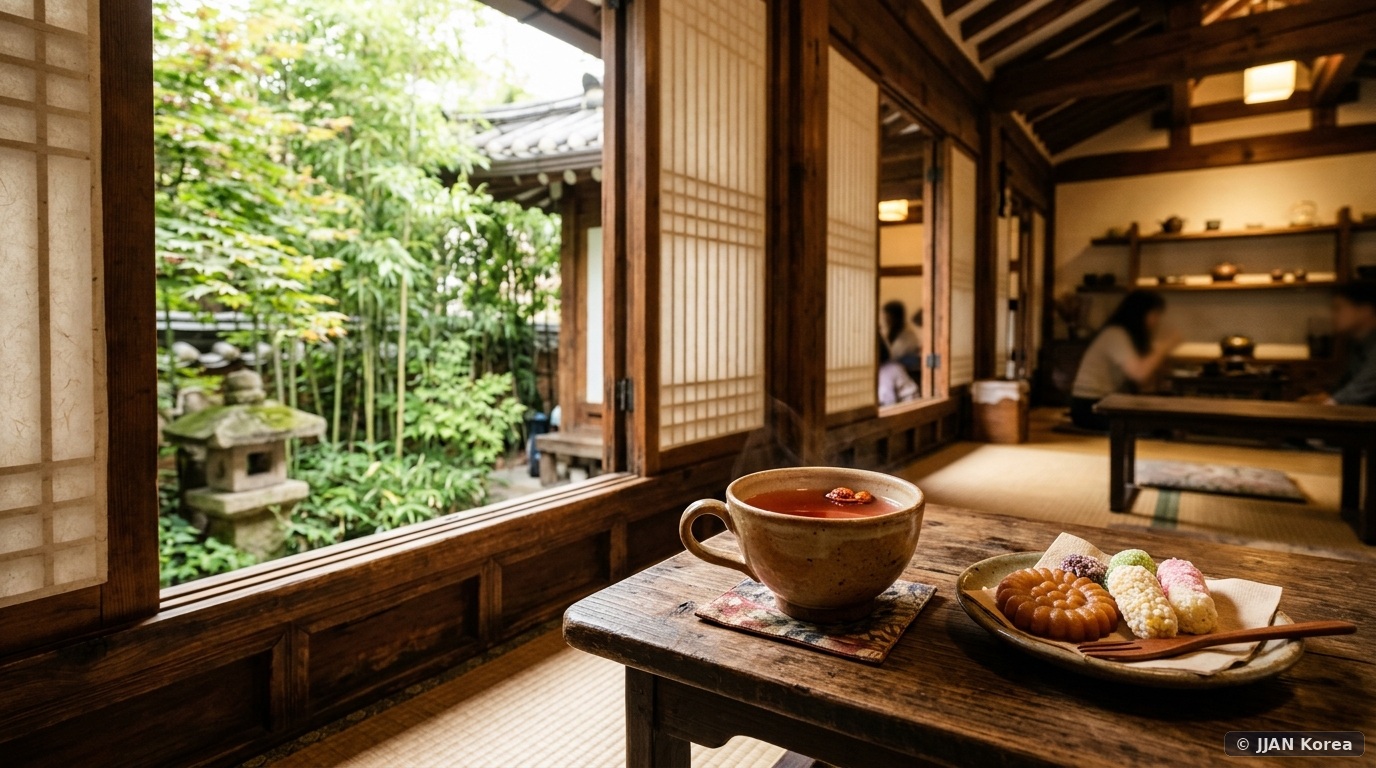
In a hyper-modern metropolis known for fast-paced digital living and bustling skyscraper avenues, stepping into a centuries-old wooden Hanok (한옥) traditional tea house in Seoul feels like stepping into a serene sanctuary suspended in time. Nestled within the labyrinthine flagstone alleys of Insadong (인사동) and Bukchon (북촌), sipping fragrant Korean herbal tea while listening to the gentle rustle of bamboo courtyard gardens is the ultimate cultural antidote to urban fatigue.
Classic Korean Teas & Health Properties
Traditional Korean tea (Cha / 차) encompasses far more than standard green tea leaves, incorporating wild berries, roasted grains, and medicinal roots steeped for vitality:
| Tea Name | Primary Ingredients | Flavor Profile | Traditional Health Benefit |
|---|---|---|---|
| Omija-cha (오미자차) | Five-flavor magnolia berries | Sweet, sour, bitter, salty, and pungent notes in harmony | Boosts liver vitality, relieves mental fatigue, hydrates |
| Daechu-cha (대추차) | Simmered Korean dried red jujubes | Thick, naturally sweet, deeply warming and comforting | Promotes deep sleep, calms nerves, soothes digestion |
| Ssanghwa-cha (쌍화차) | White peony root, angelica root, cinnamon, licorice | Deeply herbal, rich medicinal aroma, topped with pine nuts | Combats winter colds, restores physical stamina |
| Yuja-cha (유자차) | Citron fruit preserves with wild honey | Bright, sweet, aromatic citrus punch | High Vitamin C, relieves sore throats and coughs |
Top 3 Authentic Hanok Tea Houses in Seoul
- Shin Old Tea House (신옛찻집 – Insadong): Hidden at the end of a narrow, lantern-lit alleyway off Insadong-gil. A rustic Joseon-era timber home with low wooden ceilings, antique earthenware pottery, and sliding paper Hanji screens overlooking a lush mossy courtyard with songbirds.
- Dawon at Kyung-in Museum of Fine Art (다원 – Insadong): A grand aristocratic Hanok pavilion set inside a tranquil sculpture garden. Sit on the polished wooden veranda (Daechongmaru) and savor cold Omija tea accompanied by fresh traditional honey rice cakes.
- Cha-teul (차마시는 뜰 – Bukchon Hanok Village): Perched on a high Bukchon hillside. The floor-to-ceiling glass windows of this U-shaped Hanok offer breathtaking panoramic views across the tiled rooftops of Bukchon towards Mount Inwangsan.
Traditional Tea Confectionery: Hangwa & Yakgwa
Korean tea is traditionally accompanied by delicate traditional sweets (Hangwa / 한과). Most tea houses serve complimentary or a la carte plates of Yakgwa (약과)—traditional fried wheat pastries steeped in honey, ginger, and grain syrup—alongside puffed rice crackers and sweet glutinous Injeolmi rice cakes dusted with roasted soybean powder.
🛡️ JJAN Korea Editorial Standards & Fact-Checking Verification
This article was independently researched, field-tested, and audited by the JJAN Korea Traditional Arts & Culinary Heritage Desk in Seoul. Our cultural heritage writers visited historic timber Hanok tea houses across Insadong, Bukchon, and Ikseon-dong, audited traditional brewing methods for medicinal teas, and compiled etiquette guidelines.
Notice an unlisted policy change, fare update, or revised administrative rule? Help us keep our international community accurately informed: Submit a Correction to our Seoul Newsroom.