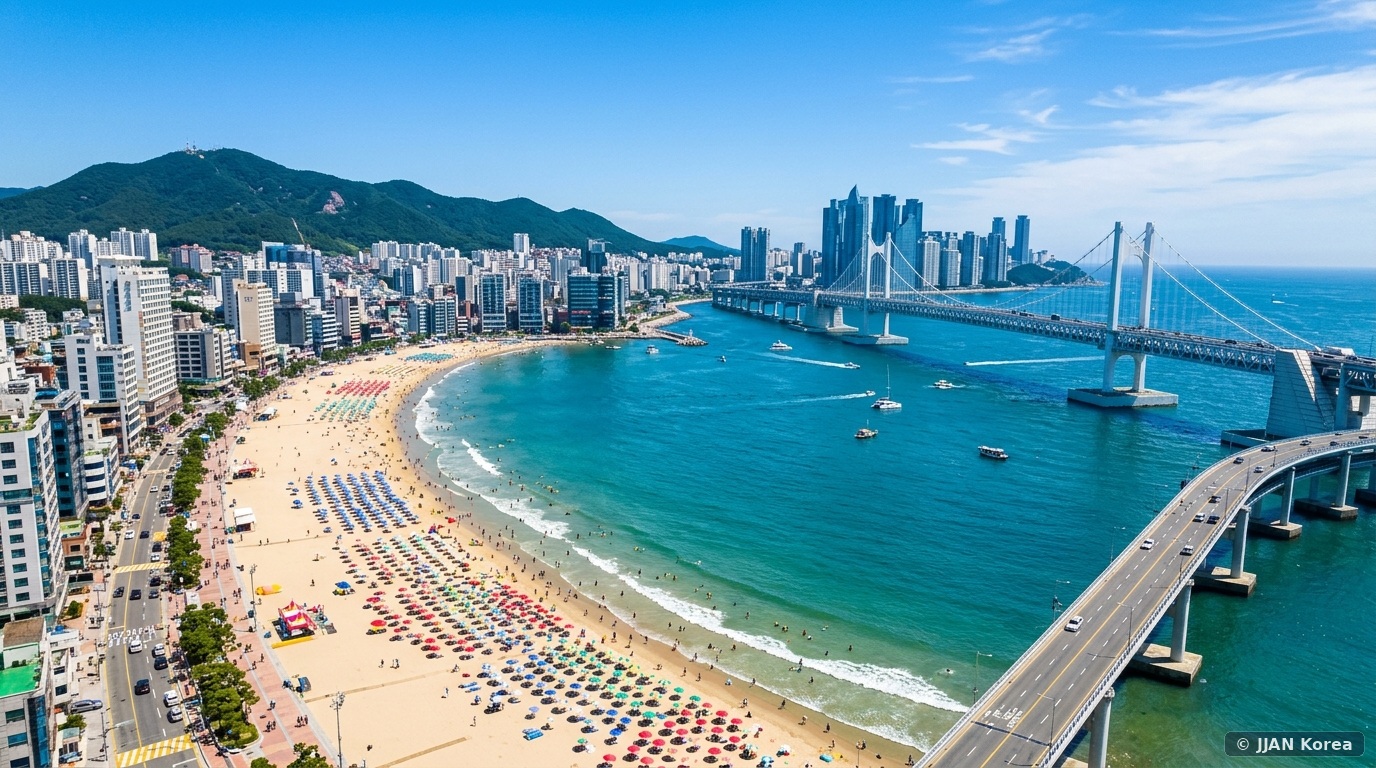
As South Korea’s vibrant second city and maritime capital, Busan (부산) reigns as the ultimate summer destination for international tourists, beach lovers, and domestic vacationers. Armed with miles of sandy coastline, world-class seafood, and dramatic urban skylines rising directly out of the blue ocean waters, the city offers an unparalleled coastal experience. However, travelers planning their Busan itinerary face an inevitable dilemma: Should you base yourself at Haeundae Beach (해운대해수욕장) or Gwangalli Beach (광안리해수욕장)? While both iconic beaches are separated by a mere 15-minute taxi ride, they offer completely contrasting personalities, cultural vibes, swimming environments, and nocturnal entertainment.
1. Head-to-Head Comparison: Haeundae vs. Gwangalli
| Feature / Metric | Haeundae Beach (해운대) | Gwangalli Beach (광안리) |
|---|---|---|
| Primary Atmosphere | Grand, resort-style, upscale hotels, luxury skyline | Youthful, bohemian, artisanal craft beer, indie music |
| Iconic Visual Backdrop | LCT Landmark Tower (101 floors), luxury marine high-rises | Gwangan Diamond Bridge (광안대교) suspension span |
| Ocean Swimming & Waves | Wide sandy beach (1.5km), gentle surf, deep swimming zones | Shallow, protected bay waters, ideal for paddleboarding (SUP) |
| Signature Night Event | Busking performances, Haeundae Traditional Market food crawl | Saturday Night Drone Light Show (Gwangalli M Drone) |
| Dining & Drinking Scene | Upscale hotel buffets, Korean BBQ beef alleys, high-end raw fish | Hip beachfront ocean-view cafes, craft breweries, pocha street food |
| Best For | Families, luxury resort vacationers, ocean swimmers | Couples, solo travelers, nightlife enthusiasts, photographers |
Arriving in Busan is effortless. As covered in our guide on taking high-speed KTX trains from Seoul Station to Busan Station, bullet trains deliver you to downtown Busan in just 2 hours and 15 minutes. From Busan Station, Metro Line 2 or regional taxis quickly connect you to either beach.
2. Haeundae Deep Dive: Parasol Rentals, LCT X the SKY & Blueline Park
Haeundae is South Korea’s most celebrated stretch of sand. During peak summer, the municipal district sets up thousands of colorful parasols in neat rows along the 1.5-kilometer crescent bay:
- Smart Parasol Rental Kiosks: Beach facilities are strictly regulated by the Haeundae District Office to prevent price-gouging. Automated rental kiosks accept credit cards and T-Money: parasols rent for 8,000 KRW, beach mats for 3,000 KRW, and inflatable swim tubes for 8,000 KRW per day.
- Busan X the SKY (LCT Tower): Ascend to the 100th floor of South Korea’s second-tallest skyscraper for panoramic 360-degree vistas of the entire Korean coastline. Features the world’s highest Starbucks lounge on the 99th floor.
- Haeundae Blueline Park: Ride the charming retro Beach Train or colorful aerial Sky Capsules from Mipo Station to Cheongsapo along a converted cliffside coastal railway track overlooking the ocean.
3. Gwangalli Deep Dive: Paddleboarding, Drone Shows & Millak Fish Market
Gwangalli offers a distinct, creative energy anchored by the panoramic view of the 7.4-kilometer Gwangan Bridge stretching across the horizon:
- Saturday Night Gwangalli M Drone Show: Every Saturday evening (08:00 PM and 10:00 PM in summer), hundreds of synchronized LED drones launch into the night sky above the ocean, forming breathtaking 3D animations of dragons, Korean traditional folk icons, and summer marine life against the illuminated bridge backdrop. Admission is completely free along the beach.
- Stand-Up Paddleboarding (SUP): Because Gwangalli is an enclosed natural bay shielded from heavy open swells, it serves as Korea’s premier paddleboarding hub. Rental shacks along the eastern end of the beach offer 2-hour paddleboard rentals and sunset tours for 30,000 to 45,000 KRW.
- Millak Raw Fish Town (Millak Hoe Center): Pick live flounder, rockfish, and sea cucumber from ground-floor seawater aquariums, take your sliced sashimi upstairs to a dining hall with floor-to-ceiling glass windows, and enjoy dinner while gazing at the twinkling bridge lights.
Moving between the two beaches is fast and inexpensive. By utilizing hailing Kakao T taxis between Haeundae and Gwangalli beaches, a 15-minute cab ride across Marine City costs less than 8,000 to 10,000 KRW.
4. Nightlife & Dining Culture: Gunamu-ro vs. Millak Waterfront Park
As darkness falls over Busan, the contrasting personalities of Haeundae and Gwangalli become even more pronounced through their nocturnal entertainment zones:
| District | Primary Dining & Drinking Boulevard | Atmosphere & Crowd Profile | Signature Culinary Offerings |
|---|---|---|---|
| Haeundae | Gunamu-ro Pedestrian Avenue (구남로) & Haeundae Traditional Market | Bustling commercial boulevard filled with acoustic buskers, neon craft beer bistros, and international hotel lounges | Busan Fish Cake skewers (Samjin Eomuk), spicy stir-fried hagfish (Gomjangeo – 꼼장어), Korean fried chicken, and luxury rooftop craft cocktails |
| Gwangalli | Millak-dong Waterfront Promenade (민락수변로) & Millak the Market | Youthful, relaxed, seaside collegiate gathering. Thousands of locals sitting on seawall granite steps overlooking the illuminated bridge | Freshly sliced sashimi platters from Millak Raw Fish Town (민락회타운), craft IPAs from Gorilla Brewing, ocean-view rooftop wine bars |
5. Strategic Accommodation & Transit Logistics
Choosing where to book your hotel or vacation rental depends upon your travel style and daily priorities:
- Stay in Haeundae if: You value premium 5-star international hotel amenities (such as Signiel Busan, Grand Josun, or Paradise Hotel with outdoor oceanfront infinity pools), direct airport limousine bus connectivity, and a quieter, highly polished resort environment.
- Stay in Gwangalli if: You prioritize unbeatable panoramic ocean views directly from your bed (hundreds of boutique officetels and Airbnbs offer floor-to-ceiling glass windows facing Gwangan Bridge), vibrant café hopping, and energetic evening nightlife without needing taxis.
- Transit Between Beaches: Traveling between Haeundae Beach and Gwangalli Beach is fast and inexpensive. A metered taxi ride takes 15 to 20 minutes and costs approximately 7,500 to 10,000 KRW. Alternatively, take Busan Metro Line 2 from Haeundae Station to Gwangan Station (5 stops, 12 minutes, 1,400 KRW).
4. Frequently Asked Questions (FAQ)
Q1: When does official swimming season open at Busan beaches?
Haeundae and Gwangalli beaches officially open partial swimming zones on June 1, with full lifeguard stations, safety buoys, and equipment rental kiosks operating from July 1 through August 31. Swimming is permitted daily between 09:00 AM and 06:00 PM.
Q2: Is alcohol consumption permitted on the sand at night?
Yes, enjoying canned craft beer and fried chicken on the sand at night is a cherished Korean summer pastime. However, municipal bylaws strictly prohibit setting off personal fireworks on the beach (fines up to 100,000 KRW) and littering.
Q3: Which beach has better public subway access?
Haeundae Station (Line 2, Exit 3 or 5) leads directly down Gunam-ro pedestrian avenue to the beach in a flat 5-minute walk. Gwangalli requires an 8- to 10-minute walk from Gwangan Station (Line 2, Exit 3 or 5) through neighborhood shopping streets.
Q4: Where should families with young children stay?
Families generally prefer Haeundae due to its full-service luxury beachfront hotels (Paradise Hotel, Westin Josun, Grand Josun), children’s play clubs, heated outdoor infinity pools, and wider sandy shoreline.
🛡️ JJAN Korea Editorial Standards & Fact-Checking Verification
This article was independently researched, field-tested, and audited by the JJAN Korea Travel & Coastal Desk in Seoul led by Travel Editor Do-jun Kim. Beach municipal rental fee caps, drone show schedules, and transit connections cross-referenced directly with Busan Metropolitan City Tourism Organization and Suyeong-gu District Office directives.
Notice an unlisted drone show schedule change or beach rental tariff update? Help us keep our international community accurately informed: Submit an Editorial Correction to our Seoul Newsroom.