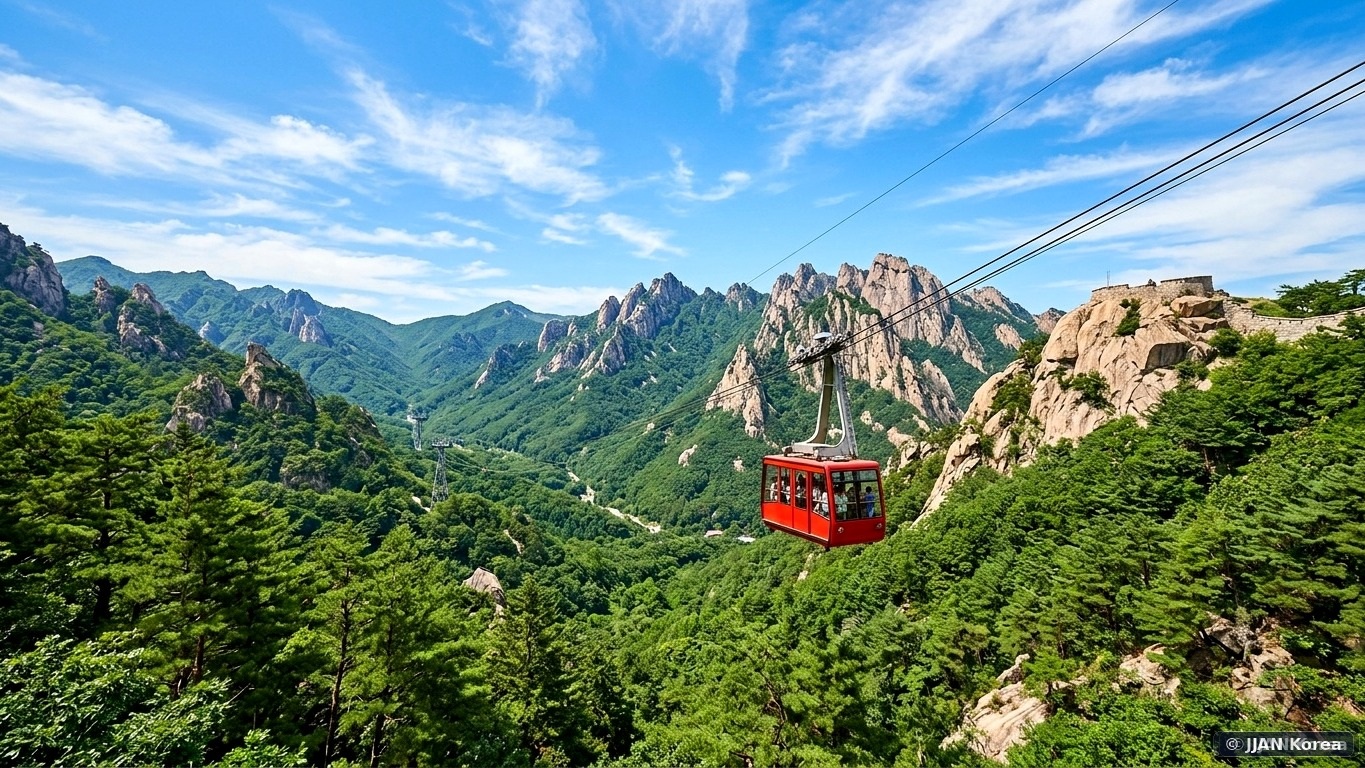
Towering majestically at 1,947 meters (6,388 feet) above sea level at the center of Jeju Island, Mount Hallasan (한라산국제공원) is a dormant shield volcano recognized globally as a UNESCO World Natural Heritage site, a Biosphere Reserve, and South Korea’s tallest mountain peak. Hiking to the dramatic summit crater rim—known as Baengnokdam (백록담 / White Deer Lake)—stands as the definitive bucket-list adventure for outdoor enthusiasts visiting the island. However, to preserve fragile sub-alpine ecosystems and manage trail congestion, the Jeju Special Self-Governing Province enforces a strict, mandatory online trail reservation quota system. Attempting to arrive at summit trailheads without an official digital QR permit will result in immediate park ranger turn-backs. Mastering trail selection, mandatory checkpoints, seasonal cutoff times, and summit certificate claims is vital for a triumphant ascent.
1. The Hallasan Mandatory Trail Reservation System (한라산 탐방예약제)
Of Hallasan’s five designated hiking trails, only two routes ascend all the way to the Baengnokdam summit crater: the Seongpanak Trail (성판악 코스) and the Gwaneumsa Trail (관음사 코스). Entering either summit route requires an official government permit issued via the dedicated portal (visithalla.jeju.go.kr):
| Hiking Trail | Daily Trail Quota | One-Way Distance & Time | Terrain Character & Difficulty |
|---|---|---|---|
| Seongpanak Trail (성판악 코스) | 1,000 Hikers / Day | 9.6 km (approx. 4.5 hours up) | Moderate / Gentle Incline: Wooden boardwalks, crushed basalt rocks, shaded forest trails; ideal for steady ascents |
| Gwaneumsa Trail (관음사 코스) | 500 Hikers / Day | 8.7 km (approx. 5.0 hours up) | Challenging / Steep: Dramatic rocky gorges, suspended footbridges, steep vertical staircases, breathtaking canyon vistas |
Reservation Timeline: Reservation slots open promptly at 09:00 AM on the first business day of the month prior to your hike (e.g., September hiking permits open on August 1st). Weekend slots fill within 15 minutes. Up to four persons can be registered per reservation. The permit is completely free of charge; upon booking, you receive a confirmation text containing a secure QR code that must be scanned at trailhead electronic turnstiles alongside your matching physical passport.
To reach the remote trailheads from Jeju City or Seogwipo without costly rental car parking issues, consult our regional transit guide on taking public transit and express buses to Hallasan trailheads, highlighting specialized mountain bus lines 181, 182, and 281.
While casual city walks like comparing casual Seoul mountain hikes with the 8-hour Hallasan trek can be completed in sneakers, conquering Hallasan demands serious trekking boots and endurance preparation.
2. Strict Checkpoint Cutoff Times: The Jindallaebat Rule
For hiker safety and to ensure all visitors descend prior to pitch-black sunset, park authorities enforce rigid, non-negotiable intermediate checkpoint cutoff times (통제 시간):
- Seongpanak Intermediate Checkpoint (Jindallaebat Shelter / 진달래밭 대피소): You must physically pass this shelter located at the 7.3km mark by 13:00 PM in summer (12:30 PM in spring/autumn; 12:00 PM in winter). If you arrive at 13:01 PM, rangers lock the summit gate and force you to descend.
- Gwaneumsa Intermediate Checkpoint (Samgakbong Shelter / 삼각봉 대피소): You must reach and clear the Samgakbong Shelter gate by 13:00 PM during summer months.
- Baengnokdam Summit Departure: All hikers must vacate the crater summit area by 14:30 PM in summer (14:00 PM in autumn; 13:30 PM in winter), beginning their descent immediately as rangers sweep the mountain.
3. The Ideal Traverse Strategy: Up Seongpanak, Down Gwaneumsa
Veteran Korean alpinists universally recommend the “Traverse Strategy” to experience the optimal balance of physical endurance and breathtaking panoramic scenery:
- Ascent via Seongpanak (06:30 AM to 11:30 AM): Begin at sunrise. The gentle, gradual gradient through temperate broadleaf forests saves knee joints and allows you to establish a steady cardiovascular rhythm without early muscular fatigue.
- Summit at Baengnokdam (11:30 AM to 12:30 PM): Admire the ancient volcanic crater lake, photograph the iconic wooden summit marker stone (1,947m), and enjoy a packed lunch of gimbap and energy bars.
- Descent via Gwaneumsa (12:30 PM to 17:00 PM): Descending through the Tamna Gorge (탐라계곡) presents the most dramatic scenery on Jeju Island: soaring basalt rock cliffs, suspension bridges crossing roaring canyon streams, and panoramic vistas stretching out to the northern East China Sea. (Note: Wear sturdy trekking poles to cushion high-impact stair descents).
4. Claiming Your Official Government Summit Certificate
Hikers who successfully reach the summit can commemorate their achievement with an official printed Hallasan Summit Certificate (한라산 등정인증서) issued by the Jeju provincial government:
- Step 1: Summit Photo with GPS Metadata: When standing at the Baengnokdam crater summit, take a clear photo of yourself with the wooden summit monument. Ensure your smartphone camera’s “Location / GPS Tags” setting is enabled so geotag coordinates are embedded in the image file.
- Step 2: Upload to Certification Portal: Open the Hallasan National Park mobile website (cert.hallasan.go.kr), tap ‘등정인증서 신청’ (Apply for Certificate), and upload your summit photo while still on the mountain or immediately upon descent. The system verifies that the photo was captured within 1 kilometer of the summit coordinates on the same date.
- Step 3: Collect Printed Certificate at Trailhead: Upon reaching the exit gate at Seongpanak or Gwaneumsa, scan your approval barcode at the automated kiosk. Pay the nominal 1,000 KRW fee (credit card accepted) to receive a heavy, gold-embossed paper certificate verifying your summit accomplishment.
4. Four Seasons Gear Guide: Winter Crampons vs. Summer Hydration
Mount Hallasan’s elevation of nearly 2,000 meters creates extreme microclimatic shifts between the coastal sea level and the sub-alpine summit crater. Packing the correct technical gear tailored to the season is essential for preventing hypothermia or heat exhaustion:
| Season | Summit Temperature Range | Mandatory Technical Equipment Required | Safety Hazards to Anticipate |
|---|---|---|---|
| Summer (July – August) | 14°C to 22°C (Humid, sudden cloudbursts) | 3 Liters water, electrolyte tablets, lightweight packable waterproof rain jacket, wide-brim UV hat, insect repellent | Severe heat dehydration on exposed crater rim; sudden violent torrential downpours that saturate boots |
| Winter (December – February) | -15°C to -5°C (Extreme sub-zero gale winds) | Heavy-duty steel ice spikes (아이젠 / Crampons), snow gaiters (스패츠), thermal insulated down parka, balaclava, windproof goggles | Rangers strictly bar hikers without crampons from entering trails; deep snowdrifts exceeding 1 meter |
| Spring & Autumn (April – June / Sept – Nov) | 4°C to 16°C (Rapid weather transitions) | Moisture-wicking base layers, breathable fleece jacket, adjustable trekking poles with rubber tips | Freezing morning temperatures at trailhead warming to sunny midday heat; heavy afternoon sea fog |
5. Emergency Rescue Infrastructure: GPS Poles & Helipads
Along every 500 meters of both the Seongpanak and Gwaneumsa trails, park authorities have installed brightly painted yellow-and-red Emergency Location Marker Posts (산악위치표지판). Each marker displays a unique alphanumeric coordinate code (e.g., Hallasan 01-14). If you or a companion experience severe exhaustion, sprained ligaments, or cardiovascular distress, immediately dial 119 and read the exact marker code. Emergency medical teams maintain staffed rescue bases at Jindallaebat and Samgakbong shelters, capable of dispatching Jeju Fire Department rescue helicopters directly to designated summit helipads within 15 minutes.
5. Frequently Asked Questions (FAQ)
Q1: Are there water refilling stations or food vendors along the trail?
A: No. There are zero commercial stores, vending machines, or restaurants once you pass the trailhead ticket offices. You must pack at least two to three liters of drinking water per person, electrolytes, and high-protein trail food (gimbap, nuts, energy gels) in your daypack.
Q2: What happens if rain is forecast on my booked hiking date?
A: Hallasan National Park closes trails automatically if heavy rain advisories (호우경보), high wind warnings, or typhoon watches are declared. Check the official park website status banner by 05:00 AM on your hike day for real-time trail opening updates.
Q3: Can I hike Hallasan in standard running sneakers?
A: While technically permitted, it is strongly discouraged. The terrain consists of thousands of uneven, sharp basalt volcanic rocks that will bruise thin sneaker soles and cause severe ankle rollover injuries. Ankle-high waterproof hiking boots with rigid Vibram soles are strongly advised.
Q4: Do the shorter Hallasan trails (Yeongsil and Eorimok) require reservations?
A: No. The Yeongsil (영실) and Eorimok (어리목) trails ascend only to the Witseoreum Shelter plateau (1,700m) and do not connect to the Baengnokdam summit crater. These shorter, highly scenic routes do not require reservations and can be hiked spontaneously without prior booking.
6. Post-Hike Recovery: Jeju Black Pork BBQ & Trailhead Pajeon
Descending 1,947 vertical meters drains thousands of calories and exhausts thigh quadriceps. The traditional climax of any Hallasan expedition is indulging in restorative local gastronomy immediately upon descending:
- Trailhead Pajeon & Hallasan Soju: At the rustic wooden rest stops located directly across from the Seongpanak parking lot, order a plate of piping hot Haemul Pajeon (seafood scallion pancake) and a chilled bowl of Jeju Makgeolli brewed with local volcanic bedrock aquifer water. The hot starch and natural electrolytes provide immediate physical revival.
- Jeju Black Pork (Heukdwaeji – 흑돼지): In the evening, head into downtown Jeju City (Black Pork Street / 흑돼지거리) or Seogwipo. Feast on thick slabs of charcoal-grilled native black pork belly and neck collar, dipped into bubbling stone bowls of Meljeot (멸젓 / fermented salted anchovy sauce simmered with raw garlic and green chilis over the charcoal briquette). The succulent collagen and natural salt balance depleted electrolytes after an 8-hour mountain trek.
JJAN Korea Editorial Standards & Fact-Checking Verification
Lead Author: Do-jun Kim, Senior Travel Editor (National Parks & Regional Rail Desk)
Trail quota regulations, seasonal checkpoint cutoffs, and digital certificate verification criteria corroborated with official 2026 Jeju Special Self-Governing Province Hallasan National Park Management Office (한라산국립공원관리소) directives.