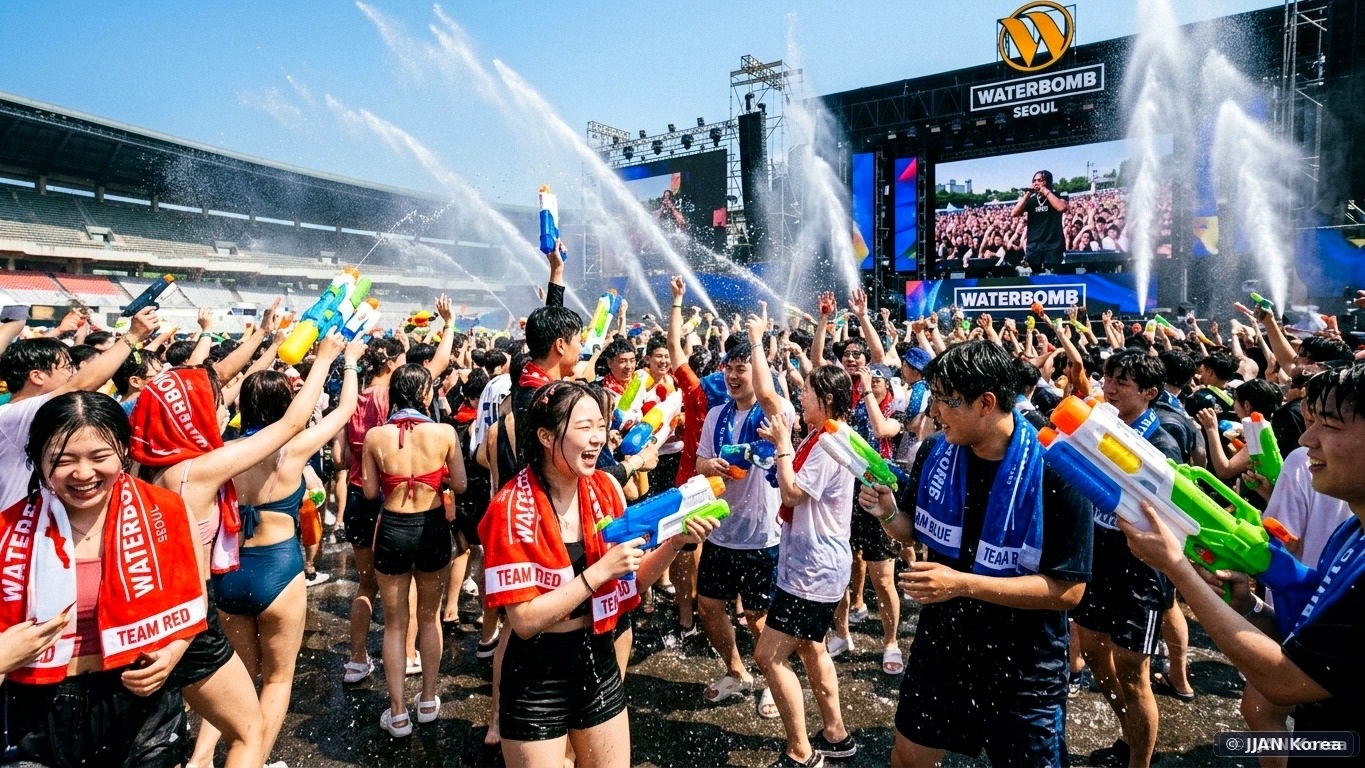
When summer temperatures in the Seoul metropolitan area exceed 33 degrees Celsius and oppressive humidity blankets the concrete avenues, locals and savvy expatriates escape northeast toward the forested mountain valleys and sparkling freshwater reservoirs of Gapyeong (가평군) in Gyeonggi-do province. Situated along the expansive Bukhangang River basin and Cheongpyeong Lake, Gapyeong is universally celebrated as South Korea’s capital of freshwater recreation, commonly referred to as Susang Lejeo (수상레저 / water leisure sports). From giant floating inflatable obstacle courses and human-catapulting “Blob Jumps” to wakeboarding, flyfishing, banana boats, and traditional riverside pork belly pensions, a summer weekend in Gapyeong offers an electrifying adrenaline release just an hour away from central Seoul. Organizing transportation via high-speed rail, securing unlimited ride wristbands, and coordinating pick-up services with lakeside pensions requires practical logistical planning.
1. Getting to Gapyeong: The ITX-Cheongchun Express Train & Subway
Unlike distant coastal beaches that require three to four hours of highway congestion, Gapyeong is exceptionally accessible through Korail’s dedicated commuter rail network. Visitors have two primary railway routes departing from central Seoul:
| Transit Method | Seoul Boarding Station | Travel Duration | One-Way Fare (KRW) | Seating & Luggage Comfort |
|---|---|---|---|---|
| ITX-Cheongchun Express (ITX-청춘) | Yongsan (용산) or Cheongnyangni (청량리) | 40 to 55 Minutes | 5,900 – 6,900 KRW | Highest: Reserved numbered seats, double-decker cars, luggage overhead racks |
| Gyeongchun Line Standard Subway (경춘선) | Sangbong Station (상봉역 Line 7 transfer) | 1 Hour 15 Minutes | 2,350 KRW | Standard commuter subway; standing during peak weekend mornings |
| Express Bus (Dong Seoul Bus Terminal) | Gangbyeon Station (강변역 Line 2) | 1 Hour 20 Minutes (traffic variable) | 7,200 KRW | Highway coach; subject to severe weekend traffic jams on Olympic Highway |
For visitors traveling with weekend luggage, booking the double-decker ITX-Cheongchun train is strongly recommended. As detailed in our step-by-step tutorial on booking ITX-Cheongchun tickets departing from Yongsan and Cheongnyangni, weekend morning tickets open exactly one month in advance at 07:00 AM on the Korail Talk smartphone app and sell out within minutes during July and August. If ITX seats are completely booked, standing room (입석) or unreserved floor seats are available at station automated kiosks.
While thrill-seekers seeking high-altitude aerial views often choose alpine mountain sports like comparing Gapyeong water adventures with Danyang valley paragliding, Gapyeong remains unmatched for dynamic water attractions, splash zones, and group aquatic team-building.
2. Floating Water Parks (Bba-ji) & Package Wristbands
In Korean colloquial culture, lakeside water sports barges are universally known as Bbaji (빠지), an onomatopoeic slang term derived from the sound of someone splashing into water (“ppaji-da”) and the flat barge docks permanently anchored along the riverbank. Dozens of commercial water facilities dot the Bukhangang coastline, such as Club Vivaldi, Camptong Island, and Gapyeong Top Land.
Rather than paying for individual tow-boat rides, virtually all foreign and domestic visitors purchase Unlimited Time Passes (무제한 이용권) or Big-3 / Big-5 Packages:
- Inflatable Aqua Park Obstacle Course (워터파크): Giant floating bouncy castles featuring balancing beams, ninja climbing walls, slippery ramps, and multi-tier launch slides. All day access is generally included with standard entrance wristbands (approx. 15,000 to 25,000 KRW).
- The Blob Jump (블롭점프): A massive air-filled rubber cushion sitting on the water. One participant sits on the edge while two staff members jump from a high tower onto the opposite end, catapulting the seated participant five to eight meters into the air before splashing down.
- Motorboat Towables (놀이기구): High-speed speedboats pulling high-octane inflatables across the waves, including Disco Pang Pang donuts, Flyfish wings (which lift completely airborne at 50 km/h), Viper tubes, and traditional multi-rider Banana Boats.
- Wakeboarding & Waterskiing Lessons: Beginner packages usually include 15 minutes of dry-dock theoretical training on a balance bar, followed by two separate on-water boat pull sessions with an instructor holding the guide boom (approx. 50,000 to 70,000 KRW).
3. Riverside Pensions & Korean Barbecue Culture
A quintessential Gapyeong weekend is incomplete without staying overnight in a traditional Korean holiday rental home known as a Pension (펜션). Gapyeong hosts the densest concentration of design-forward pensions in the nation, ranging from rustic log cabins with private cedar hot tubs to ultra-modern glass villas with infinity pools overlooking Cheongpyeong Lake.
The centerpiece of pension culture is the evening charcoal barbecue. Almost every pension charges a modest charcoal and grill fee (숯+그릴 비용), usually 20,000 to 30,000 KRW for a group of four. Before arriving at your accommodation, take a taxi or shuttle to the massive Hanaro Mart (하나로마트 가평점) located directly adjacent to Gapyeong Station. Here, you can purchase vacuum-sealed packs of fresh thick-cut pork belly (삼겹살), pork neck (목살), sweet sweet potatoes, fresh garlic, leafy ssam vegetables, ssamjang dipping paste, and chilled soju bottles.
Crucially, many large water sports centers and Hanaro Mart offer Pension Mart Shuttles: if your group purchases a minimum threshold of groceries (typically 20,000 KRW per person) at designated mart branches, the supermarket will provide a free private van drop-off directly to your pension doorstep, saving you costly rural taxi fares.
4. Essential Packing & Safety Compliance Checklist
Water safety authorities in Gyeonggi-do strictly enforce safety equipment mandates at all Bukhangang commercial barges. Ensure your weekend gear adheres to the following checklist:
- Aqua Shoes with Rubber Soles: Standard flip-flops and bare feet are strictly prohibited on floating obstacle docks to prevent slipping and stepping on sharp barge hardware. You must wear skin-tight water shoes (아쿠아슈즈) or aqua socks with anti-slip rubber treads.
- Headgear & Certified Life Vests: Life jackets (구명조끼) must remain fastened around your chest at all times while on the water. When riding high-speed towables or attempting the Blob Jump, wearing a hard foam water safety helmet (헤드기어) with chin strap is mandatory.
- Waterproof Phone Pouch: Cheongpyeong Lake reaches depths of 10 to 20 meters. If an unprotected smartphone drops into the muddy riverbed, recovery is virtually impossible. Invest in a certified IPX8 dual-latch floating lanyard case.
- Quick-Dry Rashguard: Prolonged sun exposure while wet will result in severe sunburn. Long-sleeve UV-blocking rashguards and swim leggings are preferred over traditional bikinis or trunks to prevent friction burns on inflatable vinyl surfaces.
- Cash or Domestic Transfer App: While front-desk ticket kiosks accept foreign credit cards, locker rentals (typically 3,000 to 5,000 KRW) and towel deposits frequently demand cash or local bank transfers.
4. The Definitive 2-Day Gapyeong Summer Itinerary & Budget Matrix
Maximize your weekend excursion with this optimized 48-hour schedule coordinating train transfers, water barge passes, and pension check-ins:
- Saturday 08:30 AM: Board the ITX-Cheongchun train at Yongsan Station, admiring scenic Bukhangang river bends from the second-story observation carriage.
- Saturday 09:30 AM: Arrive at Gapyeong Station. Deposit heavy weekend backpacks with your chosen water leisure club’s complimentary station pick-up van.
- Saturday 10:00 AM to 14:30 PM: Enter the water barge arena. Secure your unlimited towable pass wristband, conquer the giant inflatable floating obstacle course, and launch friends into the sky on the Blob Jump. Recharge with cup ramen and Korean fish cake skewers from the barge snack bar.
- Saturday 15:30 PM: Board the Hanaro Mart shuttle adjacent to the station. Purchase thick-cut pork belly, garlic cloves, kimchi, and charcoal fuel before taking the free grocery van drop-off to your pension.
- Saturday 18:00 PM: Ignite the outdoor charcoal grill for an authentic pension terrace barbecue feast overlooking the forested mountains.
- Sunday 10:30 AM: Check out of the pension. Take a short taxi ride to the scenic French cultural village of Petite France or the tranquil pine gardens of the Garden of Morning Calm before boarding an afternoon train back to Seoul.
5. Frequently Asked Questions (FAQ)
Q1: Do I need to know how to swim to participate in Gapyeong water sports?
A: No. Wearing an officially certified high-buoyancy life vest is strictly mandatory for all activities, including the floating aqua park obstacle course and towable rides. Even if you fall into deep water, the vest immediately surfaces your head. Dedicated lifeguards with rescue poles patrol all active docks.
Q2: How do I travel between Gapyeong Station and the water leisure barges?
A: Taxis wait in a long queue directly outside Gapyeong Station Exit 1. A taxi ride to central Bukhangang barges costs roughly 8,000 to 15,000 KRW. Furthermore, major water clubs offer free scheduled pick-up vans between the station and their private docks if arranged through their website or phone reservation.
Q3: What happens if it rains during my booked water sports weekend?
A: Most water sports barges operate normally in moderate rain, as participants are already fully submerged and wet. However, in the event of violent torrential downpours, localized flash flood advisories, or lightning storms, safety officials suspend motorized boat towing until river conditions stabilize.
Q4: Can foreign visitors rent water sports passes on-site without prior reservations?
A: Yes. While booking ahead through platforms like Naver, Trazy, or Klook secures group discounts of 20% to 40%, you can purchase day passes directly at the entrance ticket booths upon walk-in arrival.
JJAN Korea Editorial Standards & Fact-Checking Verification
Lead Author: Do-jun Kim, Senior Travel Editor (Travel & Guide Desk)
This comprehensive guide was fact-checked against official 2026 Gyeonggi-do Water Tourism Safety Regulations and Korail ITX-Cheongchun scheduling directives. Fare schedules, locker policies, and safety equipment standards are updated regularly to ensure absolute accuracy for international residents and vacationers.