
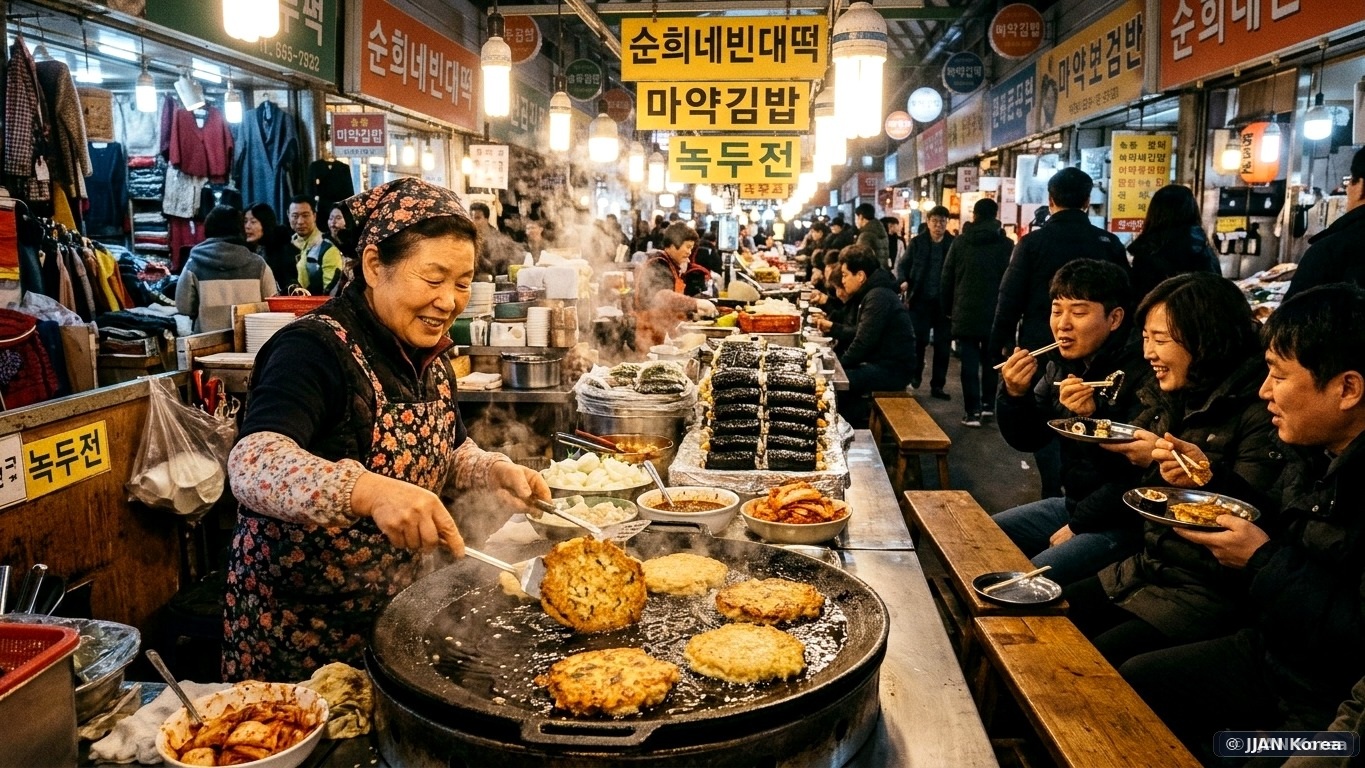
Whenever dark monsoon clouds gather over the Seoul skyline and raindrops begin to patter against window panes, an astonishing, nationwide gastronomic phenomenon unfolds across South Korea. Within minutes, office workers, university students, and retirees exchange identical text messages: “Bido oneunde, oneul bame pajeone makgeolli eottae?” (비도 오는데, 오늘 밤에 파전에 막걸리 어때? / ‘It’s raining outside, how about pajeon and makgeolli tonight?’). By 18:30 PM, traditional pancake taverns (Minsokjujom – 민속주점) and specialized jeon alleys across the capital are packed with joyous patrons sharing sizzling iron platters of crispy scallion pancakes and pouring bowls of cloudy, effervescent rice wine. Exploring the psychological science, agricultural heritage, and historic dining alleys behind this beloved folk custom offers an enchanting window into Korean communal life.
1. The Sizzle of Rain: Sound Waves, Blood Sugar & Agricultural Roots
Cultural sociologists and food scientists attribute South Korea’s rainy day pancake obsession to three complementary dimensions of sensory psychology and agricultural history:
| Causal Dimension | Scientific / Cultural Mechanism | Behavioral Outcome |
|---|---|---|
| Acoustic Parallels (빗소리와 전부치는 소리) | The sound frequency of heavy rain hitting concrete matches the exact acoustic decibel spectrum (around 200 Hz to 2 kHz) of oil sizzling when frying wheat batter on cast iron | Hearing falling raindrops naturally triggers auditory sensory memories of sizzling pancakes |
| Serotonin & Blood Sugar Chemistry | Rainy overcast skies reduce sunlight exposure, lowering serotonin and causing mild lethargy and lowered blood sugar | Carbohydrate-rich wheat flour and sweet, fermented amino-acid rich rice wine provide immediate metabolic uplift |
| Agrarian Labor Heritage | Centuries ago, Joseon dynasty farmers could not work in saturated rice paddies on rainy days | Communities gathered in village huts, mixing leftover wild scallions, flour, and fermenting homebrew rice wine |
For visitors exploring heritage market food culture, compare traditional pajeon with the legendary giant mung bean pancakes featured in our culinary guide on tasting freshly fried giant bindaetteok mung bean pancakes in central Seoul.
To master the delicate art of holding your bowl with both hands and avoiding bad luck when toasting, consult our drinking customs directory on drinking makgeolli from traditional brass bowls and pouring etiquette.
2. Seoul’s Sacred Pancake Alleys: Hoegi vs. Gongdeok
While virtually every neighborhood features cozy pancake taverns, two historic specialized food alleys stand as sacred pilgrimage sites on rainy evenings:
- Hoegi Station Pajeon Alley (회기역 파전골목): Located near Kyung Hee University on Subway Line 1 (Exit 1). Operating for over 50 years, taverns like Imo-ne Wang Pajeon (이모네왕파전) specialize in Donkkaseu-style Pajeon—enormous, two-inch-thick crispy seafood pancakes loaded with whole green scallions, squid tentacles, and shrimp, deep-fried until crunchy as a croquette (approx. 12,000 to 16,000 KRW for a giant set).
- Gongdeok-dong Jeon Alley (공덕동 전골목): Situated near Gongdeok Station (Lines 5/6/AREX). Massive open-air market stalls display over 50 varieties of individual pan-fried delights: stuffed chili peppers (Gochu-jeon), perilla leaf pork wraps (Kkaennip-jeon), skewered crab meat and ham (Sanjeok), and lotus root rounds. Grab a plastic basket, select your favorite pieces with tongs, and hand them to staff to be re-crisped on the iron grill.
3. The Makgeolli Flavor Spectrum: From Classic to Artisan Drafts
South Korea’s unfiltered rice wine (Takju / Makgeolli – 막걸리) ranges from everyday carbonated convenience store classics (like Seoul Jangsu and Kooksoondang) to luxurious, unpasteurized artisan regional vintages brewed without artificial aspartame sweeteners: Boksoondoga (복순도가) featuring naturally fizzy champagne-like carbonation, Haechang (해창) delivering velvety 9% and 12% rich glutinous rice textures, and regional chestnut (Bam Makgeolli) and honey makgeolli carafes.
4. The Home Chef Secret: How to Make Ultra-Crispy Pajeon
If you prefer to enjoy rainy day dining in the comfort of your apartment, Korean grandmothers utilize two scientific kitchen secrets to achieve that coveted restaurant-grade shattering crunch:
- Ice-Cold Sparkling Water (탄산수): Instead of plain tap water, mix your Korean pancake flour mix (Buchimgaru – 부침가루) with sub-zero, ice-cold carbonated water. The cold temperature slows gluten development (preventing gummy chewiness), while the releasing carbon dioxide bubbles create micro-air pockets in the batter that fry up into crisp, fragile bubbles.
- High-Heat Shallow Frying: Authentic pajeon is not delicately sauteed; it is shallow-fried in generous amounts of vegetable oil seasoned with a dash of fragrant toasted sesame oil over high cast-iron heat, creating an evenly blistered, golden crust.
4. Frequently Asked Questions (FAQ)
Q1: Why is makgeolli served in shallow brass or aluminum bowls rather than wine glasses?
A: Because unfiltered rice wine contains heavy rice sediment (Jigemi – 지게미) that naturally separates from the clear liquid, swirling your drink in a wide brass bowl keeps the natural ferment in suspension while providing a satisfying metallic clink when toasting.
Q2: What is the proper dipping sauce for pajeon?
A: Authentic pancake houses serve a dedicated dipping sauce made from soy sauce, vinegar, toasted sesame seeds, and raw diced onions and cheongyang green chilis (Yangpa Jang-ajji). Placing a pickled raw onion cube on a slice of hot fried pancake cuts the oiliness perfectly.
Q3: How do you open a bottle of unpasteurized (Saeng) makgeolli without it exploding?
A: Unpasteurized live-culture makgeolli contains active fermenting yeasts creating high carbon dioxide pressure. Slowly loosen the cap slightly to hear the hiss of escaping gas, re-tighten the cap, gently invert the bottle twice to mix the white sediment, and repeat the venting process two or three times before fully opening.
Q4: Do pancake houses get completely booked out on rainy evenings?
A: Yes. On rainy summer afternoons, lines outside famous Hoegi and Gongdeok jeon houses begin forming by 17:30 PM. Arrive early or prepare for a 20 to 40 minute wait under an umbrella.
5. The Regional Jeon Spectrum: Bindaetteok, Gamjajeon & Kimchijeon
While seafood scallion pancakes dominate Seoul dining conversations, South Korea’s regional pancake heritage offers extraordinary culinary diversity:
- Nokdu Bindaetteok (녹두 빈대떡 / Mung Bean Pancakes): Originating in Pyeongan-do province. Dried yellow mung beans are soaked in water and ground on stone millstones into a thick, nutty paste, mixed with chopped pork, gosari (bracken fern), and bean sprouts, then shallow-fried in bubbling hot lard until crunchy as golden hashbrowns.
- Gangwon-do Gamjajeon (감자전 / Pure Potato Pancake): Crafted by grating fresh mountain potatoes, squeezing out the liquid, and letting the pure potato starch settle. Mixed with nothing more than a pinch of salt and pan-fried into a chewy, translucent pancake celebrating sweet, pure potato earthiness.
- Crispy Kimchijeon (김치전): The ultimate pantry staple. Crafted from well-aged fermented sour kimchi (Mugeonji – 묵은지), squid rings, and spicy kimchi brine stirred into wheat flour, delivering an addictive sweet, sour, and fiery crunch.
6. Regional Makgeolli Terroir: Pine Nut, Hallabong & Chestnut
Just as French wine celebrates regional terroir, Korean craft rice wines highlight regional agricultural bounties: taste Gapyeong Jat Makgeolli (가평 잣막걸리) infused with fragrant mountain pine nuts; Gongju Bam Makgeolli (공주 알밤막걸리) bursting with sweet roasted chestnut aromatics; and Jeju Hallabong Makgeolli infusing vibrant citrus sweetness that complements spicy, oily fried pancakes.
7. The Yellow Brass Kettle Ritual & Folk Toasting Customs
At authentic rustic pancake houses, makgeolli is not served in modern glass pitchers; it arrives in a dented, golden yellow aluminum or brass kettle known as a Jujeonja (양은 주전자). Pouring from the curved spout aerates the rice wine, enriching its natural effervescence. When toasting, gently tap the rims of your shallow brass bowls together while saying: “JJAN!” (짠!). Keep your bowl slightly lower than the bowl of older colleagues or elders as a universal Korean sign of mutual respect.
8. Storage Chemistry & Proper Makgeolli Glassware Etiquette
Unlike distilled soju which maintains an indefinite shelf life, traditional unpasteurized (Saeng – 생) makgeolli is a living biological beverage teeming with billions of beneficial lactic acid probiotics and active wild yeasts. Bottles must be stored strictly upright in refrigerators below 4°C to prevent pressurized gas leaks and consume within 14 to 30 days of bottling. Savoring this fresh, living effervescence from chilled shallow brass bowls alongside sizzling scallion pancakes embodies the enduring gastronomic warmth of Korean culture.
Historical Joseon Dynasty Literary Heritage: Classical Korean poetry and Joseon dynasty folk paintings (Pungsokhwa) by artists like Kim Hong-do frequently depict villagers gathered under thatched tavern eaves on rainy afternoons sharing ceramic flagons of cloudy rice wine and crispy pan-fried pancakes, establishing a centuries-old culinary lineage that endures in modern Seoul.
Proper Storage and Chilling Temperatures: To enjoy makgeolli at its absolute peak, chill the bottle to between 4°C and 6°C for at least three hours before serving. Swirling the chilled wine in shallow brass bowls delivers an exhilarating effervescence that balances hot, savory vegetable pancakes.
Nutritional Balance: The Health Synergy of Jeon and Makgeolli: Nutritionists at the Korean Food Research Institute highlight the remarkable complementary dietary profile of this rainy day feast. While fried scallion pancakes deliver essential dietary fiber, allicin from fresh green onions, and lean protein from squid and baby clams, unpasteurized makgeolli supplies essential amino acids, vitamin B complex, and live active probiotics (over 100 million CFU per milliliter) that stimulate digestive metabolism.
Seasonal Vegetable Variations: Throughout the harvest year, traditional Korean taverns alternate their pancake ingredients, incorporating fresh chives (Buchu-jeon) in the spring, zucchini rounds (Hobak-jeon) in early summer, and wild mushrooms in the autumn to celebrate the changing Korean seasonal cycle.
JJAN Korea Editorial Standards & Fact-Checking Verification
Lead Author: Dong-hwan Kim, Senior Columnist (Culture & Living Desk)
Gastronomic heritage records, acoustic research findings, and traditional brewing standards verified in consultation with the National Institute of Agricultural Sciences (국립농업과학원) and Korean Traditional Liquor Association.