
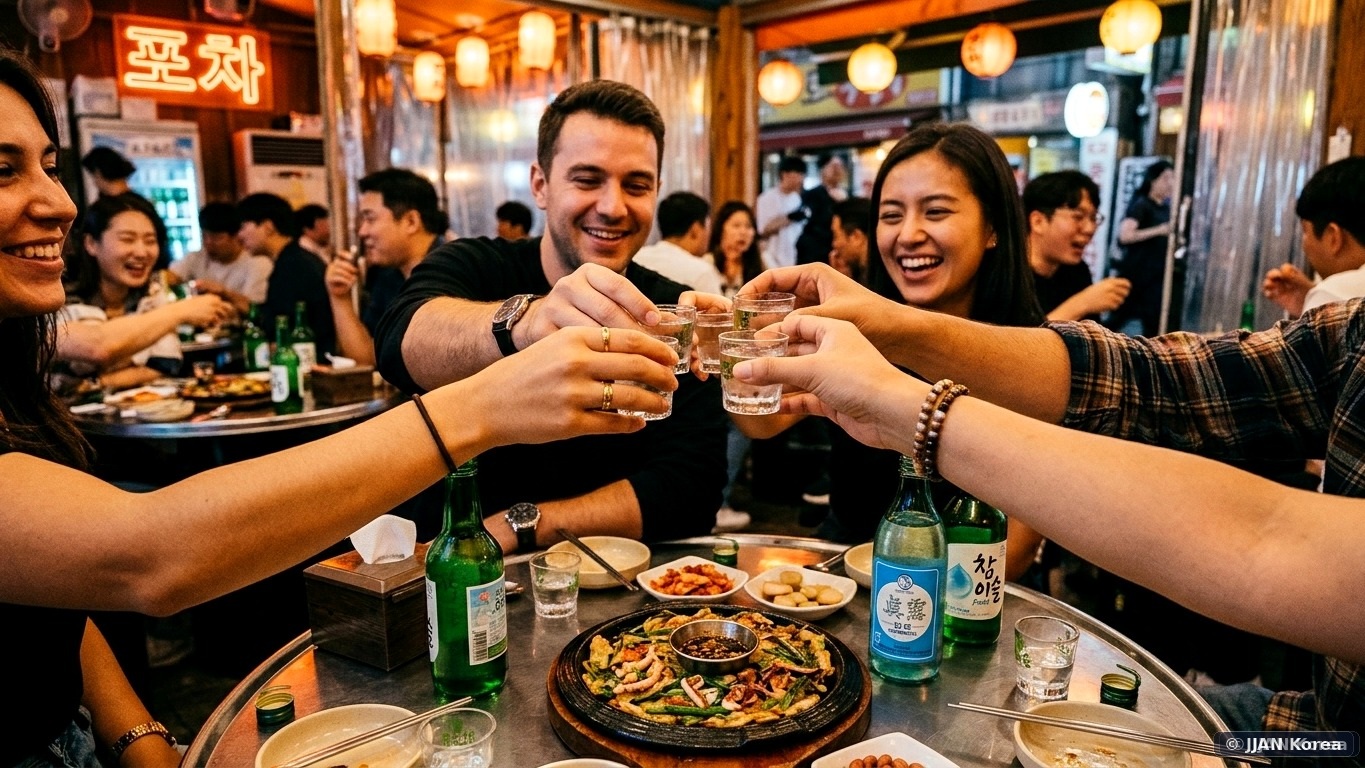
As midnight cloaks the neon-lit alleyways of central Seoul, a distinctly nostalgic nocturnal energy emerges. Beneath heavy, glowing orange waterproof tarpaulin curtains and amidst clouds of fragrant garlic smoke, the clinking of tiny green glass soju cups and hearty laughter spill onto the pavement. This is the realm of the authentic Pojangmacha (포장마차 / Pocha)—South Korea’s legendary street tent taverns. Immortalized in countless romantic and gritty K-dramas where heartbroken protagonists pour out their souls over bowls of steaming noodles, these nomadic open-air eateries represent one of the most raw, egalitarian, and intoxicating social rituals in Korean culture. For foreign travelers and expatriates, ducking beneath the plastic flap into the warm, bustling interior offers an unforgettable glimpse into authentic Korean nighttime gastronomy.
1. Anatomy of the Tent Bar: Red Plastic Chairs, Gas Burners & The “Imo”
A true traditional pojangmacha (literally “covered cart”) is an ingenious, mobile micro-restaurant erected on wheels every evening and dismantled before dawn. The layout is wonderfully stripped-down: circular folding metal tables surrounded by iconic red and blue plastic stools, portable butane gas stoves, and an open stainless-steel griddle where an industrious maternal matriarch—affectionately addressed as Imo (이모 / Auntie)—wields heavy metal spatulas with breathtaking speed.
| Signature Pocha Dish | Korean Hangul Script | Ingredients & Cooking Method | Alcohol Pairing Recommendation |
|---|---|---|---|
| Stir-Fried Spicy Cartilage (Odeul-ppyeo) | 오돌뼈 | Minced pork soft bone wok-tossed in fiery gochujang and roasted garlic | Chilled Chamisul or Jinro Soju |
| Stir-Fried Gizzards (Ddongjip) | 닭똥집 | Crispy chicken gizzards sautéed with whole garlic cloves, salt, and sesame oil | Classic Korean draft lager (Cass / Terra) |
| Spicy Webfoot Baby Octopus (Jukkumi) | 쭈꾸미볶음 | Baby octopus flash-seared over scorching griddles with scallions and sesame seeds | Sparkling Makgeolli (Rice wine) |
| Giant Rolled Egg Omelette (Gyeran-mari) | 계란말이 | Foot-long multi-layered egg roll stuffed with diced carrots and scallions, drizzled in ketchup | Universal palate cleanser for fiery dishes |
| Comforting Street Udon (Garak Guksu / Udon) | 가락국수 / 포차우동 | Wheat noodles served in hot dried-anchovy broth with fried tempura flakes and seaweed | The ultimate late-night sober-up finale |
While ordering food is paramount, internalizing Korean drinking customs elevates your evening. By mastering soju pouring etiquette and drinking cheers (JJAN!) with locals, you ensure that you pour drinks using two hands, turn your head slightly away when drinking with elders, and clink glasses with enthusiastic cries of “Jjan!”.
2. Seoul’s Premier Pojangmacha Streets: Jongno 3-ga, Euljiro & Yeongdeungpo
While modern brick-and-mortar indoor bar chains brand themselves as “Indoor Pocha” (Silnae Pocha), experiencing authentic outdoor street tents requires visiting Seoul’s designated heritage street clusters:
- Jongno 3-ga Pocha Street (Subway Lines 1, 3, and 5): Seoul’s undisputed crown jewel of outdoor tent culture. Stretches from Exit 3 through Exit 6 of Jongno 3-ga Station. As darkness falls, dozens of glowing orange tents line both sides of the narrow street, packed shoulder-to-shoulder with twenty-something trendsetters, vintage film buffs, and international travelers enjoying an electrifying, buzzy atmosphere.
- Euljiro “Nogari Alley” (Subway Line 2 and 3, Euljiro 3-ga Station): Famed for thousands of outdoor plastic tables set up directly on the paved industrial alleyways amidst metal fabricator workshops. Celebrated for dried baby pollack (Nogari), garlic fried chicken, and icy draft beer steins.
- Yeongdeungpo Pocha Street (Yeongdeungpo Station): Located in southwestern Seoul opposite the sprawling Times Square mall. Known among local food connoisseurs for incredible fresh seafood options, including raw sea squirts (Meonggae), steamed mussels (Honghap-tang), and butter-grilled abalone.
- Mapo Salt-Grilled Pork Alleys (Gongdeok Station): Nestled in residential Mapo, these traditional tent carts focus on charcoal-grilled pork ribs and spicy pig skin (Kkobeokji). By exploring alternative outdoor tent bar zones across central Seoul and Hongdae, you can smoothly transition from casual dinner drinks into the vibrant Hongdae clubbing district.
3. Pocha Ordering Etiquette: Minimum Orders, Free Broth & Restrooms
Because street tents have limited seating capacity (often only 4 to 6 small tables per cart), distinct unwritten commercial rules govern customer behavior:
- The Mandatory Dish Order Rule (Anju): You cannot sit inside a pojangmacha and order exclusively alcohol or a single cheap bowl of 5,000 KRW udon noodles. Tents operate on a strict rule: a minimum of one main hot food dish (Anju – 안주, typically 15,000 to 20,000 KRW) per table is required before ordering soju or beer.
- The Complimentary Service (Service-tang): As soon as you take your seats, the Imo will automatically set down a steaming bowl of complimentary fishcake broth (Eomuk-tang) along with sliced raw cucumbers, crunchy carrots, and savory soybean dipping paste (Ssamjang). This broth is continuously refillable; simply smile and ask: “Imo, gukmul jom deo juseyo~” (Auntie, could we have a little more soup, please?).
- The Restroom Reality: By definition, street carts do not possess indoor plumbing. When nature calls, ask the Imo: “Hwajangsil eodi-ye-yo?” (Where is the restroom?). She will point you toward a nearby subway station exit, a public park facility, or hand you a key taped to a giant plastic bottle to access a designated commercial building restroom down the block.
4. Settlement Customs: Cash, Mobile Transfers & Receipts
Unlike corporate retail restaurants, many traditional pojangmacha operate as licensed micro-vendors that do not maintain physical credit card machines. Attempting to hand an international credit card to an elderly tent vendor can trigger confusion.
Always inspect the front counter before sitting down: vendors prominently display a small laminated card bearing their Korean bank name and account number (e.g., KB국민 123-456-789012 김순자). The two standard methods to pay are: (1) Crisp physical cash banknotes (always carry at least 30,000 to 50,000 KRW in cash), or (2) Executing an instant smartphone bank wire transfer (Gyejwa Iche) via your Korean banking app (Shinhan, Hana, Toss) and showing the completed confirmation screen to the owner.
5. Non-Alcoholic Pocha Drinks & Winterizing the Orange Tent
While soju and beer are central to pocha culture, non-drinkers and designated drivers are warmly embraced. Pojangmacha always stock iconic Korean soft drinks kept chilled in ice baths: Chilsung Cider (칠성사이다)—Korea’s beloved crisp lemon-lime soda; Haitai Crushed Pear Juice (Gal-bae – 갈아만든 배), celebrated scientifically for its high natural fructose that accelerates alcohol metabolism; and traditional canned sweet malt punch (Sikhye).
As autumn transitions into chilly winter nights in late October, the physical pojangmacha tent undergoes a cozy metamorphosis. The Imo rolls down heavy transparent plastic vinyl draft curtains and fires up giant kerosene heaters (Nallo) or glowing charcoal briquettes placed beneath tables. Sitting inside the insulated tent with condensation misting the windows while enjoying sizzling spicy food creates an intimate, cocoon-like warmth found nowhere else in the city.
Pocha Hygiene and Dishwashing Infrastructure: A common curiosity among foreign visitors is how street carts wash dishes without plumbed running water. Certified pojangmacha carts utilize a standardized hygiene system: plates are covered in thin, food-grade transparent plastic liners before food is served, which are discarded after each customer. For glassware, carts maintain dedicated multi-stage sanitizing water tanks with food-grade disinfectants, ensuring that every glass and pair of metal chopsticks meets municipal sanitation standards.
The Evolution of Modern ‘Silnae’ Pocha Chains: While outdoor wheeled street carts capture historical nostalgia, travelers can also enjoy the same iconic menu items in heated indoor retro tavern franchises like Hanshin Pocha or Pocha Kkeut-pan. These indoor venues recreate 1980s street aesthetics with retro vinyl signs and plastic stools while providing private indoor restrooms and accepting all major international credit cards.
5. Frequently Asked Questions (FAQ)
Q1: Are pojangmacha street food dishes safe and hygienic?
Yes! Korean municipal health authorities enforce strict sanitation guidelines for registered street vendors. Woks and griddles operate at extreme temperatures exceeding 250°C, instantly sterilizing cooked proteins. Ingredients are kept chilled on ice within enclosed glass display cases until ordered.
Q2: What should I do if I cannot eat spicy food?
Many pocha specialties (like stir-fried gizzards Dakddongjip, grilled mackerel Godeungeo-gui, or the giant rolled egg omelette Gyeranmari) are 100% savory and non-spicy. When ordering seafood or meats, you can also specify: “An-maep-ge hae-ju-se-yo” (Please make it non-spicy).
Q3: What time do pojangmacha open and close?
Most outdoor tent bars begin setting up around 17:30 to 18:00 as city traffic subsides, reaching peak bustling energy between 21:00 and 01:00 AM. Many continue operating until 03:30 or 04:30 AM, serving night-shift workers and revellers seeking a final warm bowl of noodle soup before morning subway service resumes.
Q4: Is it safe for solo travelers or solo women to drink in a pocha?
South Korea is exceptionally safe for nightlife. Solo diners frequently take a seat at the corner of the griddle counter to enjoy a quiet beer and noodles. The matriarchs (Imos) are legendary for looking after solo patrons, frequently offering friendly maternal conversation and extra fruit slices.
🛡️ JJAN Korea Editorial Standards & Fact-Checking Verification
This cultural guide to Korean street tent bars has been researched and verified by Culture Editor Min-ah Kim in consultation with materials published by the Seoul Tourism Organization and the Jongno District Office Food Sanitation Division.
- Designated municipal street vending zone boundaries verified with Seoul Metropolitan Urban Management Bureau.
- Food safety and mobile water supply regulations audited under the Food Sanitation Act Enforcement Decree.
- Traditional culinary recipes and culinary histories cross-referenced with Korean Traditional Food Institute archives.