
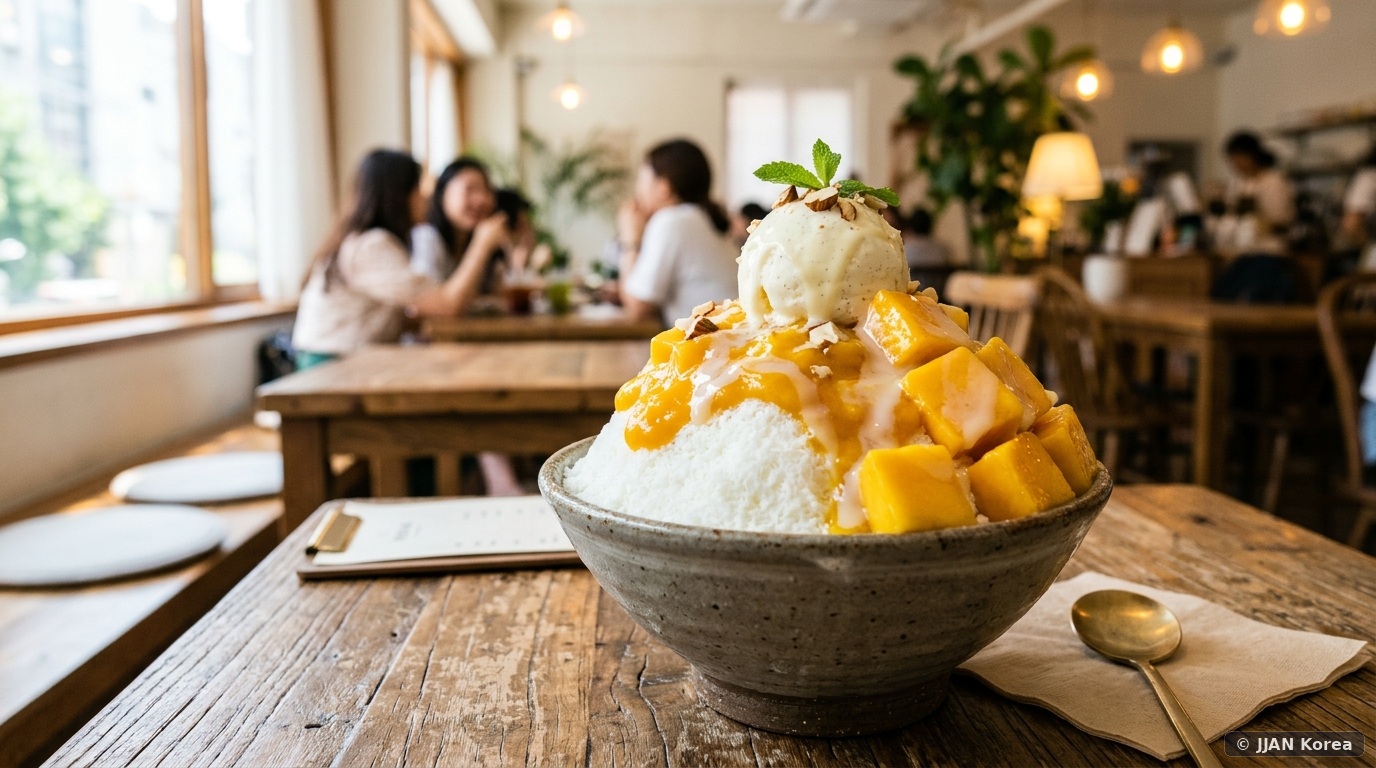
As summer temperatures climb across South Korea, the country’s cafe culture undergoes an annual dessert revolution centered around a national obsession: Bingsu (빙수). Far more than basic crushed shaved ice with flavored syrup, modern Korean bingsu is an exquisite culinary spectacle crafted from micro-planed, frozen whole milk or sweet cream that cascades into ceramic bowls with the soft, fluffy consistency of fresh winter snow. From national franchised powerhouses like Sulbing (설빙) to century-old traditional teahouses and luxurious five-star hotel lounges charging over 100,000 KRW for artisanal Jeju Apple Mango bowls, bingsu represents the pinnacle of Korean summer social dining. Navigating the diverse styles, portion sizes, seasonal toppings, and dining etiquette guarantees an authentic and refreshing cultural experience.
1. From Imperial Ice Cellars to Snowflake Snow: The History of Bingsu
The origins of bingsu trace back to the Joseon Dynasty (1392–1910), when government officials shared winter river ice stored in royal ice warehouses (Seobinggo – 서빙고) topped with sweetened wild fruit compotes. Following the Korean War, the availability of sweetened canned red beans and condensed milk gave birth to Patbingsu (팥빙수)—coarsely shaved water ice layered with red adzuki beans, chewy rice cakes (Tteok), misutgaru (roasted multi-grain powder), and colorful jelly candies.
The watershed moment in modern bingsu occurred in 2013 with the invention of the commercial ‘Snow Ice Machine’ (Nunkkot Bing-su-gi – 눈꽃빙수기). Instead of shaving solid blocks of water ice, these flash-freezing cylinders instantly freeze liquid milk into microscopic ribbons. The result was a velvety dessert that melts luxuriously on the tongue without brain freeze, permanently elevating bingsu into an internationally copied dessert phenomenon.
2. Major Bingsu Varieties: Traditional vs. Modern Gourmet
| Bingsu Variety | Core Ingredients | Flavor Profile | Average Price (KRW) | Best For |
|---|---|---|---|---|
| Traditional Patbingsu (팥빙수) | Simmered adzuki beans, injeolmi tteok, milk snow | Earthy, nutty, subtly sweet | 9,000 – 13,000 KRW | Purists, elderly family gatherings, teahouses |
| Injeolmi Bingsu (인절미설빙) | Roasted soybean powder, chewy rice cakes, sliced almonds | Rich, savory-sweet, powdery | 9,500 – 12,000 KRW | Nut-flavor lovers, iconic Sulbing signature |
| Apple Mango Cheese (애플망고치즈) | Cubed mango, cheesecake chunks, mango puree, ice cream | Tart, creamy, vibrant tropical | 13,900 – 16,500 KRW | Fruit lovers, modern aesthetic photos |
| Jeju Matcha / Green Tea (말차빙수) | Organic matcha milk snow, matcha gelato, dark chocolate brownie | Bittersweet, herbal, rich umami | 12,500 – 15,000 KRW | Tea enthusiasts, less-sugary palate |
| Hotel Luxury Apple Mango | Whole ripe Jeju apple mangoes, gold leaf, house sorbet | Ultra-luxurious, floral sweetness | 98,000 – 130,000 KRW | Special occasions (Shilla, Signiel, Chosun Palace) |
3. The Sulbing (설빙) Masterclass: Ordering, Customization & Menu Hacks
Sulbing is the undisputed champion of accessible bingsu culture, operating hundreds of bustling branches across university districts like Hongdae, Sinchon, and Gangnam. When dining at Sulbing, keep these insider ordering rules in mind:
- Portion Sizing is Built for Two: A single bowl of bingsu at Sulbing is designed to be shared between 2 to 3 people. Solo diners should order compact cup versions or accompany a dining companion.
- The Condensed Milk (Yeonyu – 연유) Rule: Every bingsu order is served with a small squeeze pouch or ceramic pitcher of sweetened condensed milk. Do not pour the entire container at once! Because the toppings are concentrated on top, pour half initially, enjoy the upper layers, and add the remaining condensed milk halfway through to sweeten the plain milk snow at the bottom of the bowl.
- Injeolmi Powder Warning: When eating Injeolmi Bingsu, never inhale sharply while taking a spoonful! The ultra-fine roasted soybean powder easily catches in the throat, causing an inevitable coughing fit. Gently fold the powder into the milk snow before swallowing.
- Pairing with Warm Korean Street Snacks: Contrast the ice-cold bingsu with warm side dishes like Injeolmi Toast (crispy buttered toast with melted sticky rice cake inside) or mini hotteok (brown sugar griddle cakes). If you enjoy discovering sweet Korean bites, check out our guide to viral convenience store desserts and packaged parfaits.
4. Where to Find Seoul’s Best Artisanal Teahouse Bingsu
While franchise chains deliver consistent quality, travelers seeking historical ambiance should head to Insadong, Bukchon Hanok Village, or Samcheong-dong. In our extensive walkthrough on traditional teahouses serving artisanal patbingsu in Insadong, venues like Tong-in Sweet, Suyeonsanbang, and Dadam prepare their adzuki red beans in-house daily, simmering domestic Gangwon-do red beans in copper kettles for 6 hours without industrial corn syrup. The natural bean texture remains intact, offering an earthy complexity that commercial purees cannot replicate.
5. Dining Etiquette: To Mix (Biba) or Not to Mix?
One of the most spirited debates in contemporary Korean dining is whether to vigorously stir your bingsu into a soupy slush or eat it neatly layer by layer:
- The Old-School Method (Bibim-Style): Older Koreans who grew up with coarse water-ice patbingsu often use their spoons to mash the red beans, rice cakes, and ice together into a uniform porridge-like consistency (Bi-bida – 비비다). This ensures every bite contains identical ingredients.
- The Modern Milk-Snow Method (Tteomukgi-Style): Modern cafes strongly advise against mixing. Finely shaved milk snow melts significantly faster when agitated. Culinary purists recommend scooping a portion of toppings and milk snow together with a single vertical spoon motion (Tteomukgi – 떠먹기). This preserves the ethereal fluffy texture until the final spoonful.
6. Frequently Asked Questions (FAQ)
Q1: Are dairy-free or vegan bingsu options available in Korea?
Traditional water-ice patbingsu topped exclusively with sweetened red beans and fruit is naturally dairy-free. However, because 90% of contemporary bingsu uses whole cow’s milk for the shaved base, vegans must explicitly ask cafes if they offer oat milk or soy milk bases (Duyu Bing-su – 두유빙수). Dedicated vegan cafes in Itaewon and Mangwon-dong regularly feature plant-based bingsu during peak summer.
Q2: Can I order bingsu for delivery (Baedal) to my hotel or apartment?
Yes! Korean delivery apps (Baemin, Yogiyo, Coupang Eats) deliver bingsu seamlessly. Franchises package the shaved milk snow inside insulated foil bubble pouches with dry ice packs, placing sauces and sliced fruits in separate compartments so the ice arrives completely frozen.
Q3: When does the famous Hotel Apple Mango Bingsu season end?
Five-star luxury hotel mango bingsu promotions (such as the Shilla Hotel Seoul’s legendary Jeju Apple Mango Bingsu) run strictly from May through late August, aligning with the domestic harvest on Jeju Island. Weekend wait times at hotel lobby lounges frequently exceed 2 to 3 hours.
Q4: Is it considered rude to order just one bingsu for two people in a cafe?
No, ordering one bingsu for two guests is standard practice throughout South Korea. However, if your party consists of 3 or 4 people, cafes that enforce a ‘One Order Per Person’ (1-in 1-eumnyo – 1인 1음료) policy will typically request that you order an additional iced Americano or tea alongside your bingsu.
🛡️ JJAN Korea Editorial Standards & Fact-Checking Verification
This article was independently researched, field-tested, and audited by the JJAN Korea Culture & Lifestyle Desk in Seoul led by Culture Editor Min-ah Kim. Menu prices, historical origins, and cafe service policies audited directly across active franchise locations and independent dessert houses in Seoul.
Notice an unlisted seasonal menu pricing update or new viral cafe trend? Help us keep our international community accurately informed: Submit an Editorial Correction to our Seoul Newsroom.