Located along South Korea’s rugged Gangwon-do coastline, Gangneung (강릉) has emerged as one of the country’s premier coastal getaways. Before the construction of the Gyeonggang High-Speed Railway for the 2018 PyeongChang Winter Olympics, traveling from Seoul to the East Sea required grueling 3.5 to 5-hour highway bus journeys through winding mountain passes. Today, the ultra-modern KTX-Eum (KTX-이음) bullet train rockets passengers from Seoul Station or Cheongnyangni to Gangneung Station in just 1 hour and 40 minutes. Gangneung offers an irresistible blend of coastal charm: turquoise East Sea waves breaking against soft white sand, artisanal roasteries clustered along Anmok Beach Coffee Street, centuries-old pine forests surrounding Gyeongpo Lake, and savory gastronomic traditions centered around Chodang soft bean curd (Sundubu) and artisanal tofu gelato.
1. Seoul to Gangneung KTX Logistics: Booking Windows & Route Selection
Planning your high-speed rail transit requires precision, particularly during summer weekends when Seoulites flock to Gangwon beaches. By mastering the fundamentals of booking KTX train tickets on the Korail website or app, you can secure window seats offering sweeping views as the train emerges from the Daegwallyeong mountain tunnels toward the sparkling coast.
| Departure Station | Destination Station | Train Class | Travel Duration | One-Way Economy Fare |
|---|---|---|---|---|
| Seoul Station (서울역) | Gangneung Station (강릉역) | KTX-Eum | 1 Hour 50 Minutes | 27,600 KRW |
| Cheongnyangni Station (청량리역) | Gangneung Station (강릉역) | KTX-Eum | 1 Hour 35 Minutes | 26,000 KRW |
| Seoul Express Bus Terminal | Gangneung Intercity Terminal | Premium Express Bus | 2 Hours 50 Minutes | 24,300 KRW |
| Dong Seoul Bus Terminal | Jumunjin Bus Terminal | Intercity Bus | 3 Hours 10 Minutes | 19,800 KRW |
Korail opens ticket reservations exactly 30 days in advance at 07:00 AM KST. For Friday evening departures from Seoul and Sunday afternoon returns from Gangneung, tickets sell out within minutes. If standard seats are fully booked, use the Korail Talk app’s ‘Standby Ticket’ (Yeyak Daegi – 예약대기) feature, which automatically converts unpaid reservations into confirmed seats 48 hours prior to departure.
2. Anmok Beach Coffee Street: History & Best Oceanfront Roasteries
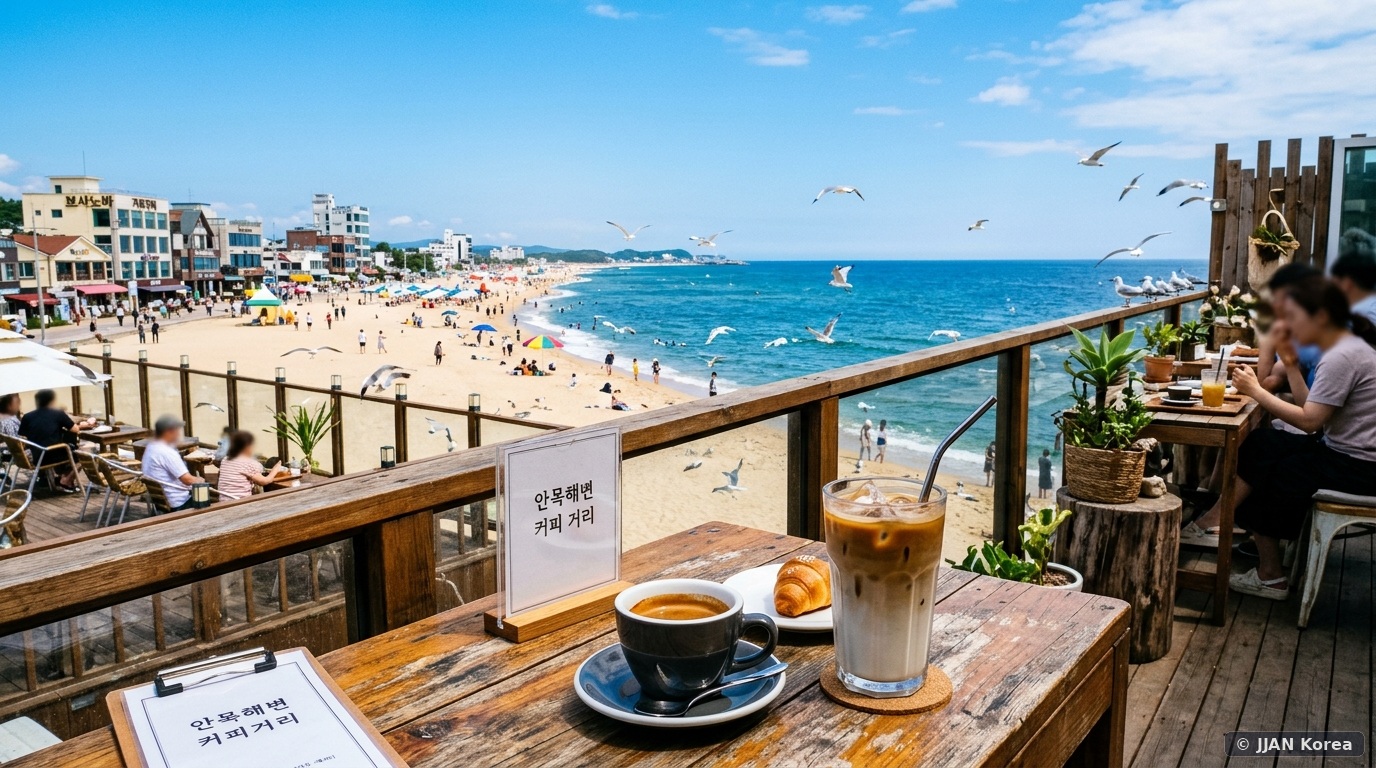
Gangneung’s transformation into South Korea’s coffee capital began unexpectedly in the 1980s. Bohemian writers, artists, and lovers gathered along Anmok Beach to sip inexpensive sweet coffee from street vending machines while watching the waves. Local roasters perfected individual blends, culminating in the establishment of the annual Gangneung Coffee Festival and the iconic Anmok Coffee Street (Anmok Haebyeon Keopi Geori – 안목해변 커피거리), featuring over two dozen multi-story cafes with floor-to-ceiling glass balconies.
- Bossanova Coffee Roasters (보사노바): Renowned for its fourth-floor rooftop terrace featuring white canopy cabanas and panoramic views of the entire beach crescent. Order their single-origin Ethiopian pour-over paired with artisanal Earl Grey chiffon cake.
- Santorini Coffee (산토리니): A blue-and-white architectural landmark inspired by the Greek isles. Features house-roasted hand drip coffees prepared by veteran barista masters using traditional Kalita Wave drippers.
- Terarosa Coffee (테라로사 사천점 / 본점): While the massive Terarosa Coffee Factory headquarters is located in southern Gangneung (Gujeong-myeon), their coastal branch near Sacheon Beach offers brutalist industrial brick design and world-renowned Panama Geisha pour-overs.
- Coffee Cupper (커피커퍼): Houses a mini coffee museum displaying historic European manual grinders, antique roasters, and early 20th-century espresso machines.
3. Chodang Tofu Village: Soft Sundubu & Viral Tofu Gelato
No trip to Gangneung is complete without visiting Chodang Dubu Village (초당순두부마을), located a short 10-minute taxi ride north of Gangneung Station. The culinary heritage dates back over 400 years to the Joseon Dynasty, when scholar Heo Yeop developed a technique of coagulating freshly ground soybean milk using clean, mineral-rich seawater filtered directly from the East Sea rather than chemical coagulants. The result is an ethereal, naturally savory bean curd curdled to delicate perfection.
Top gastronomic highlights include:
- Chodang Halmeoni Sundubu (초당할머니순두부): The village matriarch restaurant, serving pure unseasoned white bean curd stew accompanied by savory soybean paste stew (Doenjang-jjigae) and freshly pickled coastal greens.
- Donghwa Garden (동화가든): The originator of Jjambbong Sundubu (짬뽕순두부), a fiery red, wok-charred seafood noodle broth poured over silky soft tofu. Lines regularly exceed 90 minutes; secure your queue slot early by reserving gourmet Gangneung dining spots via Catch Table or using on-site mobile kiosk waiting tickets.
- Chodang Tofu Gelato (순두부젤라또): For dessert, visit the nearby modern gelato cafe where artisanal Italian churning equipment transforms fresh soybean curd into silky, creamy soft gelato (4,500 KRW). Notable variations include Black Sesame (Heukimja), Injeolmi Rice Cake, and Jeju Matcha.
4. Gyeongpo Lake, Pine Forests & The BTS Bus Stop at Jumunjin
Beyond culinary indulgence, Gangneung offers diverse cultural and scenic landscapes:
- Gyeongpodae Pavilion & Pine Trail: Rent a multi-person tandem bicycle to circle the 4.3km shoreline trail surrounding Gyeongpo Lake. The path weaves through ancient, towering Korean red pine forests (Solhyang), shielding cyclists from the summer sun while filling the air with pine scents.
- Ojukheon (오죽헌): One of the oldest surviving wooden residential structures in Korea, Ojukheon was the home of celebrated Joseon female artist Shin Saimdang (depicted on the 50,000 KRW banknote) and her son, philosopher Yi I (depicted on the 5,000 KRW banknote).
- Jumunjin Breakwater & BTS Bus Stop: Located 25 minutes north by coastal bus. The rocky sea wall gained global fame as the filming site for the drama Guardian: The Lonely and Great God (Goblin). Further north along Hyangho Beach sits the world-famous reconstructed bus stop featured on the album cover of BTS’s You Never Walk Alone.
5. 48-Hour Weekend Itinerary Breakdown
- Day 1 (Saturday):
- 08:22 AM: Board KTX-Eum from Seoul Station.
- 10:12 AM: Arrive at Gangneung Station; take a 10-minute taxi to Chodang Tofu Village for an authentic Sundubu brunch.
- 01:00 PM: Check into your beachfront hotel or boutique pension overlooking Gyeongpo Beach.
- 03:00 PM: Explore Anmok Beach Coffee Street, enjoying an iced pour-over on a rooftop terrace.
- 06:30 PM: Dinner at Gangneung Jungang Market (중앙시장), sampling Dakgangjeong (sweet crispy garlic chicken) and squid sundae.
- Day 2 (Sunday):
- 05:15 AM: Watch the sunrise over the East Sea directly from the sandy shoreline.
- 09:30 AM: Ride Coastal Bus No. 300 to Jumunjin Breakwater and the BTS Bus Stop.
- 01:00 PM: Tour historic Ojukheon and relax in the surrounding pine forest park.
- 04:30 PM: Walk through Gangneung Station souvenir shops to pick up Coffee Manju pastries and Chodang tofu crackers.
- 05:40 PM: Board return KTX-Eum to Seoul Station.
6. Frequently Asked Questions (FAQ)
Q1: Do I need to rent a car to explore Gangneung comfortably?
No. Gangneung is exceptionally tourist-friendly via public transit and taxis. Taxis wait continuously outside Gangneung Station, and fares to Anmok Beach, Gyeongpo Lake, or Chodang Village rarely exceed 7,000 to 10,000 KRW. Furthermore, local buses No. 202-1 and 300 connect all primary coastal attractions.
Q2: Can foreign tourists swim in the ocean at Anmok or Gyeongpo Beach in June?
Official swimming season with lifeguard stations and marked buoy zones typically opens between July 1 and July 10, running through late August. While you can stroll the beach and wade in the surf during June, water temperatures remain chilly (18°C–20°C) and full swimming is restricted prior to official beach opening dates.
Q3: How do I store my luggage at Gangneung Station before hotel check-in?
Gangneung Station features automated luggage locker banks (Mulpyeon Bogwanham – 물품보관함) operated by T-Locker inside the central rotunda. Lockers support English touchscreens and accept Korean credit cards and T-Money cards. Fees range from 2,000 to 5,000 KRW depending on locker size.
Q4: Is the Gangneung KTX covered by the Korail Pass for foreign tourists?
Yes! The Korail Pass for foreign visitors covers all KTX-Eum departures between Seoul and Gangneung. You can reserve your seat assignments online through the Korail Pass redemption portal without paying individual one-way fares.
🛡️ JJAN Korea Editorial Standards & Fact-Checking Verification
This article was independently researched, field-tested, and audited by the JJAN Korea Travel & Transit Desk in Seoul led by Travel Editor Do-jun Kim. Rail timetables and fare schedules cross-referenced with Korail high-speed rail updates and Gangneung City Tourism Bureau official seasonal publications.
Notice an unlisted timetable adjustment or coastal cafe change? Help us keep our international community accurately informed: Submit an Editorial Correction to our Seoul Newsroom.