A little over a decade ago, South Korea’s commercial beer landscape was notoriously dominated by an industrial duopoly producing mild, watery lagers colloquially mocked by international commentators as tasting “worse than North Korean brew.” Following historic revisions to South Korea’s Liquor Tax Act (주세법) in 2014, however, an exhilarating artisanal revolution exploded across the peninsula. Today, Seoul stands as one of Asia’s most dynamic, innovative craft beer capitals, boasting hundreds of independent microbreweries, experimental taprooms, and beer pubs tucked into atmospheric retro neighborhoods. From crisp IPAs infused with Hallabong citrus and Jeju tangerines to velvety imperial stouts aged with roasted Korean barley and wild-fermented sours, embarking on a Seoul craft beer crawl offers a delicious journey through contemporary Korean urban culture.
1. Epicenters of Seoul’s Taproom Culture: Euljiro vs. Seongsu
The Korean craft beer movement is closely tied to creative urban regeneration. Two historic neighborhoods have emerged as essential pilgrimage hubs:
| Craft Beer District | Subway Access | Architectural Vibe | Signature Brewery Highlights |
|---|---|---|---|
| Euljiro “Hipjiro” (을지로) | Euljiro 3-ga Station (Lines 2/3, Exits 10 & 11) | Raw industrial printshops, dark labyrinthine alleyways, neon signage, retro 1980s metalworks | Euljiro Brewing (을지맥옥), Art Monster, The Ranch Brewing Euljiro |
| Seongsu-dong (성수동) | Seongsu Station (Line 2, Exits 3 & 4) | Repurposed red-brick shoe factories, sprawling warehouse spaces, high-ceiling modern taprooms | Amazing Brewing Company, Seoul Brewery Seongsu flagship, Daily Beer |
| Itaewon & Gyeongnidan (이태원·경리단길) | Noksapyeong Station (Line 6, Exit 2) | The historic birthplace of Korean craft brewing; international expat roots | Magpie Brewing Co. (맥파이), The Booth, Craftworks Taphouse |
For visitors exploring the industrial designer boutiques and fashion pop-ups featured in our lifestyle guide on exploring designer pop-ups and industrial taprooms in Seongsu-dong, capping off an afternoon with a flight of 30 experimental tap lines at Amazing Brewing Company is the definitive local custom.
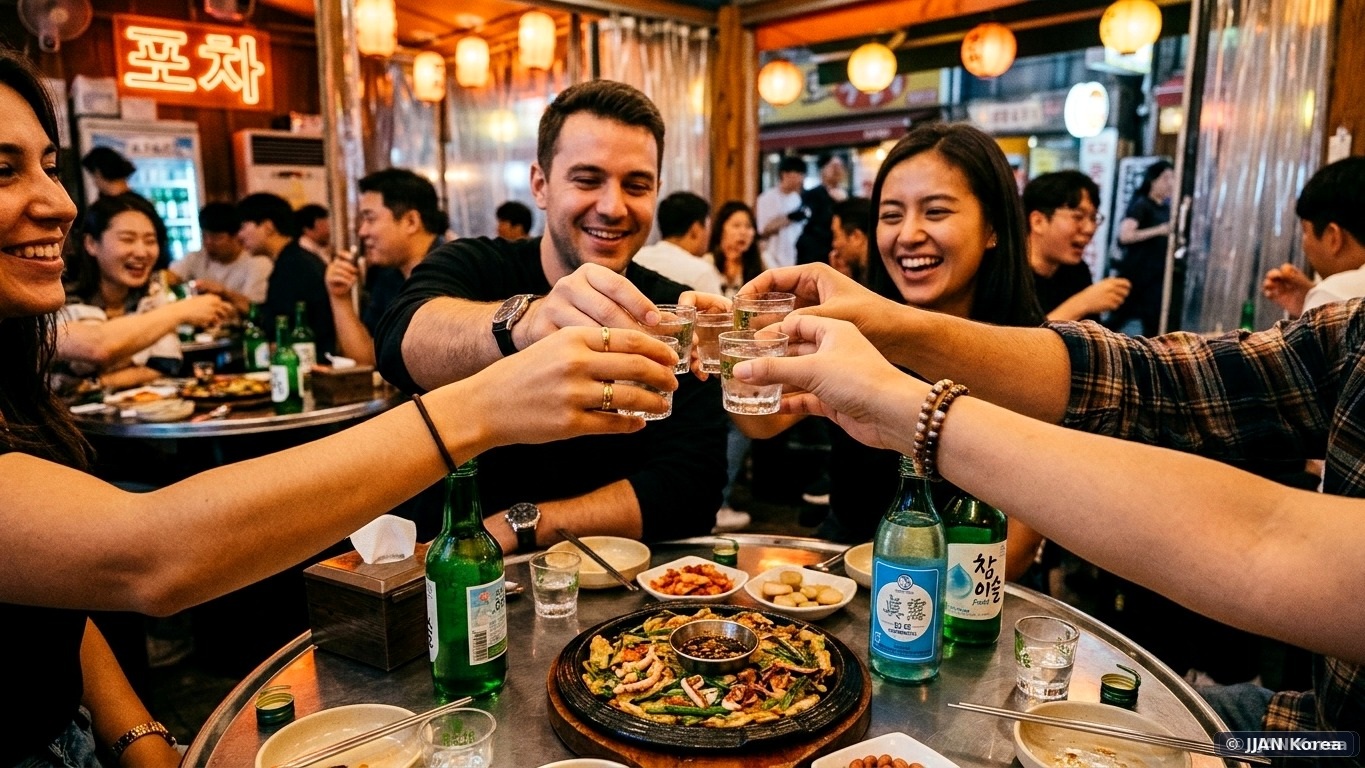
Before raising your glass, ensure you appreciate traditional Korean drinking manners and glass-clinking rituals as explained in our cultural etiquette handbook on understanding Korean drinking customs and clinking toast rituals (JJAN!), which remain deeply respected even in hip microbreweries.
2. Flagship Breweries & Must-Try Korean Flavor Profiles
What distinguishes Korean craft beer from Western counterparts is the enthusiastic embrace of indigenous botanicals, seasonal agricultural ingredients, and traditional fermentation heritage:
- Magpie Brewing Company (맥파이 브루잉): Founded in 2011 by a passionate team of expat and Korean homebrewers in a tiny Noksapyeong basement, Magpie sparked the nation’s craft revolution. Their flagship Magpie Pale Ale (맥파이 페일에일) remains an immortal classic, while their seasonal Ghost Sour Ale showcases tart, refreshing lactobacillus fermentation.
- Amazing Brewing Company (어메이징 브루잉): Operating from a massive converted warehouse in Seongsu, Amazing brews over 30 unique recipes simultaneously. Their signature First Love Hazy IPA (첫사랑 IPA) explodes with tropical passionfruit, peach, and juicy hop aromas without aggressive bitterness.
- Seoul Brewery (서울브루어리): Renowned for gastronomic sophistication, Seoul Brewery’s multi-level brewery and restaurant in Seongsu delivers barrel-aged wild ales, spelt farmhouse saisons, and decadent imperial chocolate stouts that pair with fine dining menus.
- Jeju Tangerine & Omija Infusions: Keep an eye out for regional beers utilizing Jeju Hallabong peels, Mungyeong five-flavor Omija berries (delivering sweet, sour, salty, bitter, and pungent undertones), and roasted black sesame porters.
3. How to Execute an Authentic “Hipjiro” Taproom Crawl
Navigating the dim back-alleys of Euljiro after dark can feel intimidating to first-time visitors, as many of the best craft taprooms have no street-level storefronts, marked only by faint neon stickers on rusted metal doors:
- Step 1: Start at Eulji Maek-ok (을지맥옥): Follow the glowing neon pink sign into an industrial print-shop alleyway. Head upstairs into a neon-drenched retro-futuristic taproom serving sour beers, Belgian saisons, and crispy Korean fried chicken tacos.
- Step 2: Walk to Art Monster Euljiro (아트몬스터): Famous for winning over 200 international beer competition medals, Art Monster’s Euljiro branch features a whimsical retro entrance resembling a vintage 1980s Hong Kong alleyway. Order a pour of their award-winning Itaewon Freedom (wheat beer) or First Love Scent (Belgian Witbier).
- Step 3: Outdoor Plastic Chairs at Nogari Alley: Conclude your crawl along the open-air streets of Euljiro Nogari Alley (을지로 노가리 골목). Pull up a bright plastic stool, order an icy pint of draft craft lager, and chew on traditional dried pollack (노가리) dipped in spicy gochujang-mayonnaise sauce amidst thousands of cheering locals.
4. Ordering Etiquette, Fares & Convenience Store Finds
Unlike casual draft hofs where pitchers of commercial lager cost 15,000 KRW, independent craft beer in Korea carries premium artisanal pricing. Expect to pay between 7,000 and 12,000 KRW for a standard 400ml draft pour, with barrel-aged or high-ABV double IPAs reaching 14,000 to 18,000 KRW. Taster flights of four distinct beers typically cost around 16,000 to 22,000 KRW.
CVS Craft Beer Cans: If you are enjoying a budget evening along the Han River, visit major convenience stores (CU, GS25, 7-Eleven). Korean convenience stores feature famous “4 Cans for 12,000 KRW” promotional deals that include canned domestic craft beers from Gompyo Wheat Ale, Jeju Beer Company, and Ark Brewery.
4. Contemporary Craft Beer Food Pairings: Modern Anju Culture
While traditional Korean drinking establishments rely heavily on heavy fried platters, Seoul’s progressive microbreweries have developed an artful, sophisticated food pairing culture that bridges international bar comfort classics with bold Korean culinary flavors:
- Crispy Truffle Potato Pancakes (트러플 감자전): Finely shredded golden potato pancakes pan-fried in cast iron until shattering crisp, drizzled with white truffle oil and topped with shaved parmesan cheese. The earthy starch and salt perfectly cut through the citrusy hop bitterness of hazy double IPAs.
- Gochujang Honey Butter Fried Chicken: Tender boneless chicken thighs tossed in sweet acacia honey, cultured butter, and mild fermented red chili paste, paired alongside crisp, effervescent Belgian Witbiers or German-style Pilsners.
- Dried Pollock (Nogari / 먹태) with Spicy Wasabi Mayo: Shredded roasted pollock fish served warm, dipped in a rich condiment blending kewpie mayonnaise, chopped green Cheongyang hot chilis, and soy sauce. The light, high-protein chew provides the classic accompaniment to malt-forward lagers and amber ales.
- Artisan Sourdough Pizza: Microbreweries like Amazing Brewing and The Ranch bake sourdough pizzas fermented with their own house brewer’s yeast, offering charred, chewy crusts topped with bulgogi beef and pickled jalapenos.
5. Annual Craft Beer Festivals & Curated Bottle Shop Pilgrimages
For dedicated beer connoisseurs seeking rare, limited-run seasonal releases that never reach commercial convenience store shelves, participating in Seoul’s vibrant annual beer expos and independent bottle shops is essential:
- Korea International Beer Expo (KIBEX): Held annually in the spring at COEX Exhibition Center in Gangnam, KIBEX stands as South Korea’s premier trade and consumer beer gathering. Over 250 domestic and international breweries pour fresh drafts, unveil collaborative experimental ferments, and host educational sensory seminars led by Master Cicerones and brewing science professors.
- Great Korean Beer Festival (GKBF): A massive outdoor consumer festival held in outdoor plazas (such as Yongsan I’Park Mall rooftop or Olympic Park), combining food trucks, live acoustic and indie rock bands, and over 100 tap lines from pioneering regional craft breweries from Jeju to Gangwon-do.
- Specialty Craft Bottle Shops: Visit destination bottle shops like Beer Post Bar in Mullae-dong or Dodo Craft in Hongdae. These boutique bottle shops house refrigerated walk-in vaults stocked with hundreds of barrel-aged imperial stouts, Norwegian farmhouse kveik ales, wild spontaneous lambics, and rare domestic small-batch releases. Many bottle shops feature indoor bar counters where you can purchase chilled bottles and enjoy them immediately with light bar snacks for a nominal corkage fee (typically 2,000 to 4,000 KRW).
5. Frequently Asked Questions (FAQ)
Q1: Do I need to order food (Anju) when visiting craft beer taprooms in Korea?
A: At traditional Korean drinking establishments (pochas and hofs), ordering a food dish (안주 / Anju) is practically mandatory. In modern independent craft beer taprooms and microbreweries, however, ordering solely drinks by the glass at the bar or high-top tables is completely acceptable.
Q2: What is the legal drinking age in South Korea, and do I need to carry ID?
A: The legal drinking age in South Korea is 19 years old (calculated by calendar year: reaching January 1 of the year you turn 19). Foreign visitors must carry a physical passport or Alien Registration Card (ARC); smartphone photos of IDs are frequently rejected by bouncers and cashiers.
Q3: Can I buy fresh draft craft beer to take out in growlers or cans?
A: Yes! Modern Korean liquor regulations permit craft breweries to can fresh draft pours directly from the tap into sealed 500ml aluminum cans on-site for takeout. Many taprooms also fill personal pressurized carbonated growlers.
Q4: Are Korean craft beer taprooms non-smoking?
A: Yes. In accordance with the National Health Promotion Act, smoking and vaping are strictly prohibited inside all restaurants, bars, and taprooms in South Korea. Patrons must step outside into designated outdoor smoking booths or back alleys.
Crowler Takeout Systems & Brewery Merch: Nearly all prominent Seoul taprooms now feature automated tabletop seamers that fill 32-ounce giant aluminum ‘Crowler’ cans with fresh draft beer directly from the tap within 60 seconds. These hermetically sealed cans maintain carbonation and hop aromatics for up to 14 days in your refrigerator. In addition to canned beer, taprooms sell collectible craft merchandise, including bespoke Teku glassware, embroidered brewery hoodies, and graphic canvas tote bags designed by local indie illustrators.
JJAN Korea Editorial Standards & Fact-Checking Verification
Lead Author: Min-ah Kim, Culture & Nightlife Editor (K-Trend Desk)
Brewery profiles, pricing benchmarks, and Liquor Tax Act standards corroborated in consultation with the Korea Craft Brewers Association (한국수제맥주협회). Venue operating hours and seasonal tap rotations subject to weekly brewer updates.