
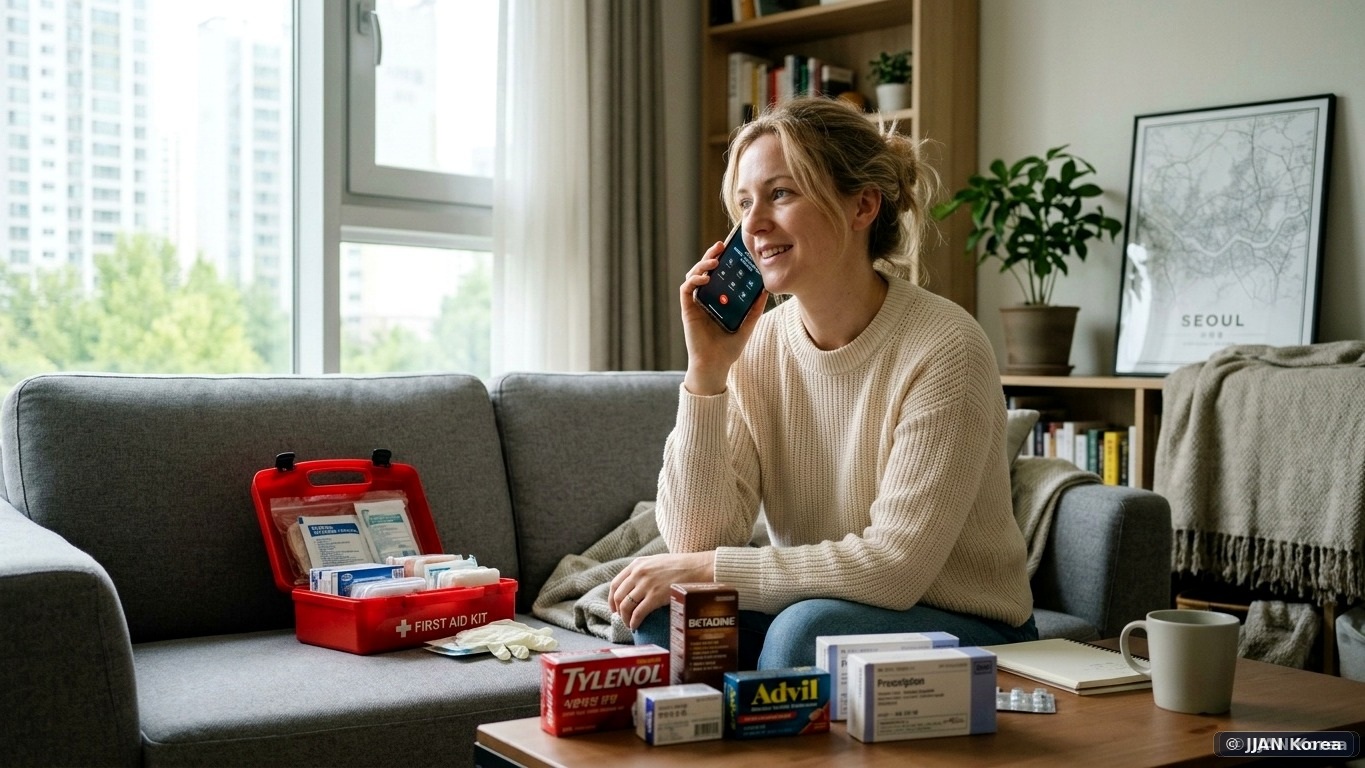
Few experiences startle newcomers and foreign tourists in South Korea quite like the sudden, ear-piercing siren that screams simultaneously from every smartphone in a crowded subway carriage. Within seconds, commuters glance briefly at their screens, dismiss the pop-up notification without reaction, and return to their morning routines. Known nationally as Emergency Disaster Text Alerts (긴급재난문자 / Anjeon Annae Munja), South Korea’s cell-broadcast public safety network is among the world’s most aggressive and technologically advanced. Managed by the Ministry of the Interior and Safety (행정안전부 / MOIS), the system broadcasts real-time localized warnings for meteorological crises, sudden flash floods, extreme heatwaves, fine dust spikes, missing elderly citizens, and North Korean missile trajectory alerts. Understanding how to decode Korean alarm terminology, translate alerts automatically into English, and customize sound thresholds will preserve your peace of mind while keeping you safe.
1. The Three Tiers of Korean Cell Broadcast Alarms
South Korean telecommunications regulations divide emergency cell broadcasts into three distinct legal threat tiers, each carrying different decibel levels and device override protocols:
| Alert Classification | Hangul Designation | Acoustic Alarm Level | Event Triggers & Examples | Device Mute Capability |
|---|---|---|---|---|
| War Disaster Alert (위급재난) | 위급재난문자 | 60 dB Piercing Siren (Maximum override) | Civil defense air raids, missile launches, nuclear radiation incidents, massive earthquakes (M6.0+) | Cannot be muted or disabled by law; overrides silent and vibration modes |
| Emergency Disaster Alert (긴급재난) | 긴급재난문자 | 40 dB Loud Chime Siren | Flash floods, landslide evacuation orders, incoming typhoons, localized wildfires, tsunamis | Can be toggled off in system settings; overrides vibration mode unless disabled |
| Safety Guidance Alert (안전안내) | 안전안내문자 | Standard SMS notification tone or gentle vibration | Extreme heatwave advisories (폭염주의보), heavy snowfall, missing dementia patients, fine dust alerts | Follows phone’s normal ringtone/silent/vibrate profile; fully customizable |
In the event of a severe natural disaster or sudden medical emergency triggered during typhoon flooding, remember that you can obtain instant multi-language assistance by calling 1339 for medical triage during regional weather emergencies, where bilingual healthcare coordinators dispatch rescue assets.
For urgent structural collapses, entrapment, or critical road flooding, immediately coordinate with emergency services by dialing 119 for urgent ambulance transport and rescue operations, as 119 maintains automated three-way translation translation desks with the Korea Tourism Organization.
2. Quick Translation Glossary: Essential Hangul Disaster Keywords
Because cell broadcast alerts are generated rapidly by municipal district offices, they are transmitted almost exclusively in Korean. Memorizing these recurring root words allows you to comprehend the situation within five seconds:
- Daebi / Daepisho (대피 / 대피소): Evacuate / Emergency Shelter. Indicates mandatory or recommended evacuation from low-lying coastal basements or landslide zones.
- Pok-yeom / Pok-woo (폭염 / 폭우): Severe Heatwave / Torrential Rain. Pok-yeom Teukbo warns outdoor workers to halt manual labor between 14:00 and 17:00 PM.
- Tae-poong (태풍): Typhoon. Typically accompanied by coastal storm surge and high wind advisories.
- San-bul (산불): Mountain Wildfire. Usually warns hikers to immediately descend from specific national park ridge trails.
- Siljong / Chaja-juseyo (실종 / 찾아주세요): Missing Person. Municipal broadcast detailing physical characteristics, clothing colors, and age of missing elderly dementia patients or young children.
- Haesang Milmul / Chimsu (밀물 / 침수): High Tide / Inundation Flooding. Warns car owners parked on Han River floodplains or coastal ports to relocate vehicles immediately.
3. Installing the Official ‘Emergency Ready App’ (English)
To eliminate the stress of manual copy-pasting into translation apps, the Ministry of the Interior and Safety created the official multilingual public safety smartphone portal: Emergency Ready App (재난안전정보):
- Real-Time English Push Notifications: The app automatically receives government cell broadcasts, translates the advisory text into English (or Chinese), and delivers an intelligible push notification directly to your lock screen.
- GPS Civil Defense Shelter Mapping: Tap the ‘Shelter’ (대피소) tab to load an interactive GPS map displaying every certified underground air raid and natural disaster shelter within a 2-kilometer radius, including subway platforms, apartment basement bunkers, and municipal civic centers.
- Emergency First Aid Guides: Features visual English CPR walkthroughs, tourniquet instructions, and fire extinguisher deployment procedures.
- Installation: Available completely free on iOS App Store and Google Play Store by searching “Emergency Ready App”. No account creation or Korean mobile verification required.
4. Smartphone Settings: How to Mute or Adjust Alert Sounds
If frequent safety guidance messages (안전안내문자) for mild summer heat disturb your sleep or work meetings, you can adjust settings without compromising life-saving war or flash flood warnings:
- Apple iOS (iPhone): Open Settings ➔ Notifications ➔ Scroll to bottom to ‘Government Alerts’. Here you can toggle ‘Emergency Alerts’ (긴급재난) and ‘Public Safety Alerts’ (안전안내) independently. Keeping Public Safety Alerts disabled silences weather notices, while critical natural disasters remain active.
- Android (Samsung Galaxy / Google Pixel): Open Settings ➔ Safety and Emergency ➔ Wireless Emergency Alerts. Tap ‘Alert Preferences’ to toggle off ‘Vibration’ or turn off ‘Safety Guidance Alerts’ while leaving ‘Extreme Threats’ enabled.
- Foreign SIM Roaming Handsets: Note that phones purchased overseas connected via international roaming occasionally interpret standard safety alerts as high-priority presidential alarms. Installing an inexpensive Korean local eSIM or configuring the Emergency Ready app prevents recurring midnight sirens.
5. The Nationwide Civil Defense Drill: What to Do on the 3rd Wednesday
Periodically throughout the year (typically in August and March), South Korea conducts a nationwide 20-minute Civil Defense Drill (민방위 훈련) at 14:00 PM. Sirens will sound across urban streets, traffic lights turn red, and police officers direct pedestrians into underground subway stations or building basements. Foreign visitors should not panic; vehicular traffic halts for 15 minutes while commercial shops and subways operate normally underground. Following instructions from fluorescent-vested civil defense guides ensures smooth participation.
4. Seismic & Air Raid Shelter Protocols: Finding Underground Refuges
While South Korea is not situated directly on the Pacific Ring of Fire, moderate seismic events (such as the magnitude 5.8 Gyeongju earthquake and 5.4 Pohang earthquake) have prompted widespread structural retrofitting and enhanced civil defense drills. If a high-priority earthquake alert sounds on your phone:
- Indoors (Apartment / Office): Immediately drop to the floor, take cover beneath a sturdy wooden desk or dining table, and hold on until shaking stops. Protect your head with a cushion or backpack. Once tremors cease, immediately switch off city gas valves (가스 밸브 차단) on your kitchen stove and open the front entrance door slightly; structural warping can jam steel security doors, trapping occupants inside.
- Subway & Underground Stations: Seoul’s subway network is engineered to withstand magnitude 7.0 earthquakes. If shaking occurs while riding, hold firmly to overhead straps and handrails. Follow announcements from train dispatchers; do not attempt to pry open train doors or jump onto electrified tracks.
- Identifying Civil Defense Shelters (대피소 표지판): Look for round, bright yellow-and-black signs reading “Civil Defense Evacuation Facility” (민방위 대피소) mounted beside subway station entrances, underground shopping arcades, and large apartment underground parking garages. Over 17,500 certified shelters exist nationwide, providing reinforced concrete shielding, backup air filtration systems, and emergency food rations.
5. Essential Foreigner Emergency “Go-Bag” Packing Checklist
Public safety authorities recommend that long-term international residents maintain a compact 72-hour emergency grab-bag stored near the front door containing:
| Emergency Supply Category | Essential Items to Include | Why It Matters in Korea |
|---|---|---|
| Official Identification & Cash | Physical passport, Alien Registration Card (ARC), 200,000 KRW in paper banknotes (10,000 KRW bills) | Electronic bank card networks and mobile pay may experience temporary grid failure during severe natural disasters |
| Respiratory Protection | 5x KF94 certified particulate masks + 1x chemical/smoke emergency escape hood | Protects against heavy wildfire smoke, urban building dust, or chemical particulate advisories |
| Communications & Power | 20,000mAh external power bank, universal USB charging cable, battery-powered compact FM radio | Guarantees continuous access to Emergency Ready app push notifications and KBS emergency radio broadcasts |
| Hydration & Sustenance | 2x 500ml bottled water + high-calorie nutrient bars (Yanggaeng – 양갱, energy bars) | Lightweight survival hydration during mandatory shelter relocation |
6. Frequently Asked Questions (FAQ)
Q1: Why did my phone scream an alarm when the weather outside was completely sunny?
A: Municipal safety alerts are broadcast based on geographical cell tower zones. You may receive an alert issued by an adjacent district experiencing localized riverbank flooding, or you may receive a heatwave warning warning elderly citizens of heat exhaustion temperatures exceeding 35°C.
Q2: Will turning off Emergency Alerts prevent me from receiving Amber alerts or missing person notices?
A: Yes. Missing person broadcasts are transmitted under the ‘Public Safety Alert’ (안전안내) category. If you toggle this tier off, you will no longer receive localized missing resident bulletins.
Q3: Do emergency alerts cost money or consume mobile data on my prepaid SIM?
A: No. Cell broadcasts utilize dedicated radio broadcast channels (Cell Broadcast Service / CBS) that bypass standard cellular data packets. They function even when mobile data is disabled, without deducting credit from your SIM balance.
Q4: What should I do immediately if I receive a ‘War Disaster Alert’ (위급재난문자)?
A: Remain calm, tune into national broadcast television (KBS 1TV) or radio, and move promptly into the nearest designated underground civil defense shelter—most accessible via any subway station mezzanine.
JJAN Korea Editorial Standards & Fact-Checking Verification
Lead Author: Min-jun Kim, Tech & Telecommunications Editor (Daily Korea Desk)
Alert tier classifications, decibel standards, and municipal broadcast protocols verified in alignment with the 2026 Ministry of the Interior and Safety Framework Act on the Management of Disasters and Safety (재난 및 안전관리 기본법). Smartphone operating system workflows tested on iOS 18 and One UI 7.