
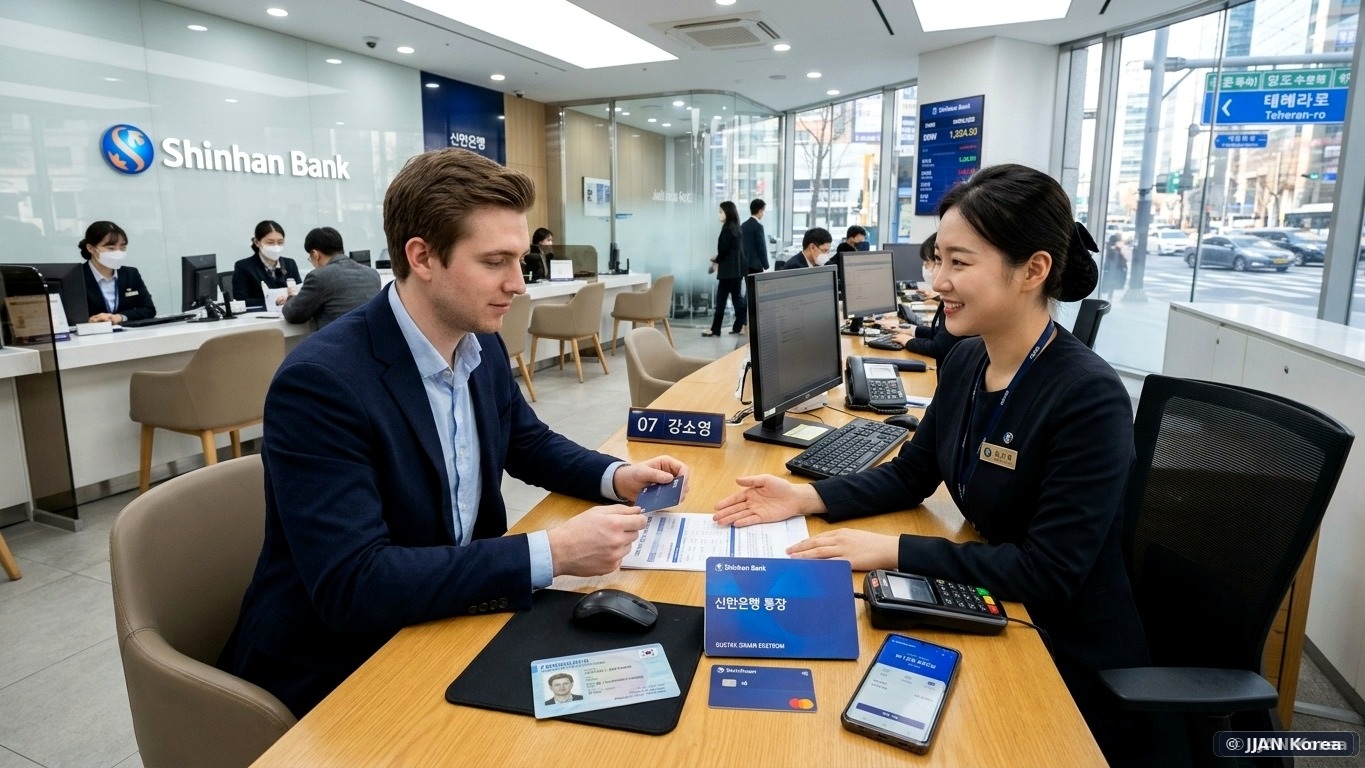
When international residents in South Korea successfully open their first domestic bank account, their excitement is frequently shattered the moment they attempt to pay their monthly rent, deposit a housing lease, or transfer tuition. Across major commercial lenders—including Hana Bank, Shinhan Bank, Woori Bank, and KB Kookmin Bank—all newly created accounts are automatically classified under statutory fraud-prevention frameworks as Limited Purpose Accounts (한도제한계좌 / Hando Jehan Gyejwa). Under these rigid financial caps, automated ATM cash withdrawals and electronic online banking transfers are restricted to a meager 300,000 to 1,000,000 KRW per day. Understanding how to legally unfreeze your account limits, obtain physical One-Time Password (OTP) security key fobs, and register digital Joint Certificates (Gongdong Injeungseo) is essential for conducting financial life in Korea.
1. The Anti-Voice Phishing Framework: Why Limits Exist
To combat organized voice-phishing syndicates and illegal “daepo” shell account laundering, the Financial Supervisory Service (FSS / 금융감독원) mandates that banks restrict transaction ceilings on any account where the holder cannot prove clear, recurring domestic financial activity:
| Banking Channel | Standard “Limited Account” Daily Ceiling | Standard Normal Account Daily Ceiling (Upgraded) |
|---|---|---|
| Mobile & Internet Banking Transfers | 300,000 KRW (Level 1) or 1,000,000 KRW (Level 2) | 50,000,000 to 500,000,000 KRW (with physical OTP token) |
| ATM Cash Withdrawals | 300,000 to 1,000,000 KRW per day | 6,000,000 KRW per day |
| In-Branch Teller Counter Transfers | 1,000,000 to 3,000,000 KRW per visit | Unlimited (subject to funds availability and identity proof) |
As documented in our complete banking onboarding guide on step-by-step procedures for opening your first Korean bank account, foreign nationals who open accounts prior to receiving their physical Alien Registration Card (using solely passports) are locked into Level 1 restrictions indefinitely until physical ARC presentation.
If you are preparing to transfer large lump-sum Jeonse or Wolse key-money security deposits as explained in our property guide on preparing large electronic deposit transfers for rental apartment contracts, unfreezing your transfer limits at least two weeks before your lease signing date is mandatory.
2. The Document Checklist: How to Remove Account Restrictions
Lifting the “Hando Jehan” restriction requires visiting your issuing bank branch in person and submitting certified documentary proof of legitimate domestic economic purpose (Geum-yung Georae Mokjeok Hwaginseoryu – 금융거래 목적 확인서류):
- Full-Time Employed Professionals: Valid Alien Registration Card, original Certificate of Employment (Jaejik Jeungmyeongseo – 재직증명서) stamped with your corporate seal within 30 days, and corporate business license copy (Saupja Deungrokjeung). Most banks also require proof of at least three consecutive monthly salary deposits matching your employer’s legal business name.
- University Students (D-2 / D-4): Valid ARC, current Certificate of Enrollment (Jaehak Jeungmyeongseo – 재학증명서), and an official university housing fee or semester tuition bill. (Note: Many student accounts can only be upgraded to Level 2: 1,000,000 to 3,000,000 KRW/day).
- Utility Bill & Tax Method: Submitting proof of at least three consecutive automatic debit payments (Jidong Iche – 자동이체) for residential utility bills (electricity, water, city gas, or National Health Insurance) debited directly from your account.
3. Security Tokens: Digital Security Cards vs. Physical OTP Fobs
Once your account is unlocked, your electronic daily transfer ceiling is governed by the physical security authentication tool assigned to your profile:
| Security Token Medium | Physical Appearance | Per-Transfer Limit | Daily Total Transfer Ceiling | Hardware Cost |
|---|---|---|---|---|
| Plastic Security Matrix Card (보안카드) | Thin credit-card sized plastic card containing 35 numbered 4-digit codes | 5,000,000 KRW | 10,000,000 KRW | Free of charge |
| Physical OTP Key Fob (토큰형 OTP) | Small keychain device with a digital LCD screen generating 6-digit codes | 100,000,000 KRW | 500,000,000 KRW | 3,000 – 5,000 KRW |
| Smart / Card-Type OTP (카드형 OTP) | Credit card with integrated battery and e-ink display button | 100,000,000 KRW | 500,000,000 KRW | 10,000 – 15,000 KRW |
4. International Remittances: SWIFT vs. Specialized Fintech Apps
Beyond domestic rent transfers, foreign workers frequently need to send accumulated Korean won savings back home. Navigating international remittance limits governed by the Foreign Exchange Transactions Act (외국환거래법) requires strategic selection:
| Remittance Platform | Transfer Speed | Standard FX Spread & Fees | Foreigner Accessibility & KYC |
|---|---|---|---|
| Specialized Fintech Apps (SentBe, WireBarley, Hanpass) | Instant to 4 Hours | Low (0.5% to 1.5% markup; fees under 5,000 KRW) | Highest: Completely bilingual English apps; simple passport/ARC mobile photo verification |
| Commercial Bank Wire (SWIFT Transfer) | 1 to 3 Business Days | High (Wire fee + intermediary bank fee + receiving bank fee, approx. 30,000–50,000 KRW) | Requires physical branch visit to designate ‘Designated Foreign Exchange Bank’ (외국환거래은행 지정) |
5. Unfreezing Accounts Flagged for Voice Phishing Audits
Occasionally, an account may be suddenly frozen without warning if automated banking monitoring algorithms detect unusual deposit patterns (such as receiving multiple rapid electronic transfers from unrecognized third parties). If your mobile app displays an alert reading “Geum-yung Sagi Euisim Gyejwa” (금융사기 의심계좌 / Suspected Fraud Account), do not panic: visit your branch with your ARC, employment contract, and phone call records explaining the legitimate origin of the funds to execute immediate administrative unfreezing.
4. Frequently Asked Questions (FAQ)
Q1: Can I lift my transfer limit using my bank’s English smartphone mobile app?
A: Certain lenders like Shinhan Bank (SOL Global) and Hana Bank (Hana 1Q) allow users to upload digital photo proofs of National Health Insurance payments or tax certificates through their app to unfreeze limits. However, in-person branch visits yield a 95% higher immediate success rate for foreign residents.
Q2: What is the fastest emergency way to transfer 10,000,000 won for rent if my account is still limited?
A: Visit any physical branch of your bank with your passport, ARC, and lease contract. Tellers can execute in-person counter transfers directly to your landlord’s account, bypassing electronic mobile limits entirely.
Q3: Can an OTP key fob purchased at Hana Bank be registered and used with Shinhan Bank?
A: Yes! South Korea operates a universal financial OTP registry. Once you buy a physical OTP token at one bank, you can register its serial number across all other Korean commercial banks, brokerage accounts, and fintech apps without buying duplicate devices.
Q4: Why does my mobile banking app ask for a “Joint Certificate” (공동인증서)?
A: Digital Joint Certificates (formerly known as Accredited Certificates / 공인인증서) function as legal digital signatures in Korea. You can export a Joint Certificate from your bank’s website to your smartphone or PC to authorize high-value wire transfers and tax filings.
6. Internet-Only Banks for Foreigners: KakaoBank & Toss Bank Realities
South Korea’s mobile-first digital neobanks—most notably KakaoBank (카카오뱅크) and Toss Bank (토스뱅크)—offer sleek, branchless user experiences, zero ATM withdrawal fees nationwide, and instant peer-to-peer messaging transfers. However, international residents must understand their legal onboarding criteria:
- Alien Registration Card Mandatory: Foreign residents holding registered long-term residency visas (such as E-7, F-2, F-4, F-5, and D-2) can legally open accounts on KakaoBank and Toss Bank via automated mobile photo scanning of their physical ARC. Short-term 90-day tourists cannot register.
- Domestic Mobile Carrier Verification: Your smartphone plan must be registered under your exact English name as printed on your ARC. If your mobile carrier record has a slight spacing discrepancy, automated National Health Insurance identity checks will fail.
7. Closing Your Korean Bank Account When Leaving Permanently
When concluding your stay in South Korea, visit your bank branch two weeks prior to your departure flight. Settle all remaining automatic debit bills, convert remaining won balances into foreign currency (or wire funds to your home account via international remittance), and cancel your electronic Joint Certificates. Retain your bankbook and account for 30 days if expecting post-departure tax refunds or national pension lump-sum disbursements, closing the account remotely via international power of attorney.
8. Multi-Currency Debit Cards & Expat Financial Management
Modern banking in South Korea has evolved rapidly with the introduction of specialized multi-currency debit products, such as Hana Bank’s Travlog (트래블로그) and Shinhan SOL Travel Card. These innovative accounts allow long-term residents to hold multiple foreign currencies (USD, EUR, JPY, GBP) within their mobile app with zero foreign exchange conversion spreads. When traveling outside South Korea on vacation, the card automatically debits the local overseas currency with zero overseas transaction surcharge fees, bridging the gap between domestic won payrolls and global financial mobility.
9. Smart Budgeting & Real-Time Expense Tracking on Korean Fintech Apps
Once your bank account and transfer limits are fully operational, long-term expatriates can integrate their accounts with South Korea’s world-class personal wealth and budgeting platforms, most notably Toss (토스) and KakaoPay. By linking your domestic bank account via Open Banking (오픈뱅킹), these bilingual financial platforms automatically track your monthly dining, grocery, utility, and transit expenditures, categorizing receipts in real time and providing automated alerts whenever recurring apartment maintenance fees or insurance premiums are debited.
Voice Phishing Warning Signs & Emergency Police Freezes: If you ever receive a suspicious phone call from an individual claiming to be a public prosecutor, police officer, or FSS investigator demanding you transfer funds to a ‘safe verification account’, hang up immediately. Legitimate government entities in South Korea never demand electronic fund transfers over the telephone. Dial 112 immediately to report fraudulent phishing attempts.
JJAN Korea Editorial Standards & Fact-Checking Verification
Lead Author: Seo-jun Kim, Senior Finance Editor (Banking & Real Estate Desk)
Financial limits, anti-money laundering compliance statutes, and electronic token standards corroborated with the Financial Services Commission (금융위원회) and commercial banking operating manuals across Hana, Shinhan, and Woori Bank.