Known affectionately throughout East Asia as the “Museum Without Walls,” Gyeongju (경주) was the glorious capital of the ancient Silla Kingdom for nearly one thousand continuous years (57 BCE to 935 CE). Located in the southeastern corner of the Korean Peninsula in North Gyeongsang Province, Gyeongju represents one of the most culturally dense UNESCO World Heritage destinations on earth. Unlike modern industrial cities that bulldozed their past, Gyeongju preserves its history in plain sight: giant, emerald-green grassy royal burial mounds (Tumuli) rise dramatically directly between contemporary downtown coffee shops, ancient stone astronomical observatories stand in wildflower meadows, and illuminated royal palace pavilions cast mirrored golden reflections over lotus ponds at twilight. Because the city’s central historic district is delightfully flat, exploring Gyeongju on a rented bicycle is universally considered the most sublime, liberating day trip in South Korea.
1. High-Speed Transit from Seoul and Downtown Bike Rental Logistics
Visiting Gyeongju from Seoul has never been more convenient. By booking KTX express rail tickets arriving at Singyeongju Station, travelers depart Seoul Station and arrive at Singyeongju (Gyeongju KTX Station) in just 2 hours and 5 minutes. High-speed KTX-Sancheon trains operate every 30 to 45 minutes daily.
Upon exiting Singyeongju Station, catch city express bus No. 700 or No. 50 directly outside the terminal exit; a 15-minute scenic ride brings you to the Gyeongju Intercity Bus Terminal in downtown Gyeongju. This central hub is surrounded by dozens of local bicycle rental shops offering single-speed city cruisers, multi-gear touring bikes, tandem bicycles, and electric scooters for roughly 10,000 to 15,000 KRW for a full day of riding.
| Bike Route Stop | Distance from Previous | Estimated Cycling Time | Key Highlight & Photo Spot |
|---|---|---|---|
| 1. Hwangridan-gil (Starting Hub) | 0 km (Rental pickup) | — | Trendy Hanok cafes, traditional 10-won coin cheese bread |
| 2. Daereungwon Royal Tomb Complex | 0.4 km | 3 minutes | Giant grassy tumuli, Cheonmachong excavated interior chamber |
| 3. Cheomseongdae Observatory | 0.8 km | 5 minutes | Asia’s oldest observatory tower, autumn pink muhly grass fields |
| 4. Gyerim Forest & Woljeonggyo Bridge | 1.2 km | 7 minutes | Mythical birth forest of the Kim clan; monumental covered bridge |
| 5. Donggung Palace & Wolji Pond | 1.5 km | 8 minutes | Legendary illuminated night palace reflections over royal lotus pond |
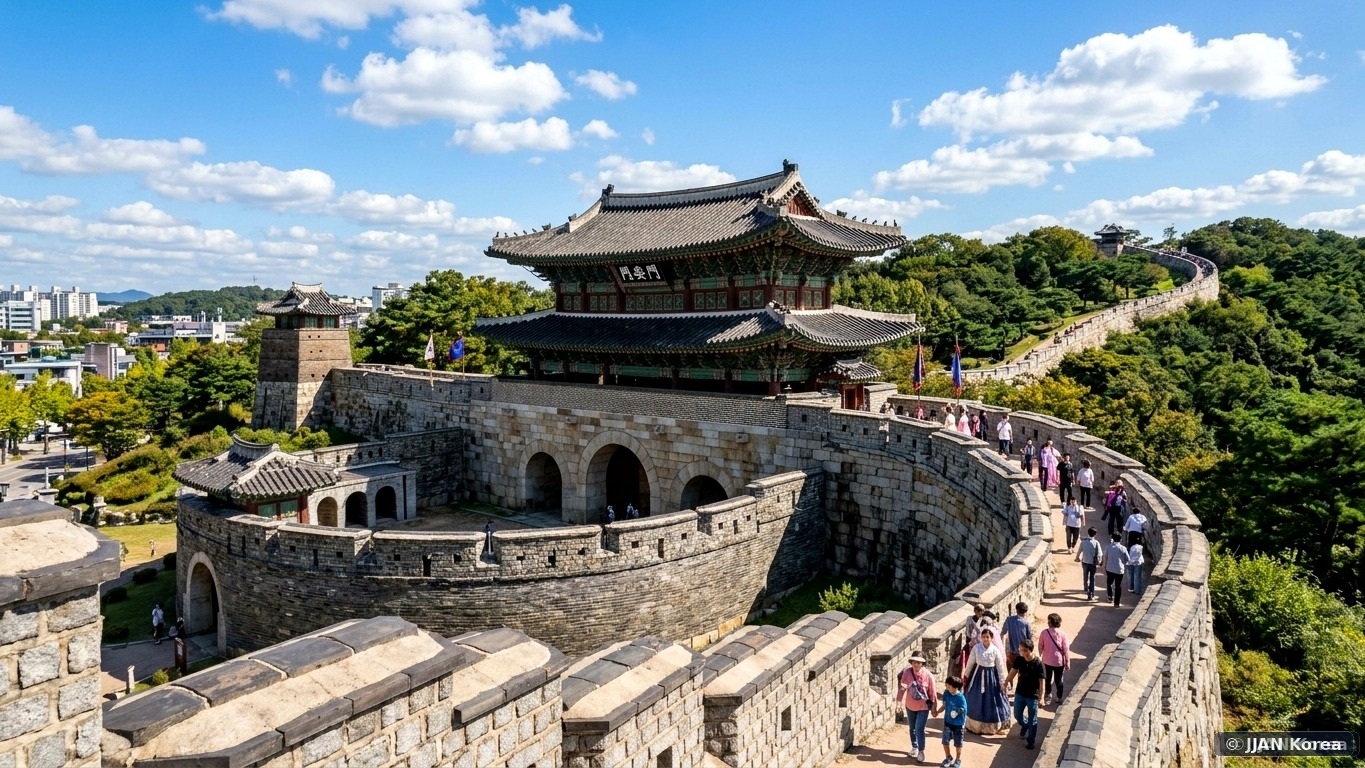
While travelers often compare historic Korean day trips, by comparing Gyeongju’s ancient Silla tombs with Suwon’s Joseon fortress architecture, one appreciates the profound shift from Joseon military brick masonry to Silla’s poetic earthen landscape integration.
2. Daereungwon Royal Tomb Park: Walking Among Kings
Your first major stop is Daereungwon (대릉원), a tranquil walled park enclosing 23 monumental grassy burial tumuli of Silla monarchs, queens, and high aristocracy. The mounds, covered in perfectly manicured green grass, resemble gentle rolling emerald hills, creating a deeply meditative atmosphere under towering ancient pine trees.
Unlike Egyptian pyramids or European crypts, Silla royal tombs were constructed using a unique wooden burial chamber sealed beneath massive layers of river boulders and tens of thousands of tons of earth, which made tomb robbery virtually impossible. At Cheonmachong (천마총 / Heavenly Horse Tomb), the burial mound has been excavated and converted into a subterranean walk-in museum. Inside, visitors can view the exact skeletal resting chamber where the legendary golden Silla royal crown, jade belt pendants, and gold horse saddle flaps (depicting a mythical winged horse) were unearthed.
3. Cheomseongdae Observatory & Autumn Pink Muhly Grass
Cycling eastward across flat, car-free stone paths leads to Cheomseongdae (첨성대), constructed during the reign of Queen Seondeok in the 7th century. Standing 9.1 meters high, this bottle-shaped stone tower is recognized as the oldest surviving astronomical observatory in East Asia. The tower was constructed with 365 individual cut granite stones (representing the days of the solar year), and features 27 stone tiers (representing Queen Seondeok as the 27th ruler of Silla).
During autumn (late September through October), the meadows surrounding Cheomseongdae explode into a breathtaking sea of fluffy, pastel Pink Muhly grass (핑크뮬리) and golden sunflowers. Visitors park their bicycles along designated wooden racks to capture ethereal photos with the ancient stone observatory rising out of the soft pink cotton-candy sea.
4. Twilight Magic: Woljeonggyo Bridge & Donggung Palace Reflections
As afternoon softens into twilight, cycle south along the stream to Woljeonggyo Bridge (월정교), a majestic double-deck covered wooden bridge originally built during the Unified Silla period and painstakingly reconstructed in 2018. The bridge’s intricate red and green wooden eaves and dual palace gate pavilions illuminate brilliantly at dusk, casting mirror-like reflections onto the flowing river waters below.
Your ultimate cycling finale is Donggung Palace and Wolji Pond (동궁과 월지), historically known as Anapji. Built in 674 CE by King Munmu as a secondary royal pleasure palace and banquet hall for foreign dignitaries, the pond was ingeniously designed with curving shorelines and miniature islands so that observers from any single vantage point could never see the entirety of the water, making a modest garden feel like a boundless ocean.
When the sun fully sets, automated spotlights illuminate the restored royal pavilions. The completely still pond water creates a flawless, glass-smooth inverted mirror reflection of the golden-lit wooden architecture against the deep night sky, providing South Korea’s most photographed nocturnal heritage view.
5. Hwangridan-gil: Hanok Cafes, 10-Won Bread & Local Dining
Between cycling stops, park your bike along Hwangridan-gil (황리단길). Once a forgotten residential neighborhood, this vibrant quarter has transformed into one of Korea’s trendiest cultural streets, lined with low-rise traditional Hanok houses converted into artisan roasteries, craft beer pubs, and boutique diners. While here, you must sample Gyeongju Sib-won-ppang (10-won bread)—a giant pancake pastry pressed into the shape of a Korean 10-won coin (which depicts the historic Dabotap pagoda of Gyeongju), stuffed with piping-hot, molten stretchy mozzarella cheese and sweet custard.
5. Bomun Lake Cycling Extension & Gyeongju Soft Tofu (Sundubu) Dining
For ambitious cyclists wanting to extend their itinerary beyond the central tumuli basin, a scenic 6-kilometer paved riverside bicycle trail heads eastward toward the Bomun Lake Resort Complex (보문관광단지). Circling this vast reservoir provides flat, peaceful cycling paths shaded by thousands of weeping cherry trees whose foliage turns blazing orange and amber in autumn. Along the lakeside promenade, the towering nine-story glass architectural replica of Hwangnyongsa Pagoda at the Gyeongju Expo Grand Park offers panoramic views across the Silla mountain basin.
No trip to Gyeongju is complete without visiting the historic Bukgun-dong Soft Tofu Village (북군동 순두부마을) located just northwest of Bomun Lake. Famous restaurants like Mattdol Sundubu grind locally harvested Korean soybeans using traditional rotating stone millstones every morning. Ordering a bowl of bubbling spicy seafood soft tofu stew (Haemul Sundubu Jjigae) served with a fresh raw egg cracked into the boiling earthen pot (Ttugi-baegi) and seasonal wild mountain banchan provides the ultimate protein-rich refuel after an invigorating day of heritage cycling.
6. Historic Gyeongju Souvenirs: Hwangnam-ppang & Silla Traditional Liquors
Before catching your evening KTX back to Seoul, take time to collect Gyeongju’s time-honored artisanal culinary souvenirs. The most famous is Hwangnam-ppang (황남빵)—also known as Gyeongju-ppang—an artisan pastry perfected in 1939. Crafted with an ultra-thin, delicate pastry crust stamped with a traditional Chrysanthemum flower seal, each cake is packed to bursting with dense, velvety, 100% locally harvested Korean red bean paste (Pat) that is naturally sweet without cloying artificial syrups. You can watch bakers hand-molding hundreds of pastries per minute behind glass observation kitchens at the historic flagship bakery near Daereungwon.
Connoisseurs of traditional beverages should also visit the historic Choi Clan Wealthy Estate (Choi Buja-jip) in Gyochon Traditional Village to purchase Gyeongju Gyo-dong Beopju (경주교동법주). Designated as Important Intangible Cultural Heritage No. 86-3, this exquisite golden rice wine is brewed using pure glutinous rice, secret herbal yeast (Nuruk), and pristine subterranean well water. Aging for 100 days yields a silken, honey-like mouthfeel with delicate floral undertones that once graced royal Silla banquets over a thousand years ago.
6. Frequently Asked Questions (FAQ)
Q1: Are bicycles permitted inside Daereungwon Royal Tomb Park?
No. While cycling on the streets and public paths surrounding Daereungwon is encouraged, bicycles must be locked at the designated free bike racks outside the main entrance gates. Daereungwon itself is a sacred historical park and must be explored on foot (admission is free).
Q2: Is Gyeongju cycling safe for beginners and children?
Yes, exceptionally safe. The central historic zone connecting Hwangridan-gil, Daereungwon, Cheomseongdae, and Donggung Palace features wide, dedicated pedestrian-and-bicycle stone pathways entirely separated from automotive vehicle traffic.
Q3: What should I wear for cycling in Gyeongju during autumn?
Because daytime cycling in late September and October generates body heat while evening night cycling around Woljeonggyo can feel brisk near the river, wear comfortable athletic trousers, supportive sneakers, and bring a lightweight windbreaker jacket in your bike basket for after sunset.
Q4: Can I visit Bulguksa Temple and Seokguram Grotto on the same bike trip?
Bulguksa Temple and Seokguram Grotto are located roughly 16 kilometers east of downtown Gyeongju in the foothills of Mount Tohamsan. Attempting to cycle there is a strenuous, uphill highway journey not recommended for casual cruisers. Take city express bus No. 10 or No. 11 from the Gyeongju Intercity Bus Terminal instead (approx. 35 minutes).
🛡️ JJAN Korea Editorial Standards & Fact-Checking Verification
This Gyeongju cultural bike tour itinerary has been planned and field-checked by Travel Editor Do-jun Kim following documentation provided by the Gyeongju City Cultural Heritage Department and the UNESCO World Heritage Centre.
- High-speed rail connections cross-checked with Korail Gyeongbu Line express timetable tables.
- Historic monument opening hours and nocturnal illumination schedules verified with Donggung and Wolji Management Office.
- Bicycle pathway safety and rental regulations reviewed in accordance with Gyeongju City Traffic Safety Bylaws.