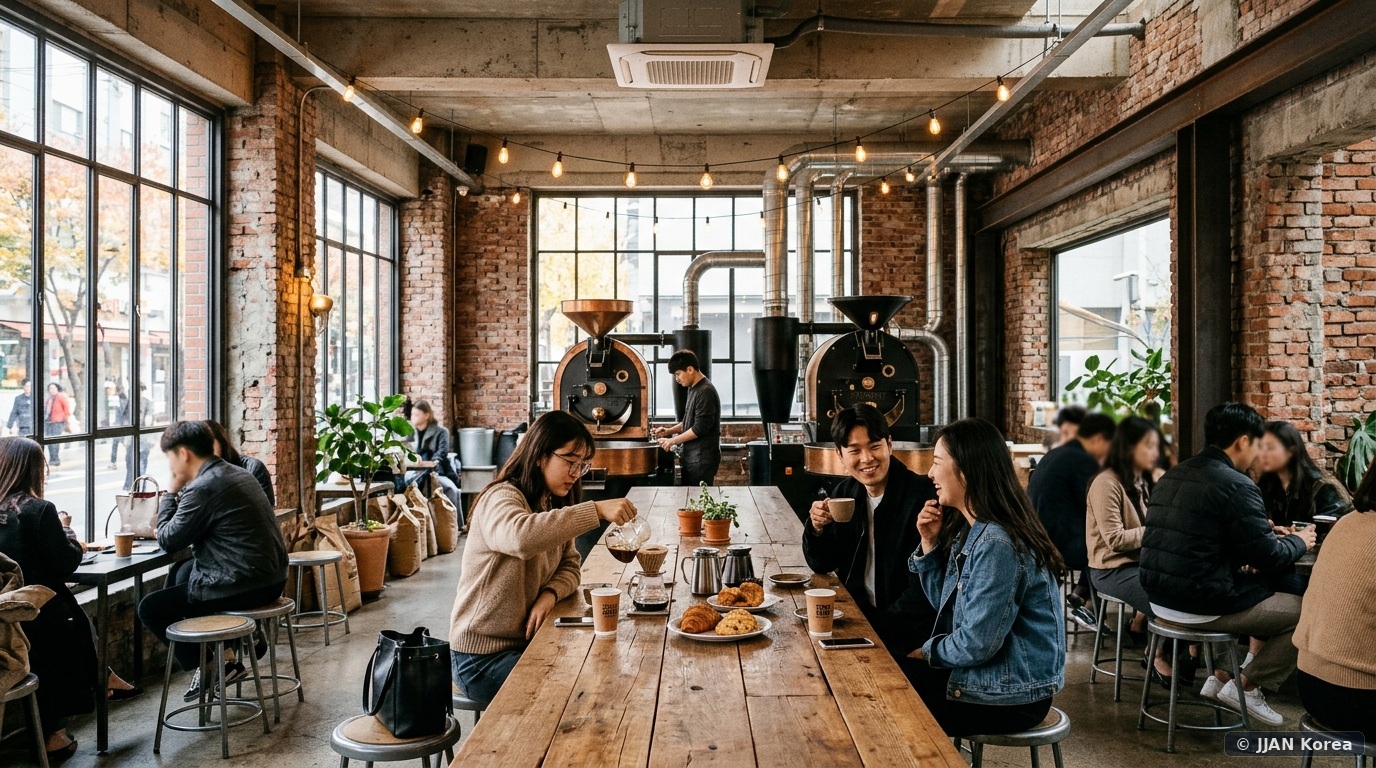
Located in eastern Seoul along the northern bank of the Han River, Seongsu-dong (성수동) has undergone the most electrifying urban regeneration transformation in modern East Asian history. Once an unglamorous industrial manufacturing enclave of leather tanneries, shoe cobbler workshops, and metal fabrication plants, Seongsu has blossomed into what international architecture and fashion critics universally crown the “Brooklyn of Seoul.” The neighborhood’s red-brick warehouse facades, corrugated steel loading docks, and weathered concrete walls have been ingeniously repurposed by visionary Korean architects into monumental specialty coffee roasteries, fragrant artisan sourdough bakeries, and multi-story futuristic luxury flagship boutiques. For design lovers, coffee purists, and cafe hoppers, wandering the autumn alleys of Seongsu offers a sensory feast of world-class espresso, piping-hot sea salt bread, and cutting-edge Korean retail theater.
1. From Shoe Cobblers to Cultural Hub: The Architecture of Seongsu
Unlike commercial retail districts dominated by generic glass towers, Seongsu’s aesthetic allure is rooted in its raw industrial bones. In the 1960s and 1970s, Seongsu was the manufacturing heart of Korea’s leather goods trade, home to hundreds of small-scale handmade shoe ateliers (Su-je-hwa – 수제화). When manufacturing decentralized, local creatives and coffee entrepreneurs preserved the weathered red brickwork, wooden roof trusses, and industrial pulleys, establishing a design philosophy known as Korean “Industrial Neo-Chic.”
| Iconic Seongsu Cafe | Architectural Origin | Signature Beverage / Pastry | Vibe & Atmosphere |
|---|---|---|---|
| Daelim Changgo (대림창고) | 1970s Rice storage mill & metal warehouse | Single-origin pour-over & strawberry cream tart | Monumental red brick gallery, indoor trees, skylights |
| Onion Seongsu (어니언 성수) | 1950s Metal parts factory & supermarket | Pandoro (powdered mountain bread) & flat white | Exposed crumbling plaster, rusted steel beams, rooftop terrace |
| Jayeon-do Salt Bread (자연도소금빵) | Modern minimalist open bakery | Fresh warm Sea Salt Butter Rolls (Sogeum-ppang) | Continuous baking queues; heavenly melted French butter aroma |
| Center Coffee (센터커피) | Renovated residential brick villa beside Seoul Forest | Geisha cold brew & seasonal fruit tonics | Tranquil leafy views overlooking Seoul Forest park trees |
Beyond coffee, by discovering exclusive designer clothing pop-up shops throughout Seongsu, visitors encounter the global flagship installations of Dior, Gentle Monster, Tamburins, and Musinsa, where luxury retail merges seamlessly with surreal contemporary art sculptures.
2. The Sea Salt Bread Phenomenon: Butter, Flakes & Sizzling Crusts
While croissants and canelés have their devotees, the undisputed monarch of contemporary Seoul bakery culture is Sogeum-ppang (소금빵 / Sea Salt Bread). Inspired by Japanese shio-pan but perfected into an artisan obsession in Seongsu, this unassuming crescent-shaped roll features a crispy, crackling exterior brushed with rich melted butter, topped with glistening flakes of French Fleur de Sel or Korean sinan solar sea salt.
When you tear the warm roll open, a hollow center created by a solid cylinder of grass-fed butter that melted during baking reveals itself, creating a glistening, chewy, buttery honeycomb crumb. At legendary kiosks like Jayeon-do Sogeum-ppang, bakers produce fresh batches six times daily using Canadian organic flour and Normandy butter. Customers line up along the pavement to purchase brown parchment bags of four rolls for 12,000 KRW, savoring the heavenly contrast of rich butter fat and crystalline salt while strolling through the autumn breeze.
3. Curating the Perfect Autumn Walking Itinerary: Yeonmujang-gil to Seoul Forest
To experience Seongsu without backtracking, follow this master 4-hour walking circuit:
- Stop 1: Yeonmujang-gil Fashion Core (11:00 AM): Emerge from Seongsu Station Exit 4 into Yeonmujang-gil boulevard. Browse cutting-edge pop-up fashion activations and fragrance testing labs (Tamburins flagship) before crowds peak.
- Stop 2: Architectural Coffee Break at Daelim Changgo (12:30 PM): Step inside the massive wooden double doors of Daelim Changgo. Marvel at towering ficus trees growing beneath skylights while sipping a rich, cocoa-noted espresso blend surrounded by giant kinetic art sculptures.
- Stop 3: Salt Bread & Indie Boutiques in Atelier Street (14:30 PM): Wander westward toward Seoul Forest into “Atelier Street,” lined with vintage vinyl listening bars, independent perfume ateliers, and handmade leather boot makers carrying on Seongsu’s artisanal shoe legacy.
- Stop 4: Golden Autumn Leaves at Seoul Forest (16:00 PM): Conclude your walk by crossing into Seoul Forest (Seoul-ui Sup – 서울숲). In mid-October, the park’s majestic Ginkgo Tree Promenade explodes into a blazing canopy of golden foliage. Sitting on a wooden park bench with a warm takeout latte while watching fallen yellow leaves flutter over the lake is pure autumn poetry.
4. Evening Transition: Craft Breweries & Natural Wine Bars
When dusk settles over Seongsu at 18:00 and coffee roasteries turn off their espresso machines, the neighborhood transitions into an intoxicating nocturnal hotspot. By transitioning from afternoon coffee roasteries to hip evening craft taprooms, visitors can explore pioneering urban breweries like Amazing Brewing Company, which operates out of a converted woodshop featuring 30 rotating craft beer taps ranging from juicy West Coast IPAs to seasonal persimmon sours.
5. Digital Queue Apps (Catch Table/Kakao), Pop-up Reservations & Rooftop Sunset Vistas
The rapid evolution of Seongsu-dong from an underground artisan enclave to East Asia’s premier retail pop-up capital has introduced sophisticated digital crowd management systems. On crisp autumn weekends, popular fashion pop-ups (hosted by luxury fashion houses, cutting-edge K-beauty brands, and indie eyewear labels along Yeonmujang-gil) and trending bakeries no longer operate on traditional physical walk-up lines. Instead, tablet-based digital queue portals—principally powered by Catch Table and Kakao Waiting—control venue capacity.
To avoid spending three hours waiting idly on congested sidewalks, adopt a tactical reservation workflow. Arrive in Seongsu between 10:30 AM and 11:15 AM before the major noon rush. Walk immediately to your top two prioritized pop-ups or famous bakeries (such as Jayeon-do Salt Bread or Point of View stationary salon) and scan the physical tablet kiosks positioned at their entrances. Enter your Korean mobile phone number or international WhatsApp contact to reserve an on-site queue ticket.
The automated messaging system will send live countdown notifications informing you how many parties remain ahead of you. While waiting for your queue ticket to activate, stroll leisurely toward Yeonmujang-gil’s converted brick side alleys, exploring independent leather design ateliers, fragrance showrooms, and vinyl record record stores without wasting time in stationary queues.
As the late-afternoon autumn sunlight casts warm golden hues across the industrial brick facades, make your way to Seongsu’s elevated rooftop terraces. Venues like Grandpa Factory (Harabeoji Gongjang) feature expansive wooden treehouses and open-air rooftop viewing decks surrounded by changing maple canopies. Here, you can sip a creamy roasted sesame Einspänner while listening to acoustic indie playlists, witnessing the transition of Seongsu from daytime coffee sanctuary into a buzzing evening dining hub.
For visitors holding foreign passports, many prominent Seongsu pop-up showrooms and flagship boutiques (such as Tamburins, Gentle Monster, and Amore Seongsu) offer instant on-site tax refunds (Immediate Tax Refund). Present your physical passport at the cash register when spending 15,000 KRW or more to have the 10% value-added tax (VAT) deducted immediately from your bill, eliminating the need to wait in airport refund queues later.
If you arrive carrying shopping bags or travel luggage, avoid hauling heavy bags along Seongsu’s cobblestone alleys. Seongsu Station (Subway Line 2) features automated digital luggage lockers (T-Locker) inside the concourse between Exits 1 and 4, payable via T-Money or foreign credit cards, providing secure storage for 4 to 12 hours while you explore the district unencumbered.
To cap off your Seongsu itinerary, take a relaxing 10-minute stroll south into adjacent Seoul Forest (Seoul-ui Sup). In mid-to-late October, the park’s majestic Metasequoia lane and Ginkgo tree groves burst into brilliant amber and gold foliage, creating a tranquil natural counterpoint to Seongsu’s industrial concrete chic.
5. Frequently Asked Questions (FAQ)
Q1: What are the best days and hours to visit Seongsu cafes?
Visit on weekdays (Tuesday through Thursday) between 11:30 AM and 15:00. On Saturday and Sunday afternoons, Seongsu experiences massive domestic crowds; lines for popular bakeries and pop-up boutiques can easily stretch to 45 minutes, and popular cafes require tablet waitlist queuing via Catch Table.
Q2: Can I work on a laptop with Wi-Fi in Seongsu cafes?
Yes, but check cafe policies: while spacious industrial roasteries like Daelim Changgo and Cafe Onion welcome laptop users and offer high-speed Wi-Fi, smaller boutique bakeries in the Seoul Forest residential sector enforce “No Laptop” policies on weekends to encourage high customer turnover.
Q3: How do I get to Seongsu-dong on the subway?
Take Seoul Subway Line 2 to Seongsu Station (성수역) and use Exit 3 or 4 to access the main Yeonmujang-gil cafe boulevard. Alternatively, take the Suin-Bundang Line to Seoul Forest Station (서울숲역) Exit 5 to access Atelier Street and the park promenade.
Q4: Do Seongsu cafes accept international credit cards?
Yes, virtually 100% of cafes, roasteries, and pop-up stores in Seongsu accept international credit cards (Visa, MasterCard, Amex) through standard contactless and IC chip readers. Cash is rarely required.
🛡️ JJAN Korea Editorial Standards & Fact-Checking Verification
This Seongsu-dong urban cafe and architecture guide has been curated and verified by Culture Editor Min-ah Kim in accordance with commercial zoning documentation issued by the Seongdong-gu District Urban Regeneration Bureau.
- Industrial heritage preservation bylaws cross-checked against Seongdong-gu Sustainable City Ordinances.
- Food safety and specialty bakery inspection records verified under the Food Sanitation Act.
- Public park operating guidelines audited with the Seoul Forest Park Management Office.