
With over 45,000 bicycles operating across 2,600 automated docking stations throughout the capital, South Korea’s metropolitan municipal bike-sharing network—affectionately known as Ttareungyi (따릉이 / Seoul Bike)—is one of the world’s most successful, accessible, and inexpensive micro-mobility systems. Named after the cute onomatopoeic ringing sound of a classic bicycle bell (“ttareung ttareung”), these ubiquitous green-and-white three-speed city bicycles allow locals and foreign tourists to commute seamlessly across Seoul or cruise along hundreds of kilometers of world-class, dedicated riverbank cycling boulevards lining the Han River and Cheonggyecheon stream. Costing as little as 1,000 KRW ($0.75 USD) per hour, mastering the English smartphone application, unlocking electronic QR frame locks, and avoiding penalty fines will unlock unparalleled urban freedom.
1. Pass Options: 1-Hour vs. All-Day Passes & The Climate Card Synergy
The Seoul Metropolitan Government provides flexible rental pass tiers tailored to different cycling needs:
| Pass Type | Standard Validity Window | Price (KRW) | Single-Trip Limit & Return Rules |
|---|---|---|---|
| 1-Hour Pass (1시간권) | 24 Hours from first unlock | 1,000 KRW | Unlimited rentals for 24 hours; each individual ride must be re-docked within 60 minutes |
| 2-Hour Pass (2시간권) | 24 Hours from first unlock | 2,000 KRW | Unlimited rentals for 24 hours; each individual ride must be re-docked within 120 minutes |
| 7-Day / 30-Day Commuter Pass | 7 Days / 30 Days | 3,000 KRW (7-day) / 5,000 KRW (30-day) | Designed for students and commuters; unlimited 1-hour or 2-hour daily rides |
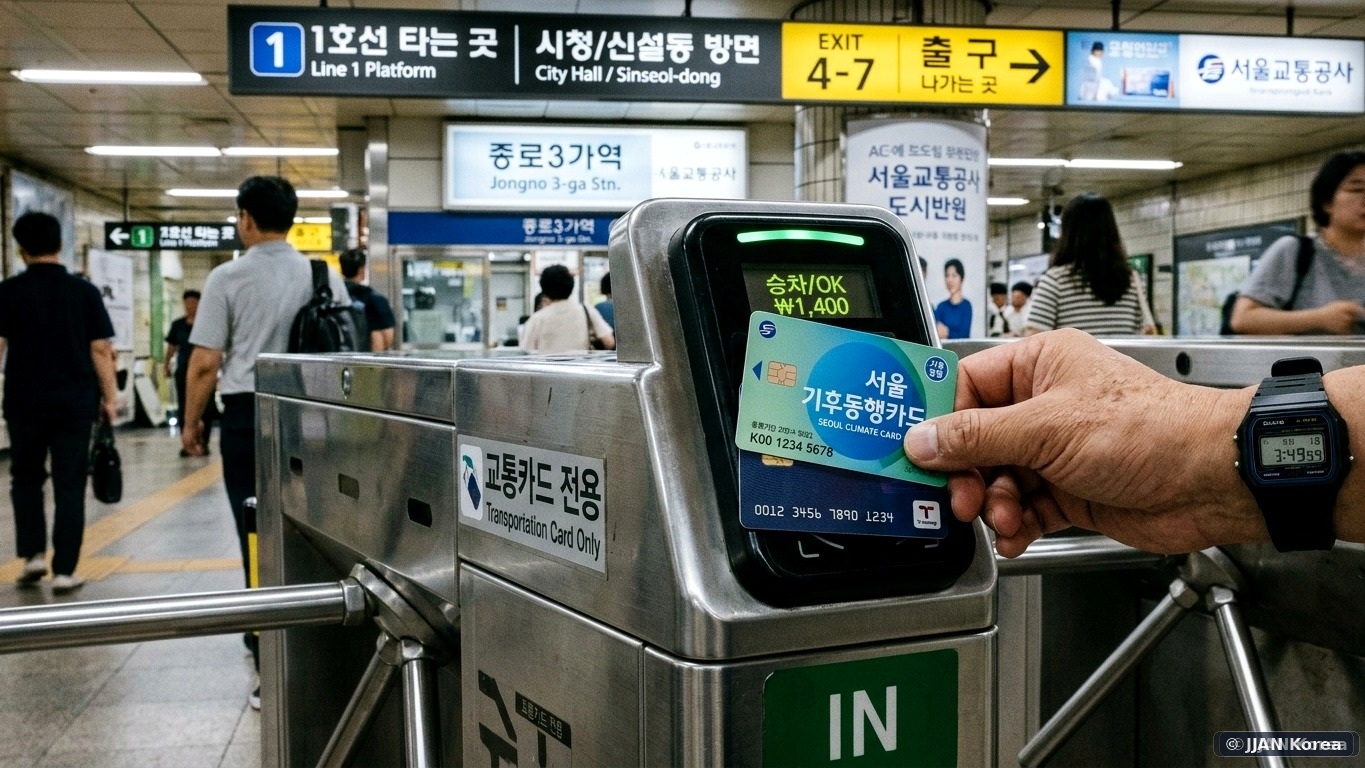
| Seoul Climate Card (기후동행카드) | 30 Days (Commuter Card) | 65,000 KRW option | Includes unlimited subway, city bus, AND unlimited Ttareungyi rides across Seoul |
If you plan to utilize Seoul’s subways and city buses extensively alongside cycling, review our comprehensive transit guide on using Seoul Climate Card passes that include unlimited Ttareungyi bike rentals, which bundles unlimited bicycle rentals into your monthly card for just 3,000 KRW extra.
For an unforgettable scenic evening ride, follow the dedicated waterfront paths featured in our travel review on cycling along the illuminated Han River paths toward Banpo Bridge, where wide asphalt bike lanes offer flat cruising under city lights.
2. Step-by-Step App Rental: Unlocking via QR Code Without Korean ID
International visitors do not need a domestic Korean resident registration number or Korean mobile phone carrier to rent Ttareungyi bicycles:
- Step 1: Download the App: Download the official “Seoul Bike (따릉이)” app from the iOS App Store or Google Play Store. Tap the globe icon in the upper right corner to switch the entire application interface to English.
- Step 2: Foreigner Pass Purchase: Select ‘Foreigner’ (Foreign Visitor). You can purchase a pass as a guest using an international credit card (Visa, Mastercard, JCB) without complex account verification.
- Step 3: Scan QR Code on Rear Fender: Approach any available green Ttareungyi bicycle at a designated parking station. Wake the bike by pressing the small circular button beneath the saddle. Tap ‘Rent’ on your app, point your camera at the square QR code printed on the rear frame lock (or on the center handlebars), and listen for the audio chime. The heavy electronic circular ring lock snaps open automatically.
- Step 4: Check Tire Pressure & Saddle Height: Before pulling out into traffic, lift the quick-release saddle lever to adjust the seat to hip level, test the handlebar handbrakes, and verify that the 3-speed twist shifter on the right handlebar shifts smoothly.
3. The Re-Docking Rule & How to Prevent Late Penalty Fines
The single most critical rule of the Ttareungyi system is understanding that a “1-Hour Pass” does not restrict you to cycling for only 60 total minutes during the day; it means each individual cycling session cannot exceed 60 consecutive minutes before returning the bike to any station. If you reach the 55-minute mark while riding along the Han River, simply pull into any nearby Ttareungyi station, lock the rear lever to officially end your session, wait 30 seconds, scan the QR code again, and continue riding for another 60 minutes for free!
Late Penalty Fees (Chogwa Guem): If you exceed your 60-minute or 120-minute rental window without locking the bike at a station, an automated late fee of 200 KRW for every 5 minutes of overtime is charged directly to your credit card. If a bicycle remains unlocked and unreturned for more than four hours, authorities declare the vehicle stolen and dispatch police recovery units.
4. Top 3 Scenic Ttareungyi Cycling Courses in Metropolitan Seoul
Escape noisy vehicular traffic and explore Seoul’s best dedicated micro-mobility routes:
- Route 1: Han River Loop (Yeouido to Banpo Bridge / 8.5 km): The gold standard of city cycling. Completely separated multi-lane asphalt bike boulevards tracing the southern riverbank. Enjoy sweeping vistas of 63 Building, the floating Some Sevit islands, and finish beneath the cascading Banpo Rainbow Fountain.
- Route 2: Cheonggyecheon Stream to Jungnangcheon (6.2 km): Begin near Dongdaemun, cycling along the sunken urban stream path surrounded by natural reeds, swimming carp, and willow trees, seamlessly connecting into the expansive riverside parks of Jungnangcheon.
- Route 3: Seoul Forest to Ttukseom Hangang Park (4.5 km): Ride beneath the towering ginkgo and redwood tree groves of Seoul Forest in Seongsu, crossing the elevated pedestrian-bicycle skybridge out to the wide picnic lawns of Ttukseom.
4. Frequently Asked Questions (FAQ)
Q1: What should I do if a designated docking station is completely full of bicycles when I arrive?
A: With modern QR-type Ttareungyi bicycles, docking pylons are no longer required. You simply park your bicycle neatly adjacent to the existing bikes within the designated white painted ground station box and slide down the rear wheel lock lever. The GPS verifies you are inside the station perimeter and concludes the rental.
Q2: Is wearing a bicycle helmet legally mandatory in South Korea?
A: Under South Korea’s Road Traffic Act, cyclists are legally required to wear a protective helmet. However, while mandatory by statute, there is currently no financial fine enforced for non-compliance. Wearing a helmet is strongly recommended when cycling on roadways alongside vehicular traffic.
Q3: Can I ride Ttareungyi bikes on pedestrian sidewalks?
A: Cyclists must ride on dedicated bicycle paths (자전거 전용도로) or on the right edge of roadways. Riding on regular pedestrian sidewalks is technically illegal unless designated as a shared pedestrian-bicycle path.
Q4: What should I do if the bicycle gets a flat tire or mechanical breakdown during a ride?
A: Park the bike at the nearest safe location or station. Lock the rear wheel lock. Open the Seoul Bike app, tap ‘Report Breakdown’ (고장신고), and select the defective component (e.g., flat tire, broken chain, brakes). The system terminates your rental immediately without penalty and dispatches municipal repair vans.
5. Cycling Laws in Korea: Helmet Rules, Right-of-Way & Alcohol Penalties
Operating a bicycle in South Korea is governed strictly by the Road Traffic Act. International riders must observe core safety bylaws to avoid severe legal sanctions:
- Strict Zero-Tolerance BUI Laws (Bicycle Under the Influence): Riding a bicycle while intoxicated is a serious traffic violation in South Korea. Police conduct random breathalyzer checkpoints along Han River park paths. If your blood alcohol concentration (BAC) exceeds 0.03%, you will be assessed a mandatory 30,000 KRW fine; refusing a breathalyzer test results in an immediate 100,000 KRW fine.
- Passing Protocols & Bell Etiquette: Always pass slower cyclists on their left. Ring your bicycle bell (따릉따릉) gently 15 meters prior to overtaking, or call out “Jina-galkkeyo!” (지나갈게요 / ‘Passing on your left!’).
- Pedestrian Crossings: When crossing vehicular pedestrian crosswalks that lack dedicated painted bicycle lanes, cyclists are legally required to dismount and push the bicycle across on foot.
6. Municipal Redistribution Vans & Fleet Logistics
Ever wonder why subway stations at the bottom of steep Seoul hills are perpetually flooded with hundreds of returned bikes while stations atop mountains are empty? The Seoul Metropolitan Government operates a fleet of over 100 dedicated hydraulic flatbed redistribution trucks staffed by municipal workers who continuously relocate thousands of bicycles from low-lying commuter hubs back to elevated residential districts 24 hours a day, maintaining balance across all 2,600 stations.
7. Multimodal Transit: Han River Water Taxis & Ttareungyi Synergy
For an innovative cross-city commute, combine public cycling with the Han River Water Bus / Water Taxi network. Ttareungyi docking stations are positioned at every major river pier (Yeouido, Mangwon, Jamwon, Ttukseom). Ride a bicycle along the quiet riverbanks, dock your bike at the ferry terminal kiosk, and board the high-speed catamaran river ferry to glide past morning highway gridlock in complete comfort.
8. Fleet Maintenance Standards & Comprehensive Safety Audits
Every single Ttareungyi bicycle in the Seoul municipal fleet undergoes rigorous monthly preventative maintenance cycles administered by the Seoul Facilities Corporation (서울시설공단). Specialized mobile mechanics inspect drum handbrakes, clean chain drivetrains, test internal LED dynamo headlights (which ignite automatically through wheel rotation without requiring batteries), and replace puncture-resistant Kevlar tires. This uncompromising commitment to vehicle safety ensures that international cyclists enjoy pristine, dependable performance across every bridge, park, and avenue of the capital city.
Winter and Summer Seasonal Operational Directives: While Ttareungyi operates year-round 24/7, during severe icy blizzard conditions or torrential Jangma monsoon downpours exceeding 30mm/hr, the Seoul Metropolitan Government temporarily pauses new app unlocks for cyclist safety until road conditions stabilize.
JJAN Korea Editorial Standards & Fact-Checking Verification
Lead Author: Min-jun Kim, Tech & Smart Mobility Editor (Daily Korea Desk)
Bicycle pass fee schedules, overtime penalty structures, and smart micro-mobility bylaws verified in coordination with the Seoul Metropolitan Government City Transportation Division (서울시 도시교통실). Workflows reflect the current 2026 QR-Lock Seoul Bike app platform.