As the autumn breeze cools the Korean peninsula and rice paddies turn into golden waves, one distinct aroma begins to fill traditional street markets and home kitchens: the sweet, herbal, resinous scent of fresh pine needles steaming over boiling cauldrons. This fragrance heralds the arrival of Songpyeon (송편), South Korea’s quintessential harvest confection and the culinary soul of the Chuseok holiday. Shaped like delicate half-moons and filled with toasted sesame seeds, sweet honey, nutty chestnuts, or savory whole soybeans, these chewy rice cakes represent centuries of agrarian gratitude, ancestral remembrance, and family bonding. For international travelers and residents discovering Korean culinary heritage, understanding how Songpyeon is crafted, the cultural symbolism behind its half-moon geometry, and how to savor its regional variations transforms a simple snack into an unforgettable cultural experience.
1. The Legend of the Half-Moon: Symbolism and Cultural Mythology
A question frequently posed by foreigners tasting Songpyeon for the first time is why a holiday celebrating the brilliant autumn full moon (Hangawi) is symbolized by a rice cake shaped like a half moon (Ban-dal – 반달). The answer lies in ancient Korean philosophical wisdom recorded in the historic chronicles of the Three Kingdoms period (Samguk Sagi).
According to historic legend dating back to King Uija of the Baekje Kingdom, a mysterious turtle emerged from the earth bearing cryptic markings on its shell: “Baekje is like the full moon; Silla is like the half moon.” When royal diviners deciphered the prophecy, they concluded that a full moon has reached its maximum luminance and can only wane into darkness, whereas a half moon holds infinite potential to grow, expand, and attain future fullness. Silla subsequently conquered Baekje and unified the peninsula. Ever since, Koreans have shaped Songpyeon as half moons—symbolizing continuous future prosperity, health, and burgeoning good fortune for the family.
Furthermore, an enduring Korean cultural proverb holds that anyone who molds smooth, aesthetically pleasing Songpyeon will find a handsome spouse and give birth to beautiful, healthy children. As a result, when multi-generational families gather around kitchen tables on the eve of Chuseok, rolling and pinching the edges of the dough becomes a warm, lively competition among siblings and in-laws.
2. Anatomy of Songpyeon: Natural Colorants and Signature Fillings
Authentic Songpyeon dough is made exclusively from freshly harvested short-grain non-glutinous rice flour (Mepssal – 멥쌀). Unlike the gummy, elastic texture of Japanese mochi (which uses glutinous sweet rice), Korean Songpyeon delivers a firm, toothsome, pleasantly chewy bite (Jondeuk-jondeuk – 쫀득쫀득). The dough is traditionally divided and colored using five harmonious natural botanical powders matching the Korean five-element spectrum (Obangsaek):
| Dough Color | Natural Plant Colorant Source | Traditional Symbolic Meaning | Flavor Profile |
|---|---|---|---|
| White (Baek-songpyeon) | Pure unadulterated white rice flour | Purity, truth, and pristine beginnings | Clean, subtle sweetness of fresh autumn rice |
| Green (Ssuk-songpyeon) | Wild mugwort herb (Ssuk / 쑥) | Vitality, spring resilience, and health | Earthy, aromatic herbal tea notes |
| Yellow (Norang-songpyeon) | Gardenia seeds (Chija) or sweet pumpkin (Dankobak) | Abundance, harvest gold, and warmth | Mildly sweet, velvety squash undertone |
| Pink / Red (Bunhong-songpyeon) | Omija berries (five-flavor berry) or red beet | Joy, protection against evil spirits | Delicate tartness balancing the filling |
| Purple / Black (Geomeun-songpyeon) | Heukmi (heirloom purple rice) or roasted black sesame | Wisdom, depth, and longevity | Deep, toasted nutty complexity |
The interior fillings (Songpyeon-so – 송편소) vary widely depending on personal palate and regional tradition. The undisputed favorite among younger generations and foreigners is Kkae-so (깨소)—a heavenly mixture of toasted whole sesame seeds crushed with brown sugar, honey, and a pinch of sea salt. When steamed, the sugar melts into a hot, molten syrup that bursts luxuriously in your mouth upon the first bite. Other beloved traditional fillings include Bam-so (steamed mashed chestnuts sweetened with honey), Kong-so (nutty, whole black soybeans lightly seasoned with salt), and Dongbu-so (velvety white cowpea paste with a delicate, creamy mouthfeel).
3. The Essential Function of Fresh Pine Needles (Solnip)
The syllable Song (송) in Songpyeon derives directly from the Sino-Korean character for pine tree (松). In traditional preparation, a dense bed of freshly plucked Korean red pine needles (Solnip – 솔잎) is spread across the bamboo steaming tier before arranging the raw rice cakes. The cakes are steamed for approximately 20 to 25 minutes, followed by a cold water bath and a light brushing of pure toasted sesame oil (Chamgireum).
Steaming over pine needles serves three indispensable scientific and culinary functions:
- Natural Phytoncide Preservation: Pine needles release powerful antimicrobial compounds known as phytoncides (terpenes). In pre-refrigeration Joseon dynasty Korea, these phytoncides inhibited bacterial growth, preventing the moist rice cakes from souring during warm autumn afternoons.
- Anti-Adhesive Barrier: The needle mattress prevents the delicate, sticky rice starch from adhering to the wooden steamer racks or fusing individual cakes into an unmanageable mass.
- Aromatic Pine Infusion & Imprint: The volatile oils penetrate the translucent rice skin, cutting the richness of the sugary sesame filling with an invigorating forest aroma, while leaving decorative geometric needle line imprints across the surface of the dough.
4. Where to Buy and Taste Artisan Songpyeon in Seoul
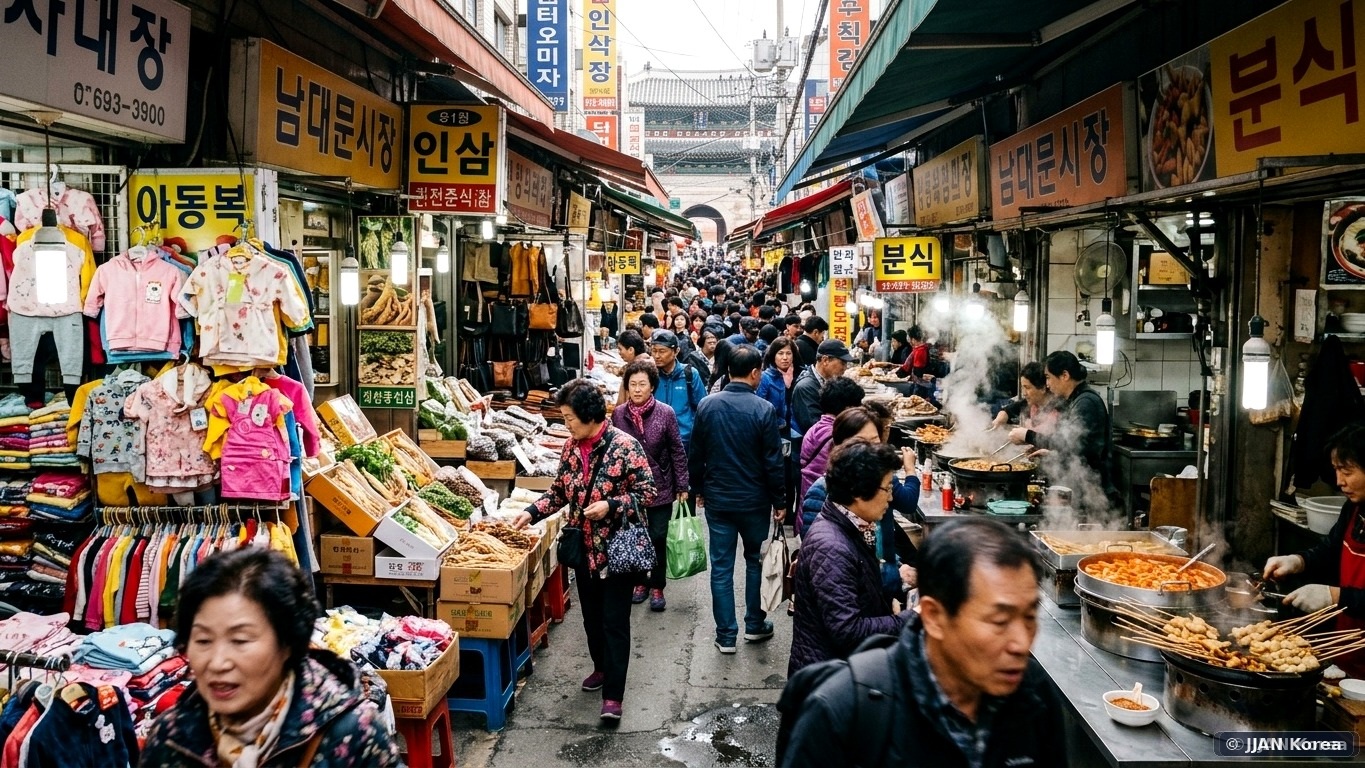
If you are not joining a Korean family kitchen to make rice cakes by hand, experiencing freshly steamed artisan Songpyeon in Seoul is exceptionally easy. Two days prior to Chuseok, traditional street markets become epicenters of rice cake production. By purchasing freshly steamed artisan tteok rice cakes at historic markets such as Namdaemun, Gwangjang, and Mangwon Market, you can observe giant steam clouds billowing from industrial steamers while grandmothers pack warm boxes for 5,000 to 10,000 KRW.
For a more contemplative, upscale experience, head to the historic Hanok alleys of Jongno. By pairing seasonal rice cakes with warm traditional teas in Insadong, historic tea salons serve curated dessert trays featuring three colors of artisan Songpyeon served alongside steaming cups of sweet iced cinnamon-ginger tea (Sujeonggwa) or fermented rice punch (Sikhye).
4. Regional Songpyeon Diversity Across the Korean Peninsula
While the classic crescent-shaped sesame songpyeon reigns supreme in Seoul and central Gyeonggi Province, South Korea’s diverse agricultural topography gave rise to fascinating regional interpretations that reflect local terroir and historical survival ingenuity:
- Gangwon Province Potato Songpyeon (Gamja Songpyeon): In the rugged mountain highlands of Gangwon, where rice cultivation was historically limited, residents used fermented potato starch instead of rice flour. Hand-pressed with four distinct finger indentations, these translucent, chewy gray cakes are filled with sweet kidney beans and deliver a uniquely elastic texture unlike any lowland rice cake.
- Chungcheong Province Sweet Pumpkin Songpyeon (Hobak Songpyeon): Chungcheong cooks knead sweet steamed kabocha pumpkin directly into the dough, creating a vibrant harvest-gold skin. The cakes are sculpted with fine wooden scoring tools to resemble miniature ribbed pumpkins, complete with a tiny rolled pine nut inserted into the crown as a decorative pumpkin stem.
- Jeolla Province Flower Songpyeon (Kkot Songpyeon): Famous for its lavish aristocratic banquet traditions, southwestern Jeolla Province elevates rice cakes into high edible art. Using mugwort, gardenia, and omija berry doughs, artisans hand-carve intricate five-petal plum blossoms, chrysanthemum leaves, and lotus rosettes directly onto the surface of the half-moon dumplings.
- Jeju Island Pea Songpyeon (Wan-du Songpyeon): On subtropical Jeju Island, songpyeon was traditionally shaped into rounded saucers resembling volcanic craters (Oreum) or flying saucers, filled with sweetened green peas and local adzuki red beans.
5. Frequently Asked Questions (FAQ)
Q1: Do you eat the pine needles stuck to the outside of the Songpyeon?
No! While pine needles are completely non-toxic and food-safe, they are stiff and sharp. Simply peel away any remaining stray pine needles before placing the rice cake into your mouth. The thin sheen of sesame oil brushed over the rice cake makes removing the needles effortless.
Q2: How should leftover Songpyeon be stored and reheated?
Because Songpyeon is made from non-glutinous rice flour, it will harden rapidly through retrogradation if kept in a standard refrigerator. If you cannot finish your rice cakes within 24 hours, place them into an airtight container and freeze them immediately. To reheat, steam them for 7 to 10 minutes or microwave them covered with a damp paper towel for 30 to 45 seconds to restore their original pillowy chewiness.
Q3: Are Songpyeon rice cakes vegan and gluten-free?
Yes, the vast majority of traditional Songpyeon varieties are naturally vegan and 100% gluten-free. The dough consists purely of rice flour, water, salt, and vegetable dyes, while standard fillings use sesame seeds, beans, chestnuts, and sugar. However, those with severe gluten celiac sensitivity should verify that commercial market vendors did not dust their preparation surfaces with wheat flour.
Q4: What is the difference between Songpyeon and standard Tteok?
Tteok is the overarching umbrella term for all Korean rice cakes (encompassing hundreds of varieties, from sliced soup rice cakes Tteokguk to sweet pounded Injeolmi). Songpyeon is a very specific subcategory of stuffed, half-moon shaped steamed tteok prepared exclusively during the Chuseok holiday season.
🛡️ JJAN Korea Editorial Standards & Fact-Checking Verification
This cultural culinary guide to Chuseok Songpyeon has been authored and verified by Culture Editor Min-ah Kim in consultation with records preserved by the National Institute of Korean Korean Food Promotion (KFPI) and the Rural Development Administration (RDA).
- Historical Three Kingdoms folklore verified against Samguk Sagi (Chronicles of the Three Kingdoms) English translations.
- Nutritional values and starch gelatinization stages confirmed via RDA Traditional Food Composition Tables.
- Artisan market sourcing locations reviewed and checked for seasonal Chuseok operating accuracy in Seoul.