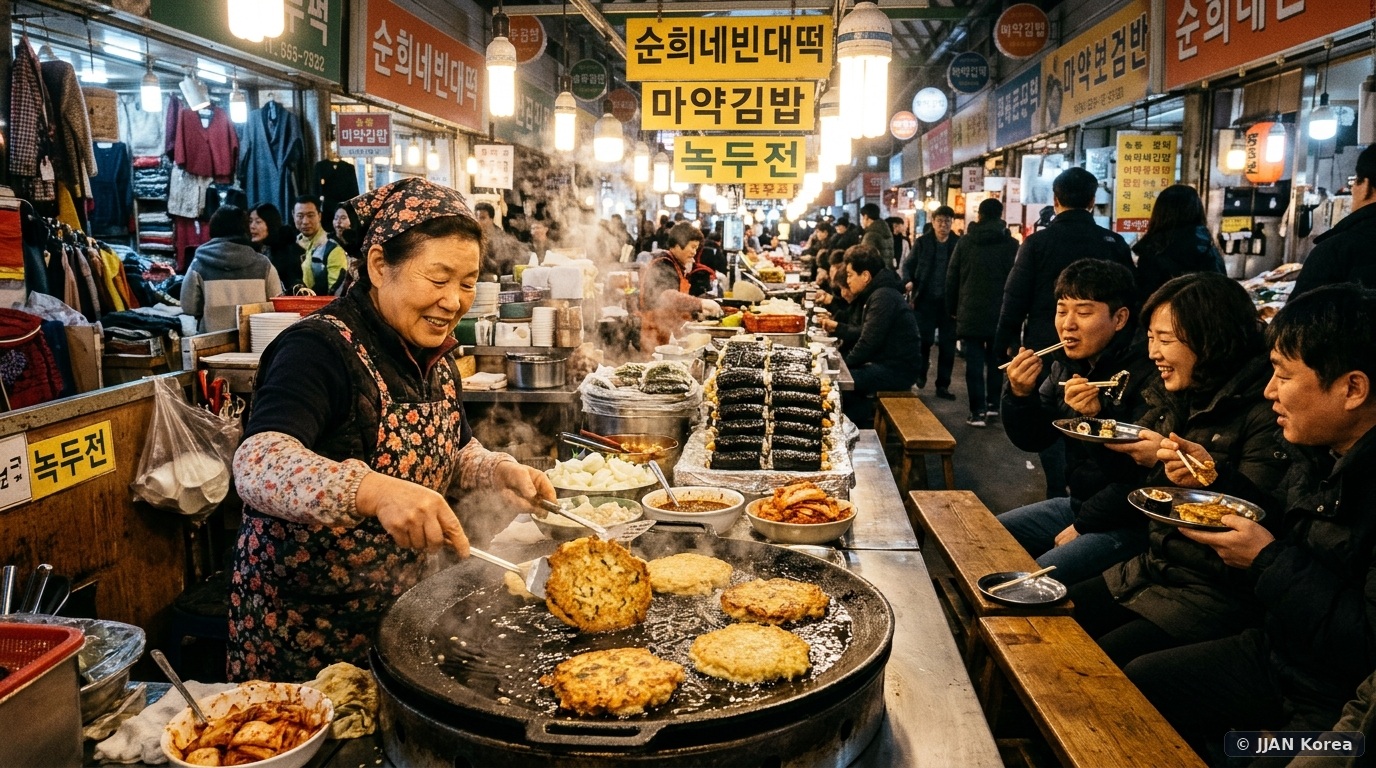

Stepping beneath the glowing red-and-white fabric banners of Gwangjang Market (광장시장) in central Jongno is an immediate, intoxicating sensory explosion. The air is thick with the tantalizing aroma of sizzling mung bean pancakes frying in cast-iron vats, the rhythmic thud of granite grinding stones crushing legumes, the hiss of steaming dumplings, and the energetic shouts of veteran market matriarchs (Imo / 이모 / Aunties) beckoning passersby to pull up a stool at their illuminated wooden counters.
Established in 1905 as South Korea’s very first permanent, private retail market, Gwangjang Market has endured over 120 years of turbulent modern history to become the undisputed, beating gastronomic heart of authentic Korean street food. Celebrated globally by culinary luminaries and featured in Michelin Bib Gourmand listings and Netflix’s Street Food: Asia, navigating its labyrinthine culinary intersections requires understanding iconic signature dishes, stall seating protocols, cash and card payment realities, and tourist price-gouging defenses. This field-tested gastronomic crawl guide prepares food lovers for an unforgettable feast in 2026.
1. The Holy Trinity: Gwangjang Market’s Must-Eat Signature Dishes
While hundreds of stalls offer tempting fare, three legendary culinary specialties define the true Gwangjang Market heritage experience:
| Iconic Signature Dish | Korean Name & Pronunciation | Culinary Anatomy & Preparation | Average Price (KRW) |
|---|---|---|---|
| Crispy Mung Bean Pancake | Bindaetteok (빈대떡) | Soaked dried mung beans ground on rotating granite millstones, mixed with bean sprouts, scallions, and pork, then shallow-fried in bubbling corn oil until golden and ultra-crispy. Dip into pickled onion soy sauce! | ₩5,000 – ₩6,000 per gigantic pancake |
| Raw Beef Tartare with Live Octopus | Yukhoe Tangtangi (육회 탕탕이) | Chilled, ruby-red lean beef strip tartare marinated in toasted sesame oil and garlic, topped with live squirming octopus tentacles (산낙지 / Sannakji), crisp Korean pear matchsticks, and a golden raw egg yolk. | ₩32,000 – ₩35,000 (Serves 2 people) |
| “Drug” Mini Gimbap Rolls | Mayak Gimbap (마약김밥) | Bite-sized seaweed rice rolls filled with pickled yellow radish, carrots, and spinach, brushed with fragrant sesame oil and toasted seeds. Called “Mayak” (Narcotic) because the spicy piquant hot mustard dipping sauce makes them dangerously addictive! | ₩3,000 – ₩4,000 per portion (6–8 rolls) |
2. Beyond the Classics: Knife-Cut Noodles, Blood Sausage & Twisted Donuts
If you arrive with a hearty appetite, explore these additional market wonders:
1. Handmade Knife-Cut Noodles (Kalguksu / 칼국수)
Stall 70 (Gohyang Kalguksu / 고향칼국수), made globally famous by Netflix’s Street Food documentary, features matriarch Cho Yoon-sun rolling, kneading, and hand-slicing fresh wheat noodles to order. The steaming noodles are served in a rich, comforting broth brewed from dried anchovies and kelp, accompanied by giant pork-and-kimchi steamed dumplings (Mandu) and freshly fermented garlic kimchi (₩7,000 per bowl).
2. Giant King Sundae Blood Sausage (왕순대)
Unlike standard skinny convenience store sausages, Gwangjang’s King Sundae are colossal, measuring over two inches in diameter. Filled with glutinous rice, sweet potato glass noodles, pork blood, and perilla leaves, they are steamed hot and served sliced alongside boiled pork liver and lungs with chili salt.
3. The Famous Twisted Glutinous Rice Donuts (Kkabaegi / 찹쌀꽈배기)
Located right beside Gwangjang Market’s North Gate 2 entrance, this humble bakery stall attracts queues stretching 50 meters down the street. Freshly fried to order, these golden braided donuts made from chewy glutinous rice dough are dredged in cinnamon sugar while scorching hot (₩1,000 each). It is the ultimate sweet conclusion to a savory market crawl!
3. The Secret “Yukhoe Alley” & Michelin Recognition
While central open-air market stalls serve excellent street snacks, the undisputed home of beef tartare is tucked away in a narrow pedestrian corridor known as Yukhoe Alley (육회골목). Located behind the textile stalls, this alley houses air-conditioned, sit-down restaurants specializing in fresh Korean beef:
- Buchon Yukhoe (부촌육회): Awarded the prestigious Michelin Guide Bib Gourmand every consecutive year since 2017. Established in 1965, Buchon sources prime beef fresh daily from the Majang Meat Market. The meat is tender, velvety, and served with a complimentary bowl of piping-hot radish beef soup (Sogogi Muguk). Expect a 30 to 45-minute queue during lunch and dinner peaks!
- Changsin Yukhoe (창신육회): An equally legendary, spacious local institution located directly across the alley, famous for fast service, ice-cold Cass draft beer, and spicy Yukhoe Bibimbap (₩10,000). Pair your meal with traditional drinks explored in our Korean drinking culture and sulzip etiquette guide.
4. Practical Market Navigation: Seating, Payments & Tourist Scams
Enjoying Gwangjang Market like a seasoned Seoulite requires observing key market mechanics:
- Seating Etiquette & Heated Benches: The narrow wooden benches surrounding street food counters are communal. Simply slide onto any vacant wooden space. During winter, market stalls feature ingenious **electrically heated thermal benches** that keep you toasty warm while eating outdoors!
- Cash vs. Credit Cards: Sit-down indoor restaurants (like Buchon Yukhoe and Sunhee’s Bindaetteok) accept 100% international credit cards. However, small open-air central food stalls and fried donut kiosks strongly prefer cash (KRW) or domestic bank transfers. Withdraw ₩20,000 to ₩30,000 in physical cash from global ATMs detailed in our Korean ATM foreign card withdrawal guide before arriving.
- Defending Against “Mixed Platter” Upcharging: Following high-profile municipal crackdowns on street food price gouging, the Seoul Metropolitan Government mandates clear statutory price signs. At Sundae or pancake stalls, vendors may ask: “Modeum? (모듬? / Assorted Mixed Platter?)” Be aware that mixed platters cost ₩15,000 to ₩25,000, whereas a single standard portion of Bindaetteok is only ₩5,000. Specify clearly: “Bindaetteok hana juseyo (빈대떡 하나 주세요 / One mung bean pancake, please).”
5. Gwangjang Market Crawl Checklist
- Arrived via Jongno 5-ga Station (Line 1, Exit 7 or 8) or Euljiro 4-ga (Line 2/5).
- Prepared ₩20,000 to ₩30,000 cash for open-air market counters and donut queues.
- Ordered crispy Bindaetteok with pickled onion soy sauce and a bottle of chilled Makgeolli.
- Visited Michelin Bib Gourmand Buchon Yukhoe for fresh beef tartare and live octopus.
- Dipped Mayak Gimbap into piquant yellow mustard sauce.
- Finished the crawl with a hot cinnamon twisted donut (Kkabaegi) at North Gate 2.
6. Frequently Asked Questions (FAQ)
What are Gwangjang Market’s operating hours?
The central food street (Meokja Golmok) is open 365 days a year from 09:00 AM to 23:00 PM. Peak vibrant dining energy runs from 18:00 to 22:00. Note: The vintage clothing market and traditional silk fabric stalls on the second floor close earlier, typically by 18:00 to 19:00 PM and are shuttered on Sundays.
Is it safe to eat live octopus (Sannakji)?
Yes. The octopus is freshly prepared, chopped into small segments, and dressed in sesame oil. While the nerve endings cause the suction cups to squirm, the octopus is completely dead. Safety Rule: Chew each piece thoroughly before swallowing to prevent suction cups from adhering to the inside of your throat, or dip it generously in sesame oil to lubricate the cups.
Are there vegetarian options at Gwangjang Market?
Yes! While many Bindaetteok pancakes contain minced pork, several prominent stalls (including Sunhee’s Bindaetteok) prepare pure vegetarian mung bean pancakes (Nokdu Bindaetteok / 녹두빈대떡) made strictly from ground mung beans, scallions, and bean sprouts. Clarify with the vendor: “Gogi ppae-juseyo (고기 빼주세요 / Please omit meat).”
How do I travel between Gwangjang Market and Namdaemun Market?
Take Seoul Subway Line 1 from Jongno 5-ga Station directly to City Hall or Seoul Station (3 stops, 6 minutes), or ride Line 4 to Hoehyeon Station for Namdaemun Market. Alternatively, enjoy a scenic 25-minute walk along the Cheonggyecheon Stream pedestrian walkway. Compare market specialties in our Namdaemun Market shopping and street food guide.
JJAN Korea Editorial Standards & Fact-Checking Verification
This culinary heritage dossier was field-tested across 25 food stalls in Gwangjang Market by Culture Editor Min-ah Kim and Travel Editor Do-jun Kim in coordination with the Jongno-gu Traditional Market Merchants Association. Pricing and hygiene guidelines reflect official 2026 standards.
🛡️ JJAN Korea Editorial Standards & Fact-Checking Verification
This article was independently researched, field-tested, and audited by the JJAN Korea Culinary Heritage & Food Culture Desk in Seoul. Field-audited across 25 food stalls by our culinary team in coordination with the Jongno-gu Traditional Market Merchants Association.
Notice an unlisted policy change, fare update, or revised administrative rule? Help us keep our international community accurately informed: Submit a Correction to our Seoul Newsroom.