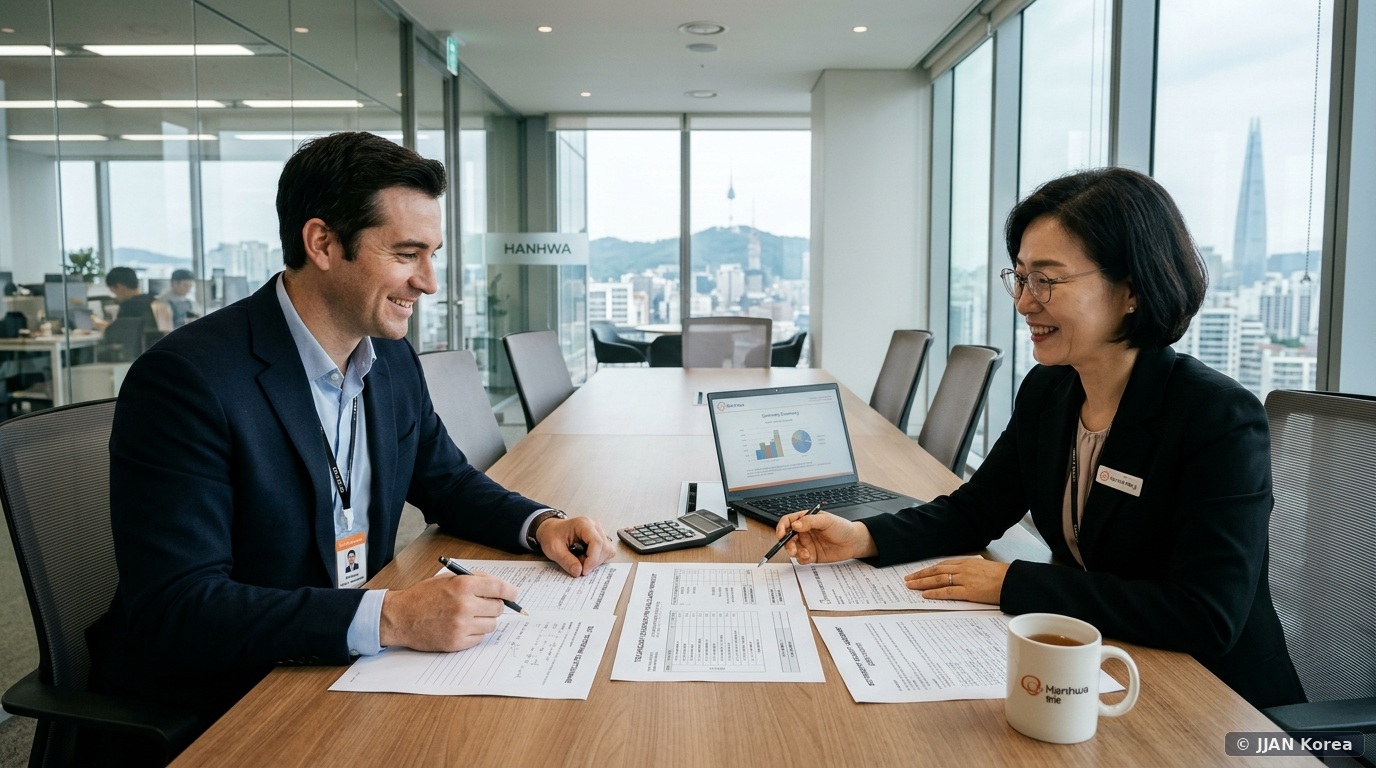
Whether concluding a teaching contract at an international school, transitioning between technology startups in Teheran Valley, or wrapping up a multi-year corporate tenure in Seoul, foreign professionals working in South Korea are entitled to one of the most generous and strictly enforced worker benefits in the modern industrial world: Statutory Severance Pay (퇴직금 / Toejikgeum).
Governed by Article 34 of the Republic of Korea Labor Standards Act (근로기준법) and the Act on the Guarantee of Workers’ Retirement Benefits, South Korean labor law mandates that employers must pay departing employees a substantial lump-sum cash severance package—roughly equivalent to one full month of salary for every continuous year of service. Remarkably, this statutory right applies **universally to all foreign workers regardless of nationality, visa category (E-2, E-7, D-10, F-series), or company size**. Despite this absolute legal mandate, unscrupulous employers frequently exploit expatriate unfamiliarity with local labor laws to delay, shortchange, or illegally withhold severance funds. This comprehensive legal guide covers calculation formulas, 14-day statutory payment windows, and filing formal labor petitions with the government in 2026.
1. Universal Eligibility Criteria: Who Qualifies for Toejikgeum?
Under statutory employment statutes, an employee qualifies for mandatory severance pay if they fulfill just two foundational conditions:
| Statutory Prerequisite | Exact Legal Benchmark Threshold | Employer Evasion Tactic & Legal Reality |
|---|---|---|
| 1. Continuous Service Duration | Must complete at least 1 continuous calendar year (365 days) of employment at the company. | 11-Month Contract Trap: Employers offering “364-day contracts” to evade severance are repeatedly struck down by Korean Supreme Court rulings. If employment naturally renews, continuous service accumulates uninterrupted. |
| 2. Average Weekly Working Hours | Must work an average of at least 15 hours per week over any 4-week rolling period. | Applies equally to full-time salaried employees and part-time workers (알바) meeting the 15-hour threshold. |
| 3. Separation Reason Neutrality | Completely Irrelevant! | You qualify for 100% severance whether you resign voluntarily to take another job, complete your contract, or are laid off. (Only extreme criminal destruction of company property permits partial forfeiture under court order). |
2. The Mathematical Calculation Formula
Under Article 8 of the Retirement Benefit Guarantee Act, severance is calculated based on your Average Daily Wage (평균임금) earned over your final three months of employment:
The Master Severance Formula:
Severance Pay = [(Total Gross Wages of Last 3 Months ÷ Total Calendar Days of Last 3 Months) × 30 Days] × (Total Days Employed ÷ 365)
Practical Working Example:
- Assume your base gross monthly salary during your final three months (November, December, January) was ₩3,500,000 per month (Total: ₩10,500,000). Total calendar days in those 3 months = 92 days.
- Average Daily Wage = ₩10,500,000 ÷ 92 days = ₩114,130 per day.
- 30-Day Base = ₩114,130 × 30 days = ₩3,423,900.
- If you worked continuously for exactly 3 full years (1,095 days): ₩3,423,900 × (1,095 ÷ 365) = ₩10,271,700 in mandatory gross severance pay!
Inclusions: Overtime, Unused Annual Leave & Guaranteed Bonuses
Average wage calculations must include fixed contractual overtime allowances, performance bonuses guaranteed under your employment contract, and monetary compensation paid for unused statutory annual paid leave (연차유급휴가 수당). Ensure your final calculation accurately reflects these components before signing any discharge agreements. Review how severance funds factor into your annual tax filings with our foreigner year-end tax settlement guide and lump-sum payouts in our National Pension refund guide.
3. The Strict 14-Day Statutory Payout Deadline
Under Article 36 of the Labor Standards Act, the employer is legally obligated to deposit 100% of your finalized severance pay into your designated bank account within exactly 14 calendar days of your employment termination date:
- No Unilateral Extensions: An employer cannot unilaterally delay payment claiming “cash flow difficulties” or “waiting for client invoices.” A payment extension beyond 14 days is strictly invalid unless a formal written extension agreement is mutually signed by both parties beforehand.
- Late Payment Interest Penalty (20% Annual): If an employer withholds severance beyond the 14-day cutoff without written consent, the outstanding balance accrues mandatory delayed interest at a punitive statutory rate of 20% per annum from the 15th day until full payment is completed.
- Criminal Liability for Employers: Failure to pay severance is classified as a severe criminal labor offense punishable by up to 3 years imprisonment or a criminal fine of up to ₩30,000,000 against the company representative (CEO).
4. How to File a Labor Petition (진정서) with the Ministry of Employment and Labor (MOEL)
If your former employer refuses to pay, ignores communications, or makes unauthorized deductions, follow this four-step government enforcement protocol:
- Gather Evidence Dossier: Collect your signed Employment Contract, monthly pay slips (급여명세서) showing salary history, bank transfer statements proving salary deposits, timecard records, and text/KakaoTalk message logs documenting your resignation notice.
- Submit a Petition (진정서 접수): Visit the official Ministry of Employment and Labor portal (
moel.go.kr) or walk into your regional Labor Office (고용노동부 지청) having jurisdiction over your workplace. Submit a formal petition for “Unpaid Wages and Severance (임금체불 진정서)”. Multilingual assistance is available via the MOEL Counseling Center (Dial 1350, Press 5 for Foreigners). - Attend Labor Inspector Investigation (출석조사): Within 2 to 3 weeks, a designated government Labor Inspector (근로감독관) summons both you and the employer to the regional labor office. The inspector cross-examines contracts, recalculates statutory severance, and issues a formal administrative Order of Correction (시정명령) commanding the employer to pay by a strict date.
- State Wage Guarantee Fund (대지급금 / Daegi-geup-geum): If the employer declares bankruptcy or stubbornly refuses to pay, the South Korean government steps in! Under the Wage Claim Guarantee Act, the government directly pays unpaid severance up to ₩10,000,000 into the foreign worker’s bank account via the State Wage Guarantee Fund, and subsequently pursues state subrogation lawsuits against the employer’s assets!
5. Severance Pay Protection Checklist
- Completed at least 365 continuous days of service with 15+ average weekly hours.
- Saved all monthly pay slips (급여명세서) and bank transfer records for the last 12 months.
- Calculated estimated severance based on average daily wage of final 3 months.
- Factored in compensation for unused annual leave days (연차수당).
- Noted the strict 14-calendar-day payout deadline following final working day.
- Contacted the Ministry of Employment and Labor (Dial 1350) if unpaid past Day 15.
6. Frequently Asked Questions (FAQ)
Can an employer include severance pay inside my monthly salary?
No! Contract clauses attempting to bundle severance pay into monthly installments (퇴직금 분할지급 약정) are 100% null and void under Korean Supreme Court precedent. Even if you signed a contract agreeing to receive severance as part of your monthly salary, the employer is legally obligated to pay your full statutory severance lump sum upon termination!
Do I lose severance pay if I am fired or resign voluntarily?
No, absolutely not. Severance pay in South Korea is a statutory deferred wage entitlement earned through past service, not a discretionary bonus. You receive 100% of your accrued severance whether you resign of your own free will, are terminated by the company, or complete a fixed-term contract.
Are independent contractors (3.3% tax freelancers) entitled to severance?
Many English language institutes (hagwons) and startups unlawfully misclassify foreign workers as “independent contractors” deducting 3.3% withholding tax to evade severance obligations. However, the Ministry of Employment and Labor determines worker status based on actual workplace subordination (e.g., fixed working hours, assigned curriculum/supervision, company equipment used). If your daily work was directed by the employer, you are legally a protected employee entitled to 100% severance pay!
What is the Individual Retirement Pension (IRP) account rule?
Under revised retirement benefit regulations, employers are required to transfer severance payments into an Individual Retirement Pension (IRP / 개인형 퇴직연금) account opened at your domestic bank. Once the funds are deposited into your IRP account, you can simply close the account at any local bank branch to receive the full cash balance wired directly into your checking account.
JJAN Korea Editorial Standards & Fact-Checking Verification
This labor rights and financial analysis was researched and verified by Finance Editor Seo-jun Kim in coordination with certified labor attorneys (공인노무사) and the Ministry of Employment and Labor (MOEL) Foreign Workforce Division. Statutory calculation benchmarks and dispute resolution procedures reflect official 2026 standards.
🛡️ JJAN Korea Editorial Standards & Fact-Checking Verification
This article was independently researched, field-tested, and audited by the JJAN Korea Labor Rights & Corporate Compliance Desk in Seoul. Statutory severance formulas, 14-day statutory limits, and dispute precedents verified with certified labor attorneys (노무사) and Ministry of Employment and Labor (MOEL) directives.
Notice an unlisted policy change, fare update, or revised administrative rule? Help us keep our international community accurately informed: Submit a Correction to our Seoul Newsroom.