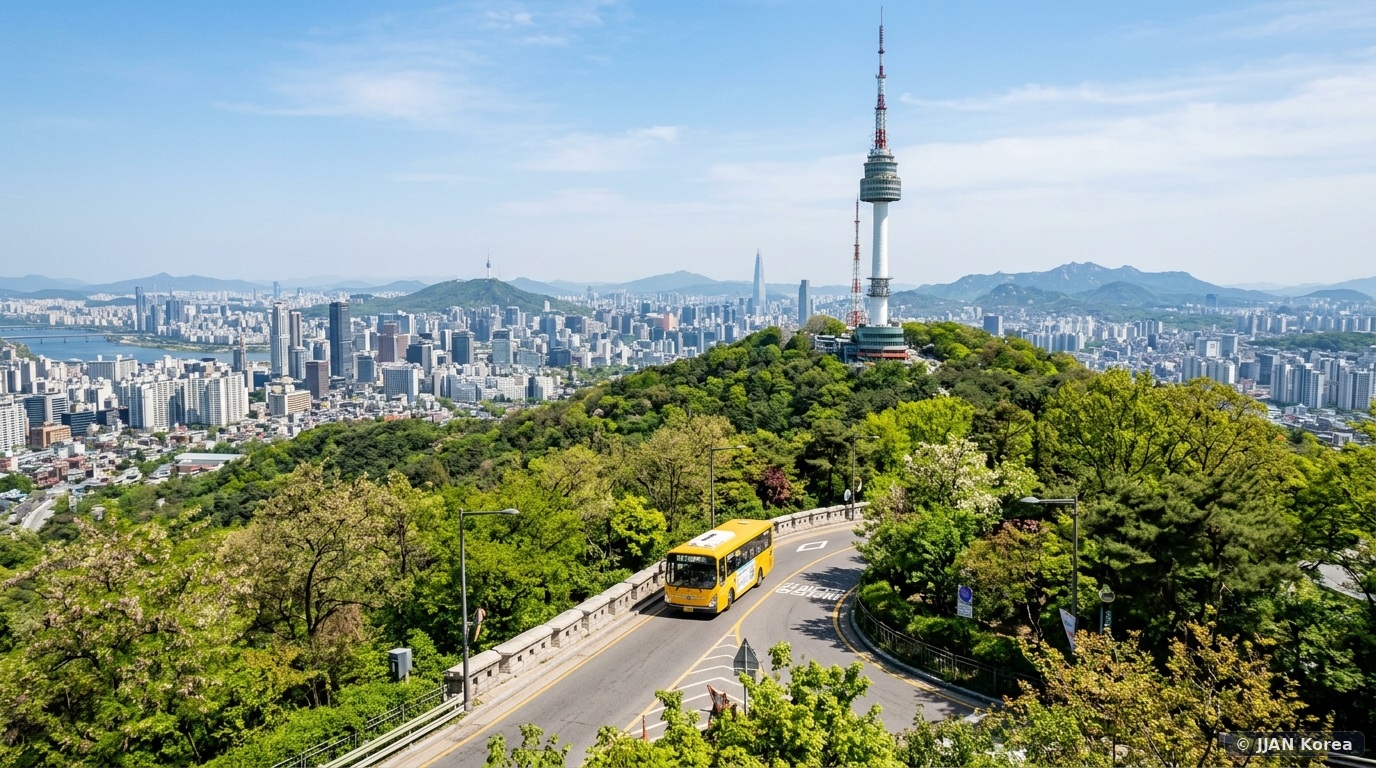

Perched majestically atop the verdant granite crest of Mount Namsan in the very geographic center of the capital, N Seoul Tower (N서울타워) is South Korea’s most iconic skyline silhouette. Soaring 236 meters (774 feet) from its base to a total altitude of 479 meters above sea level, this historic broadcasting mast turned global tourist beacon commands sweeping, breathtaking 360-degree panoramic vistas stretching from the Han River bridges and Gangnam skyscrapers all the way to Incheon’s coastal horizon and Bukhansan’s jagged northern peaks.
Beyond panoramic views, Namsan is steeped in cultural romance—celebrated globally for its colorful Love Locks decks, the historic Namsan Cable Car, and illuminated evening light displays that communicate real-time air quality to the city below. However, because private passenger cars, rental vehicles, and standard street taxis are **strictly banned from driving up Mount Namsan** to protect delicate mountain ecosystems, reaching the summit requires choosing between scenic aerial cable cars, municipal eco-buses, and forested walking trails. This comprehensive guide covers transit routes, observatory tickets, romantic photo decks, and dining for 2026.
1. Reaching the Summit: Cable Car vs. Namsan Shuttle Bus vs. Walking
Travelers can ascend Mount Namsan via three distinct routes, each offering unique pacing and aesthetics:
| Transit Option | Starting Point & Boarding Location | Transit Duration | Pricing & Accessibility (KRW) |
|---|---|---|---|
| Namsan Cable Car (남산 케이블카) | Myeongdong Station (Line 4, Exit 3) > Walk 10 mins to Namsan Ormi Outdoor Elevator > Cable Car Base Station | 3 Minutes (Gliding over forested mountain slopes) | Round-Trip Adult: ₩15,000 / One-Way: ₩12,000. Iconic aerial glass experience; long weekend lines. |
| Namsan Yellow Eco-Shuttle Bus (01A / 01B) | Chungmuro Station (Lines 3/4, Exit 2) or Dongguk University Station (Line 3, Exit 6) | 15 – 20 Minutes (Winding scenic mountain road) | ₩1,400 (T-Money card) / Covered by Seoul Climate Card! Fastest and most affordable route. |
| Namsan Dulegil Walking Trail (등산로) | From Baekbeom Square / Namsan Library or National Theater of Korea | 35 – 45 Minutes (Wooden boardwalk staircases) | 100% Free (₩0). Impeccably lit forested trail lined with historic fortress walls; popular with evening joggers. |
Pro Tip: The Namsan Ormi Outdoor Incline Elevator (남산 오르미)
When walking from Myeongdong Station to the Namsan Cable Car base station, avoid the steep uphill staircase! Walk toward Hoehyeon underground shopping arcade Exit 1 to reach Namsan Ormi—a free, glass-enclosed outdoor inclined elevator that carries pedestrians smoothly up the hillside directly to the cable car ticketing plaza in 2 minutes!
2. The Digital Observatory Deck (전망대)
While the open-air plazas around the base of N Seoul Tower offer lovely views, ascending to the Digital Observatory (Floor 5) elevates the experience:
- The High-Speed Media Elevator: Step into the high-speed elevator; as it ascends at 4 meters per second, the ceiling and walls transform into an immersive 360-degree OLED digital video simulation launching you through space, arriving at the summit in just 30 seconds!
- Panoramic Floor-to-Ceiling Windows: Features floor-to-ceiling glass observation panels with etched distance markers pointing to major world capitals (Tokyo 1,156km, Paris 8,966km, New York 11,061km). Sunset hours (18:00–19:30) provide spectacular photography lighting.
- The Sky Restroom (하늘 화장실): Famous for having panoramic glass windows directly beside the sinks and stalls, offering arguably the most breathtaking restroom view in the world!
- Observatory Tickets: ₩21,000 for adults / ₩16,000 for children. Discounted vouchers (around ₩16,000) are widely available when pre-booked online via Klook or Trazy.
3. The Iconic “Locks of Love” Decks (사랑의 자물쇠)
Stretching across the expansive outdoor wooden terraces of the tower’s lower plaza are the world-renowned Namsan Love Locks (사랑의 자물쇠). Hundreds of thousands of colorful padlocks, phone cases, and inscribed wooden hearts left by couples from every corner of the globe cluster densely along the steel fence railings, symbolizing eternal romance.
Couples inscribe their names, initials, and anniversary dates onto a lock using permanent markers before locking it onto the railings. Gift shops at the tower base sell colorful padlocks and markers for ₩8,000 to ₩12,000; however, budget-conscious travelers can pick up sturdy brass padlocks and metallic paint pens for just ₩2,000 at Daiso prior to arriving, as covered in our Daiso Korea shopping guide! Environmental Note: Visitors are strictly requested to discard their padlock keys into the designated steel “Key Disposal Mailboxes” rather than tossing them off the mountain slope.
4. Decoding the Tower’s Night Illumination: The Secret Air Quality Colors
When darkness settles over Seoul, N Seoul Tower illuminates in radiant floodlights. Far more than decorative lighting, the tower operates as a city-wide environmental telemetry indicator communicating real-time particulate air quality recorded by the Ministry of Environment:
| Illumination Color | Air Quality Index (PM2.5 Level) | Environmental Meaning & Traveler Action |
|---|---|---|
| Brilliant Blue (파란색) | Good / Pristine (0 – 15 µg/m³) | Air is exceptionally clean! Perfect evening for outdoor night hiking along Inwangsan fortress trails. |
| Vibrant Green (초록색) | Moderate (16 – 35 µg/m³) | Normal urban air conditions. Safe for all general outdoor sightseeing activities. |
| Glowing Yellow (노란색) | Bad / Polluted (36 – 75 µg/m³) | Elevated fine dust. Wear a certified KF94 mask covered in our yellow dust health guide. |
| Flashing Red (빨간색) | Very Bad / Warning (76+ µg/m³) | Severe smog advisory. Avoid prolonged outdoor exertion; head to indoor shopping centers. |
5. N Seoul Tower Visit Checklist
- Boarded Namsan Yellow Eco-Bus (01A/01B) at Chungmuro or took Namsan Cable Car.
- Checked the tower’s illumination color (Blue = crystal clear evening views).
- Pre-purchased online observatory tickets to bypass ticket booth queues.
- Brought a padlock and permanent marker for the Love Locks terrace.
- Timed summit arrival for 18:00 PM to capture both daylight vistas and evening skyline lights.
- Visited the famous panoramic “Sky Restroom” on the observatory level.
6. Frequently Asked Questions (FAQ)
Can I take a taxi directly to the top of N Seoul Tower?
No. Under Seoul municipal environmental laws enacted to preserve Mount Namsan’s air and flora, private passenger vehicles, standard street taxis, and ride-hail cabs are strictly prohibited from driving up the mountain access road. Only official Namsan Yellow Eco-Buses (01A/01B), accredited tour buses detailed in our Seoul City Tour Bus guide, and emergency vehicles are granted access.
What are the operating hours for N Seoul Tower and the Cable Car?
The Namsan Cable Car operates daily from 10:00 AM to 23:00 PM. The N Seoul Tower Observatory is open from 10:00 AM to 22:30 PM on weekdays and extends until 23:00 PM on Saturdays and Sundays. Plazas and walking trails remain open 24/7.
Are there restaurants inside N Seoul Tower?
Yes. The tower houses multiple dining establishments, including casual burger joints, Korean barbecue buffets (HanCook), and the flagship revolving fine-dining French restaurant N.Grill located on the highest floor, which completes a full 360-degree rotation every 100 minutes. Advance reservations are mandatory for N.Grill.
How do I walk down the mountain to Myeongdong?
Following your visit, enjoy a scenic 25-minute downhill stroll along the paved staircase trail toward the Namsan Cable Car base or Baekbeom Square. The illuminated pathway winds through fragrant pine trees, depositing you right into the bustling night street food alleys of Myeongdong!
JJAN Korea Editorial Standards & Fact-Checking Verification
This landmark destination report was researched and field-tested across all transit routes by Travel Editor Do-jun Kim in coordination with the CJ CJ Foodville N Seoul Tower Management Division and the Seoul Metropolitan Government Namsan Park Headquarters. Fares and operating timetables reflect official 2026 standards.
🛡️ JJAN Korea Editorial Standards & Fact-Checking Verification
This article was independently researched, field-tested, and audited by the JJAN Korea Urban Tourism & Scenic Transit Desk in Seoul. Field-verified across all mountain transit options by Travel Editor Do-jun Kim in coordination with CJ Foodville and the Seoul Namsan Park Management Center.
Notice an unlisted policy change, fare update, or revised administrative rule? Help us keep our international community accurately informed: Submit a Correction to our Seoul Newsroom.