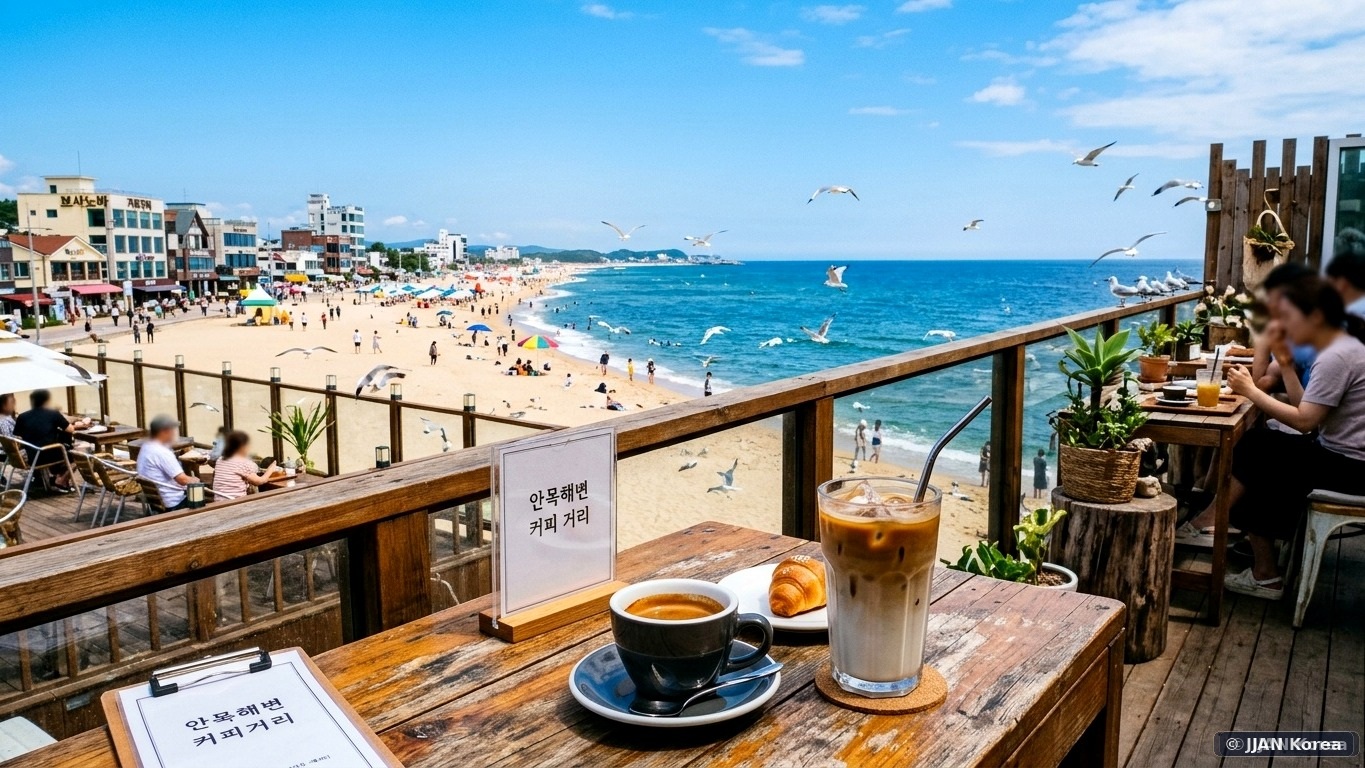
Perched along the rugged southeastern coastline of Gyeongsangbuk-do province, the maritime city of Pohang (포항시) has historically been famous as South Korea’s industrial steel powerhouse, anchored by the sprawling blast furnaces of POSCO. Over the past several years, however, Pohang has undergone an astonishing cultural and architectural transformation, emerging as one of the country’s most compelling domestic travel destinations. The centerpiece of this renaissance is the breathtaking Space Walk (스페이스워크)—a monumental walkable steel sculpture resembling a giant roller coaster curving gracefully above the tree canopy of Hwanho Park. Combined with the iconic ocean sculpture at Homigot Sunrise Square, traditional raw fish markets, and direct high-speed KTX connectivity from Seoul, Pohang offers an extraordinary coastal escape for travelers seeking dramatic vistas away from overcrowded tourist capitals.
1. Reaching Pohang: Direct KTX High-Speed Rail
Prior to high-speed rail expansion, traveling from Seoul to the East Sea coast required tedious five-hour bus journeys. Today, Korail operates direct KTX trains connecting the capital with Pohang Station:
| Transit Mode | Departure Point in Seoul | Travel Duration | Standard Adult Fare (KRW) | Frequency |
|---|---|---|---|---|
| KTX High-Speed Train (Direct) | Seoul Station (서울역) | 2 Hours 20 Minutes to 2 Hours 35 Minutes | 53,600 KRW (Standard) | Departs roughly every 60 to 90 minutes (14 daily departures) |
| SRT High-Speed Train | Suseo Station (수서역 in Gangnam) | 2 Hours 15 Minutes | 46,800 KRW | Departs 4 to 6 times daily |
| Express Intercity Bus | Seoul Express Bus Terminal (Gyeongbu Line) | 4 Hours 10 Minutes | 23,500 – 34,700 KRW | Departs every 30 to 45 minutes |
As covered in our high-speed transit directory on reserving direct high-speed KTX train seats to Pohang Station, booking weekend morning tickets at least two weeks in advance is essential during peak summer travel periods. Pohang can also be combined seamlessly into a broader eastern coastal itinerary, connecting with railway destinations featured in our guide on exploring Korea’s scenic East Coast railway destinations.
2. Conquering the Space Walk: Engineering, Views & Safety
Commissioned by POSCO and designed by world-renowned German artist duo Heike Mutter and Ulrich Genth, the Space Walk is South Korea’s largest interactive sculpture. Constructed from 317 metric tons of high-grade marine stainless steel, the structure measures 333 meters in total track length and soars 25 meters above the hilltop of Hwanho Park (환호공원):
- The Pedestrian Roller Coaster Concept: The track features 717 stairs that ascend across steep banks and curving twists. As visitors walk along the open steel mesh steps, they enjoy 360-degree panoramic views overlooking Yeongildae Beach, the POSCO industrial complex, and the vast expanse of the East Sea.
- The Inaccessible 360-Degree Loop: While the sculpture features a full 360-degree vertical loop mimicking a high-speed roller coaster, human physics naturally prevents walking upside down. The apex of the loop is physically blocked off by security gates, bifurcating the sculpture into two separate pedestrian stair routes: a gentle scenic incline to the left and a dramatic high-altitude staircase to the right.
- Admission & Access: Admission to the Space Walk is completely free of charge. The facility operates from 10:00 to 20:00 (Mon–Fri) and 10:00 to 21:00 (Sat–Sun) during summer months. When illuminated at night by integrated LED under-lighting, the structure appears as a glowing orbital ring floating against the dark night sky.
- Wind & Weather Safety Sensors: The sculpture is engineered with advanced earthquake dampers and can withstand typhoons and seismic tremors of up to 6.5 magnitude. However, for visitor comfort, automated gate sensors automatically lock the entrance whenever localized wind speeds exceed 8 meters per second (m/s) or during heavy rainfall.
3. Homigot Sunrise Square & The Hands of Harmony
Located on the easternmost horn of the Korean peninsula (known geographically as the “Tiger’s Tail”), Homigot Sunrise Square (호미곶 해맞이광장) is celebrated as the earliest mainland point to witness the sunrise in South Korea. The site is globally recognizable for its iconic bronze sculpture: The Hands of Harmony (상생의 손):
- The Dueling Hands: The installation consists of two complementary giant bronze hands crafted in 1999 to commemorate the new millennium. The right hand emerges dramatically from the churning waves of the ocean, while the left hand rises from the granite plaza ground facing it, symbolizing human coexistence, reconciliation, and harmony.
- The Sunrise Phenomenon: At dawn, photographers assemble along the seawall to capture the moment when the morning sun aligns directly within the open bronze fingers of the sea hand, creating the illusion of a blazing pearl held in the palm.
- Homigot Lighthouse: Adjacent to the plaza stands South Korea’s oldest operational brick lighthouse, constructed in 1908 without iron rebar using classical Western masonry techniques.
4. Coastal Culinary Feasts: Pohang Mulhoe & Jukdo Market
No trip to Pohang is complete without indulging in the city’s signature maritime delicacy: Pohang Mulhoe (포항물회). Unlike cold noodle soups found in central Korea, authentic Pohang Mulhoe is deeply rooted in local fishing history:
Centuries ago, deep-sea fishermen needed a fast, energizing meal on rocking wooden boats. They tossed fresh catches of firm white fish (such as rockfish or flatfish) into a stainless bowl with julienned cucumbers, Asian pear, and a dollop of spicy red pepper paste (gochujang), pouring icy cold well water directly over the bowl. Today, Pohang’s specialized Mulhoe bistros along Yeongildae Beach serve this delicacy with a sweet-tart slushy broth flavored with fermented plum and chili. Diners mix the icy raw fish, wrap it in fresh perilla leaves, and finally mix hot steamed rice directly into the remaining icy soup.
For an authentic market atmosphere, visit Jukdo Market (죽도시장), the largest traditional seafood market on the East Coast, featuring over 1,500 stalls selling live king crabs, snow crabs (대게), octopus, and fresh sashimi platters at wholesale rates.
4. K-Drama Coastal Pilgrimage: Hometown Cha-Cha-Cha Filming Sites
Over the past several years, Pohang has gained worldwide pop-culture fame as the scenic oceanfront backdrop for beloved South Korean television dramas, most notably tvN’s global hit Hometown Cha-Cha-Cha (갯마을 차차차) and KBS’s award-winning When the Camellia Blooms (동백꽃 필 무렵):
- Guryongpo Modern History Street (구룡포 근대역사문화거리): Located 15 minutes north of Homigot, this preserved early 20th-century wooden streetscape served as the fictional village of Ongsan in When the Camellia Blooms. Visitors can climb the famous stone hilltop stairs to recreate the iconic poster pose overlooking the fishing harbor or enjoy red bean camellia bread at the Camellia Cafe.
- Cheongha Market (청하시장 / Gongjin Market): Situated in northern Pohang, this sleepy rural market square was transformed into the fictional seaside village of Gongjin in Hometown Cha-Cha-Cha. You can take photographs outside Chief Hong’s hardware store, the hardware café, and the central squid statue plaza.
- Sabang Memorial Park Hilltop Wooden Ship (사방기념공원 묵은봉): Hike up a scenic wooden staircase to the crest of Mukeunbong Peak to see the real wooden fishing boat stranded atop the mountain meadow where the drama’s lead characters shared panoramic conversations over the East Sea.
5. Night Illumination & The Glowing Loop Over Yeongil Bay
While ascending the Space Walk during daylight hours offers sweeping panoramic views across the turquoise East Sea, visiting Hwanho Park at twilight unlocks a completely different architectural spectacle. As dusk falls, integrated LED under-lighting illuminates the curved steel structure in soft white, glowing amber, and cool blue hues, causing the pedestrian roller-coaster track to resemble a shimmering celestial spiral suspended in mid-air:
Looking out from the elevated observation deck of the Space Walk at night, visitors are treated to the dramatic light show across Yeongil Bay. The massive 6-kilometer POSCO industrial complex across the water transforms into South Korea’s largest interactive LED media art installation. Thousands of computerized floodlights wash the blast furnaces and steel mills in vibrant neon colors synchronized to music, reflecting across the calm dark harbor waters. Combine this evening spectacle with a stroll along the wooden pier of Yeongildae Beach to visit the illuminated traditional Hanok pavilion (Yeongildae Pavilion) sitting gracefully over the waves.
5. Frequently Asked Questions (FAQ)
Q1: Can people with mild vertigo or fear of heights walk the Space Walk?
A: The Space Walk features high safety railings, but the steps are made of semi-transparent steel mesh through which you can see the ground below. Furthermore, the structure is designed to flex slightly in high winds to dissipate mechanical stress, which can induce vertigo. If you experience acute acrophobia, the lower scenic platform offers excellent views without ascending to the highest towers.
Q2: How do I travel between the Space Walk and Homigot Sunrise Square?
A: The Space Walk is located in central northern Pohang (near Yeongildae Beach), whereas Homigot is situated on the far eastern peninsula tip roughly 35 kilometers away. A taxi ride costs approximately 35,000 to 45,000 KRW. Alternatively, Pohang City Bus No. 9000 connects Jukdo Market directly to Homigot in about 1 hour and 15 minutes.
Q3: Are there weight or capacity limits on the Space Walk?
A: Yes. Automated electronic turnstiles at the entrance restrict total real-time capacity to 150 persons at any given moment. During busy weekend afternoons, you may have to wait in a 20 to 30 minute ground queue before being permitted past the turnstile.
Q4: Can I visit Pohang as a comfortable day trip from Seoul?
A: Yes. By taking an early KTX departing Seoul Station around 07:30 AM (arriving in Pohang at 09:55 AM) and departing Pohang on an evening train around 20:30 PM, you have over ten full hours to explore the Space Walk, enjoy lunch at Yeongildae Beach, and tour Jukdo Market.
JJAN Korea Editorial Standards & Fact-Checking Verification
Lead Author: Do-jun Kim, Senior Travel Editor (Travel & Guide Desk)
Transit fares, structural operating parameters, and municipal museum access rules reviewed against 2026 Pohang City Tourism Department (포항시청 관광과) announcements and Korail KTX East Sea timetables. Weather closures apply automatically during sustained gale conditions.