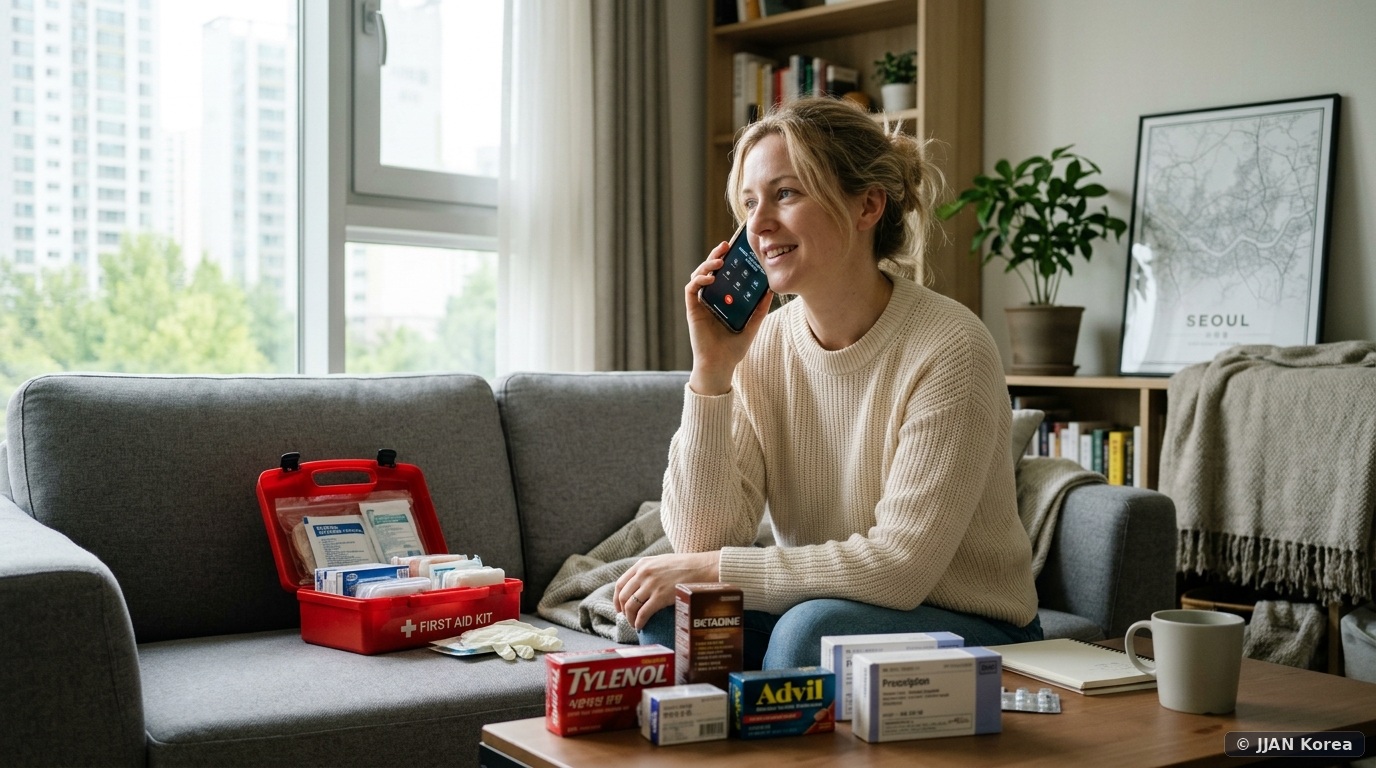
Falling ill or suffering an injury in an unfamiliar foreign country is a deeply distressing experience, magnified tenfold when complicated by language barriers, unfamiliar healthcare billing structures, and closed clinics. Whether you are dealing with a child’s sudden midnight fever exceeding 39°C, an acute allergic food reaction, or an agonizing dental abscess on a Sunday holiday, knowing where to turn for immediate, trustworthy clinical guidance is vital.
While most international visitors know to dial 119 for life-threatening ambulance transport, South Korea’s Ministry of Health and Welfare (MOHW) and the Korea Disease Control and Prevention Agency (KDCA) operate an equally formidable, specialized medical tele-triage lifeline: the 1339 Emergency Medical Consultation Hotline (1339 질병관리청 콜센터 / 119 구급상황관리센터). Available 24 hours a day, 365 days a year with real-time multilingual interpretation in English, Chinese, Japanese, and Vietnamese, 1339 connects distressed callers directly to licensed emergency physicians and triage nurses. This definitive healthcare guide explains how to access 1339, triage algorithms, finding open emergency rooms, and medical rights in 2026.
1. When to Dial: 1339 vs. 119 vs. 1330 vs. 112
South Korea maintains distinct emergency telephone hotlines. Understanding which number to call ensures immediate, appropriate response:
| Hotline Number | Operating Agency | Primary Clinical / Emergency Function | Immediate Dispatch Capability |
|---|---|---|---|
| 1339 | KDCA & Emergency Medical Center | Medical Advice, Triage & Facility Locator. Nurse consultation, locating nearest open clinic, late-night pharmacy, or English ER. | No vehicular dispatch (Transfers instantly to 119 if ambulance is required). |
| 119 | National Fire Agency (소방청) | Life-Threatening Emergencies & Physical Ambulance Dispatch. Severe chest pain, unconsciousness, heavy bleeding, stroke, fire rescue. | YES. Emergency paramedics and ambulance dispatched immediately via GPS telemetry. |
| 1330 | Korea Tourism Organization (KTO) | General Tourism & Multi-Language Interpretation. Translation for minor doctor visits, retail shopping, lost property, general directions. | No emergency authority. |
| 112 | National Police Agency (경찰청) | Crime, Physical Assault, Theft, Traffic Accidents. Police cruiser dispatch and criminal investigations. | YES. Police patrol units dispatched. |
2. Core Services Provided by the 1339 Medical Hotline
When you dial 1339 from any domestic smartphone or landline (free of charge), you gain access to an array of clinical support services:
- Real-Time Professional Clinical Triage: A licensed registered nurse or emergency physician evaluates your symptoms over the phone. They assess whether your condition requires an immediate hospital Emergency Room (응급실 / Eung-geup-sil) visit or can be safely managed until morning with over-the-counter medications covered in our Korean pharmacy OTC guide.
- Hospital & Emergency Center Locator: Operators search the national real-time medical database to locate hospitals with active bed capacity, specialized on-call surgeons (e.g., pediatric surgery, orthopedic trauma), and English-fluent international healthcare centers.
- Holiday & Late-Night Duty Pharmacy Finder: If you need medication at 23:00 on a Sunday, 1339 operators identify the nearest open Holiday Duty Pharmacy (휴일지킴이약국) based on your current location.
- Poison & Toxic Exposure Consultation: Immediate clinical toxicology guidance for accidental chemical ingestion, toxic plant contact, or adverse drug interactions.
3. Step-by-Step Calling Protocol for Foreigners
Follow this simple protocol when placing your call:
- Dial 1339 (No Area Code Needed): Dial 1339 directly from any Korean mobile phone or landline. (If calling from an overseas roaming SIM, dial +82-2-1339).
- Request English Service: An automated Korean voice greeting will answer. Press the designated number for English (typically Press 4 or state clearly to the operator: “English, please”). The system connects an accredited medical interpreter into a seamless three-way conference call.
- State Your Exact Location: Look at your smartphone map or locate your hotel’s business card. Provide your district (Gu) and neighborhood (Dong), or state your hotel name.
- Describe Symptoms Clearly: Detail the duration of symptoms, body temperature, current medications taken, and any known drug allergies. The physician will give clear instructions and provide the exact name and address of the recommended medical facility via SMS text message! Review emergency ambulance procedures in our Korea 119 emergency room guide.
4. Foreign Resident Healthcare Coverage & Hospital Payment
Understanding medical billing prior to hospital admission prevents financial shocks:
- National Health Insurance (NHIS) Holders: Registered foreign residents enrolled in Korean National Health Insurance pay standardized statutory co-pays (typically 20% to 50% of total emergency medical costs), as detailed in our NHIS expat health insurance guide. An ER visit typically totals ₩50,000 to ₩120,000.
- Uninsured International Tourists: Travelers without NHIS must pay 100% out-of-pocket at the hospital discharge billing counter. A standard ER evaluation, blood tests, and IV fluids at an international clinic typically ranges from ₩250,000 to ₩600,000 ($180 to $450 USD). Korean hospitals accept international Visa and Mastercard credit cards. Request an itemized medical bill (진료비 영수증) and medical diagnosis report (진단서) written in English for submission to your overseas travel insurance provider.
5. 1339 Medical Call Checklist
- Saved 1339 and 119 into mobile phone speed dial.
- Noted exact current address (hotel name, district, or road-name address).
- Prepared list of current medications and known drug allergies.
- Packed Alien Registration Card (ARC) or physical passport and travel insurance documents.
- Carried international credit card for hospital emergency co-pays.
- Requested English itemized medical receipt and physician diagnosis report before discharge.
6. Frequently Asked Questions (FAQ)
Is the 1339 medical consultation hotline free to call?
Yes. The 1339 telephone consultation and medical interpretation service is 100% free of charge (₩0) funded by the South Korean government. Only standard domestic carrier mobile airtime minutes apply.
Can 1339 dispatch an ambulance to my hotel?
While 1339 provides clinical triage rather than vehicular dispatch, if the consulting physician determines that your condition is acute or life-threatening, they will instantly patch your call through to the 119 Fire and Disaster Headquarters, transferring your GPS coordinates for immediate emergency ambulance dispatch without requiring you to re-dial.
Do emergency rooms in Korea accept walk-in patients without an appointment?
Yes. University hospital emergency medical centers (응급의료센터) operate 24 hours a day, 365 days a year for walk-in arrivals. Patients are triaged upon arrival according to the Korean Triage and Acuity Scale (KTAS); patients with critical, severe conditions are treated immediately, while mild non-urgent cases may experience waiting periods.
Can I get dental emergency advice through 1339?
Yes. If you suffer severe facial trauma, cracked teeth, or acute dental infections outside normal clinic hours, 1339 operators can locate designated university dental hospitals (such as Seoul National University Dental Hospital) that operate 24-hour emergency dental care units.
JJAN Korea Editorial Standards & Fact-Checking Verification
This emergency public health guide was compiled and audited by Senior Columnist Dong-hwan Kim in coordination with operational protocols published by the Ministry of Health and Welfare (MOHW), the National Emergency Medical Center, and the Korea Disease Control and Prevention Agency (KDCA). Emergency triage directives reflect official 2026 standards.
🛡️ JJAN Korea Editorial Standards & Fact-Checking Verification
This article was independently researched, field-tested, and audited by the JJAN Korea Emergency Healthcare & Triage Desk in Seoul. Operational protocols and multilingual triage systems cross-verified with the Ministry of Health and Welfare (MOHW) and National Emergency Medical Center.
Notice an unlisted policy change, fare update, or revised administrative rule? Help us keep our international community accurately informed: Submit a Correction to our Seoul Newsroom.