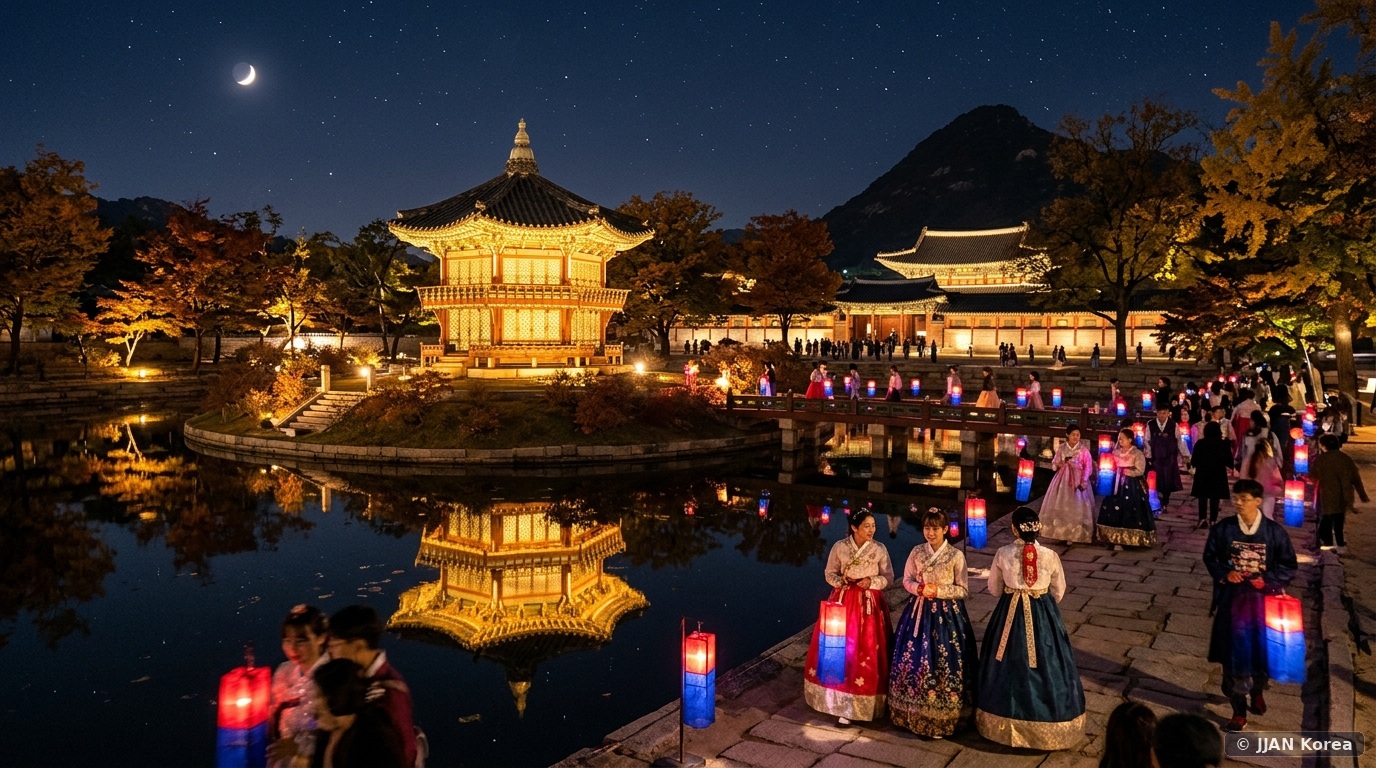
By daylight, Gyeongbokgung Palace (경복궁)—the grand primary royal palace of the Joseon Dynasty—is a bustling historic monument filled with daytime tour groups and fluttering colorful silk Hanbok dresses. But when dusk settles over the capital and the iron gates swing shut to the general public, a truly mystical, otherworldly transformation occurs: the Gyeongbokgung Starlight Night Tour (Byeolbich Yahaeng – 별빛야행) and the Palace Night Viewing Season (Yagan Gwanram). Under the soft glow of traditional silk lanterns held by royal palace guards, the monumental red and green wooden pavilions, tranquil stone lotus ponds, and ancient throne halls illuminate in golden architectural lighting against the black silhouette of Mount Bugaksan. For travelers and culture seekers, strolling these silent, illuminated royal grounds while savoring an authentic 12-dish Joseon royal banquet represents the absolute zenith of Korean cultural travel.
1. The Two Palace Nocturnal Experiences: General Night Viewing vs. The Starlight Tour
International visitors frequently confuse the two distinct nighttime palace programs organized by the Korea Heritage Service:
| Night Palace Program | Capacity & Ticketing | Admission Cost | Included Highlights & Activities |
|---|---|---|---|
| Gyeongbokgung General Night Viewing (야간관람) | 2,700 Visitors per evening (Online booking + On-site foreigner quota) | 3,000 KRW (Free with Hanbok) | Self-guided night walking tour of Geunjeongjeon Throne Hall & Gyeonghoeru Pavilion |
| Starlight Night Tour (별빛야행 / Byeolbich Yahaeng) | Strictly capped at 30 participants per session (Twice daily) | 60,000 KRW per person | Exclusive 12-dish Royal Cuisine banquet inside royal kitchen (Sojubang), private lantern tour, live Gugak theater |
While the general night viewing allows thousands to stroll the central courtyard, the exclusive Starlight Tour unlocks restricted northern sectors of the palace grounds completely closed to ordinary visitors, including the private living quarters of King Gojong and Empress Myeongseong at Geondeokgung Residence.
2. Savoring Kings’ Cuisine: The 12-Dish Dosirak Suksoobang Feast
The centerpiece of the Starlight Tour begins inside Oesojubang (외소주방), the historic outer royal palace kitchen where banquets were prepared for Joseon monarchs. Guests are seated at low traditional wooden lacquer tables set with four-tiered antique brass meal boxes (Dosirak Surasang) accompanied by warm candlelight.
Served by court attendants wearing traditional Joseon palace costumes, the 12-dish royal meal recreates authentic historical palace menus: royal braised abalone (Jeonbok-cho), skewered grilled beef short ribs (Tteokgalbi), seasonal seasoned mountain greens (Sam-saek Namul), steamed sea cucumber dumplings, and soothing medicinal ginseng chicken broth. While dining, royal court musicians perform classical Gugak (국악) melodies on traditional twelve-string gayageum zithers and bamboo daegeum flutes, transporting diners 500 years back into the Joseon royal court.
3. The Lantern-Lit Nocturnal Circuit: Gyeonghoeru & Hyangwonjeong Ponds
Following the royal dinner, each guest is handed a traditional cloth-and-bamboo lantern (Cheongsachorong) emitting a soft golden glow. Guided by historical court docents, the walking tour explores the palace’s most enchanting architectural treasures:
- Geunjeongjeon Throne Hall (근정전): The monumental grand hall where Joseon monarchs held morning audiences and coronations. Illuminated by golden floor uplights, the soaring two-story wooden architecture stands majestically against the night sky, with the royal dragon throne visible through open wooden lattice doors.
- Gyeonghoeru Royal Banquet Pavilion (경회루): The absolute jewel of the nocturnal palace. Standing on 48 massive stone pillars within a wide artificial lotus pond, this grand two-story pavilion is reflected with glass-smooth clarity onto the still pond water. Looking across the dark water at the illuminated golden eaves framed by weeping willow branches provides South Korea’s most iconic night palace image.
- Hyangwonjeong Hexagonal Pavilion (향원정): Located in the tranquil rear gardens, this exquisite two-story hexagonal pavilion sits upon an island in a round pond, connected by the wooden Chwihyanggyo bridge. Subtle underwater spotlights illuminate the wooden railings, creating a dreamlike, intimate atmosphere.
By earning free entry and breathtaking photo ops by wearing traditional hanbok, visitors attending the general night viewing can bypass the online ticket competition entirely: anyone dressed in full traditional Hanbok enters the general night viewing 100% free of charge without advance reservations!
4. Ticketing Logistics: Foreigner On-Site Quotas & Global Booking
Because domestic online tickets for Gyeongbokgung night viewings sell out in under 60 seconds on Interpark, foreign travelers have a dedicated legal safety net: The Daily On-Site Foreigner Ticket Quota.
Every evening during the night viewing season, the Gyeongbokgung ticket office sets aside 200 physical tickets reserved exclusively for foreign passport holders. Beginning at 18:40 at the main ticket counter beside Gwanghwamun Gate, foreigners presenting an original physical passport or Alien Registration Card (ARC) can purchase up to two admission tickets for 3,000 KRW each on a first-come, first-served basis. (Arrive by 18:00 on pleasant autumn weekends to ensure you secure a ticket in line).
While exploring illuminated Seoul after the palace closes at 21:30, by exploring iconic illuminated architectural nightscapes throughout Seoul, you can catch an evening taxi south to Banpo Bridge to enjoy midnight rainbow water fountain shows along the Han River.
5. Complimentary Hanbok Admission Secrets & Professional Low-Light Photography Angles
One of the most thrilling cultural privileges available at Gyeongbokgung Palace is the nationwide Complimentary Hanbok Admission Policy (Hanbok Chak-yong-ja Muryo Ipjang). Visitors dressed in full traditional Korean attire (Hanbok) are entitled to 100% free admission to both daytime grounds and special nighttime viewing sessions—completely bypassing the grueling online ticketing lottery that sells out in seconds!
However, the Royal Palaces and Tombs Center strictly enforces cultural dress standards. To qualify for the ticket fee exemption, your Hanbok must be complete and worn respectfully: women must wear a traditional top jacket (Jeogori) and flared flowing skirt (Chima); men must wear an authentic Jeogori top paired with traditional loose trousers (Baji) and overcoat (Durumagi or Baeja). Theatrical superhero mashups, altered mini-skirts, or cross-gender gag costumes are categorically rejected at the turnstiles, requiring tourists to purchase standard admission tickets or rent compliant garments.
Once inside the illuminated royal compound, low-light night photography presents extraordinary creative opportunities. The architectural pinnacle is Gyeonghoeru Pavilion (경회루), a majestic two-story wooden banquet hall resting on 48 soaring stone columns inside a tranquil lotus pond. At night, warm halogen uplighting illuminates the crimson wooden eaves, casting a flawless mirror reflection across the glassy dark water.
To capture optimal reflection photos, position yourself along the northeast perimeter stone railing where ambient reflections are clearest. Mount your smartphone on a compact mini-tripod or rest it securely against the granite balustrade. Switch your phone camera to Night Mode with a 3-second exposure timer, lock exposure on the pavilion’s middle timber rafters, and gently tap the shutter button. The resulting image balances deep indigo midnight skies with the rich, glowing red-and-gold lacquer work of the Joseon royal court.
During the evening tour circuit, traditional Joseon court musicians dressed in flowing silk robes perform live classical Gayageum (12-string zither) and Daegeum (bamboo flute) melodies from floating illuminated pavilions. Visitors can rent English multimedia audio guides at the main information desk near Gwanghwamun Gate for 3,000 KRW, providing poetic narration that vividly recreates Joseon royal court banquets under the autumn starlight.
Further north within the palace grounds, the illuminated two-story hexagonal Hyangwonjeong Pavilion (향원정) sits serenely at the center of its artificial pond, linked by the graceful wooden Chwihyanggyo Bridge. Because palace stone courtyards retain little ambient heat at night, temperatures drop rapidly after 20:00; wearing thermal heattech base layers beneath your flowing Hanbok will keep you warm throughout the two-hour nocturnal walking circuit.
After your palace stroll, walk 10 minutes south along the tree-lined boulevard toward Gwanghwamun Square and Cheonggyecheon Stream, where autumn lantern installations light up the babbling waterway, concluding a magical royal evening under Seoul’s starlit skies.
5. Frequently Asked Questions (FAQ)
Q1: What months is the Gyeongbokgung Night Viewing open?
The night viewing operates in two seasonal periods: Spring Season (April to May) and Autumn Season (early September to late October). The palace is typically closed for night viewing on Mondays and Tuesdays for preservation maintenance.
Q2: Are tripods and professional lighting equipment allowed inside?
Standard monopods and compact handheld smartphone gimbals are permitted. However, heavy professional three-legged tripods and external flash umbrellas are strictly prohibited during night viewing to prevent tripping hazards for walking crowds on dark stone paths.
Q3: How warm should I dress for an autumn night palace tour?
Because the palace grounds are wide, open stone courtyards surrounded by mountains with zero indoor heating, night temperatures in October drop rapidly. Wear warm thermal undershirts beneath your Hanbok or bring a tailored wool coat to stay comfortable throughout the two-hour walk.
Q4: Can children participate in the Starlight Night Tour?
Yes, children are welcome. However, because the Starlight Tour involves a formal 45-minute seated dinner and a quiet, contemplative 70-minute guided historical walk, it is best suited for children aged 8 and older who can walk comfortably in darkness.
🛡️ JJAN Korea Editorial Standards & Fact-Checking Verification
This Gyeongbokgung Palace nocturnal heritage guide has been authored and verified by Travel Editor Do-jun Kim following operational directives issued by the Korea Heritage Service (KHS) and the Royal Palaces and Tombs Center.
- Night viewing quotas and on-site foreign passport policies confirmed via Korea Heritage Agency operational notices.
- Royal court cuisine menu authenticity cross-checked against Joseon Dynasty Royal Banquet protocols (Uigwe).
- Night architectural lighting safety standards verified in compliance with Cultural Heritage Protection Act guidelines.