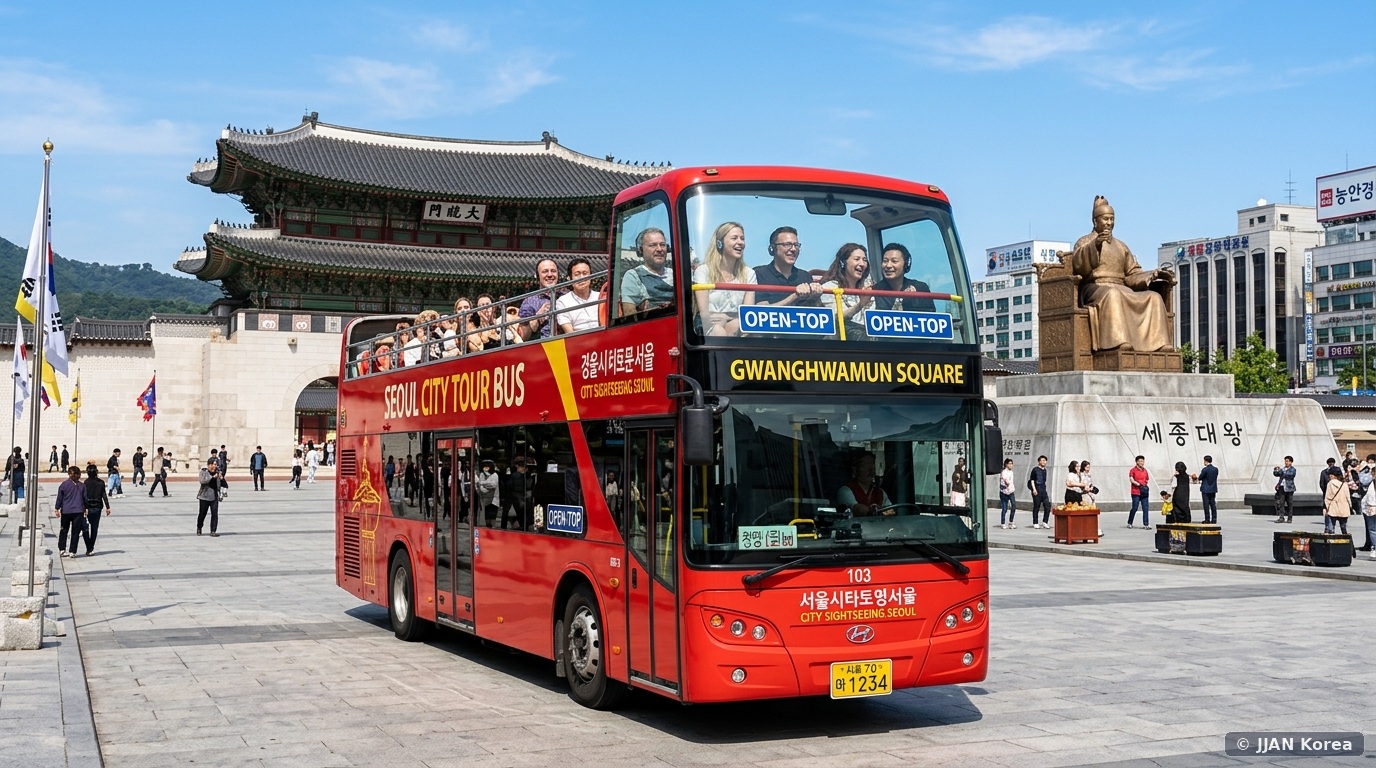

Seoul is a colossal metropolis of ten million residents spanning 605 square kilometers, where centuries-old Joseon royal palaces sit in the shadow of gleaming futuristic skyscrapers, and mountain fortresses overlook neon-drenched commercial shopping boulevards. For first-time visitors, navigating complex subway transfers and bus timetables across disparate neighborhoods can devour valuable sightseeing hours. The most relaxing, scenic, and efficient gateway to the capital’s iconic landmarks is the Seoul City Tour Bus (서울시티투어버스).
Featuring fleets of double-decker open-top convertible buses, single-decker panoramic cruisers, and specialized night-view coaches, these hop-on hop-off services provide unlimited access to major cultural districts on a single wristband ticket. Equipped with GPS-synchronized multilingual personal audio commentary in 12 languages and operating across two major licensed operators—Seoul City Tour Bus (Tiger Bus) and Yellow Balloon City Bus—mastering routes, ticket booths, and panoramic photo decks ensures an effortless travel itinerary in 2026.
1. Operator Comparison: Tiger Bus vs. Yellow Balloon City Bus
Two primary municipal concessionaires operate licensed city tour buses in Seoul, each departing from distinct central hubs:
| Feature / Parameter | Seoul City Tour Bus (“Tiger Bus”) | Yellow Balloon City Bus (노랑풍선) |
|---|---|---|
| Main Departure Hub | Gwanghwamun Station (Line 5, Exit 6) near Koreana Hotel | Dongdaemun Design Plaza (DDP) Station (Lines 2/4/5, Exit 1) |
| Flagship Daytime Course | Downtown Palace Namsan Course (22 stops, palaces & N Seoul Tower) | Traditional Culture Course (Palaces, Cheonggyecheon & markets) |
| Bus Fleet Types | Open-top double-decker, half-open convertible, panoramic enclosed | Full open-top double-decker coaches |
| Specialized Evening Tour | Night View Course (Non-stop Han River bridge lights & Namsan summit) | Seoul Night Lights Course (Departs DDP) |
| Standard Adult Ticket (KRW) | ₩24,000 (Day Course) / ₩20,000 (Night Course) | ₩20,000 (Day Course) / ₩18,000 (Night Course) |
2. Downtown Palace Namsan Course: Key Stops & Must-See Landmarks
The **Downtown Palace Namsan Course** operated by Tiger Bus is the undisputed gold standard for first-time visitors, circulating every 30 to 40 minutes across 22 premier cultural destinations:
1. Gyeongbokgung Palace & The Blue House (경복궁 / 청와대)
Alight directly in front of the palace gates to watch the Royal Guard Changing Ceremony (수문장 교대의식) and explore the throne halls. Many passengers rent traditional Korean silk attire from nearby rental studios; admission is 100% free when wearing hanbok, as detailed in our Gyeongbokgung Hanbok rental and admission guide. A 5-minute walk connects to Cheongwadae (The Blue House), the former presidential residence opened to the public.
2. Insadong & Ikseon-dong Hanok Village (인사동 / 익선동)
Stroll through historic artisan alleys filled with traditional wooden tea houses, calligraphy brush ateliers, and ceramic galleries. Cross the boulevard into Ikseon-dong to explore cozy 1920s hanok alleys repurposed into trendy specialty bakeries and natural wine bars.
3. N Seoul Tower on Mount Namsan (N서울타워)
Because private tourist vehicles and regular taxis are strictly prohibited from driving up Mount Namsan to protect mountain ecology, the City Tour Bus is one of only two vehicular services authorized to climb directly to the summit plaza! Disembark right beside the tower to photograph the famous Love Locks deck and enjoy 360-degree panoramic city views, as covered in our N Seoul Tower Namsan cable car and transit guide.
4. Dongdaemun Design Plaza (DDP)
Marvel at the neo-futuristic, curving aluminum architecture designed by legendary architect Zaha Hadid. The plaza houses modern design museums, fashion exhibition halls, and all-night wholesale clothing markets that stay open until 05:00 AM.
3. The Romantic Han River Night View Course
Unlike daytime routes which allow hop-on hop-off flexibility, the Night View Course (야경코스) is a continuous 90-minute non-stop evening spectacle. Departing Gwanghwamun at 19:00 or 19:30 (depending on season), the double-decker open-top bus cruises along the Gangbyeon Expressway, gliding across illuminated Han River bridges (Mapo Bridge, Banpo Bridge, Seongsu Bridge) to showcase Seoul’s dazzling skyline reflections.
The bus pauses for 30 minutes at the Mount Namsan summit bus terminal, granting passengers sufficient time to climb to the observatory terrace, capture night photography, and enjoy fresh mountain air before descending back to Gwanghwamun. Important Note: Because seats on the upper open-top deck for the Night View Course are limited and do not rotate, advance reservation online or visiting the ticket kiosk before 15:00 on the day of travel is strongly advised!
4. Audio Guides, Wi-Fi & Ticketing Logistics
Maximizing comfort on the city tour bus is simple with built-in amenities:
- Multilingual Audio System: Every seat features a 3.5mm headphone jack and digital channel selector. Complimentary disposable wired earphones are provided upon boarding. Channels broadcast automated GPS-synchronized narrative audio in English, Korean, Japanese, Chinese, French, German, Russian, Spanish, Thai, Vietnamese, Indonesian, and Malay.
- Ticketing & Wristband Pass: When you purchase your ticket at the Gwanghwamun kiosk (or exchange an online travel voucher from Klook or Trazy), you receive a waterproof paper barcode wristband. Show this wristband to the driver each time you re-board. Your pass is valid all day from 09:00 to 18:00.
- Transit Card Compatibility: Can you pay with a T-Money card? While you can purchase single daytime tickets at the main ticket kiosk using a credit card or cash, the Seoul Climate Card does NOT cover private sightseeing tour buses. Review eligible transit passes in our Seoul Climate Card and transit comparison guide.
5. City Tour Bus Sightseeing Checklist
- Located Gwanghwamun Station Exit 6 ticket kiosk (Tiger Bus) or DDP Exit 1 (Yellow Balloon).
- Secured wristband pass and confirmed timetable for the final return bus (usually 17:00–18:00).
- Packed sunglasses, sunscreen, and a windbreaker jacket (the open-top upper deck gets breezy).
- Plugged provided earphones into armrest audio console to test multilingual commentary.
- Reserved Night View Course tickets early in the afternoon during peak autumn and spring seasons.
- Verified whether palace destinations are open (Gyeongbokgung closes Tuesdays, Changdeokgung closes Mondays).
6. Frequently Asked Questions (FAQ)
What happens if it rains while riding an open-top bus?
In the event of light rain, the tour operator distributes complimentary plastic rain ponchos to all upper-deck passengers. If severe storms, typhoon warnings, or heavy downpours occur, operators deploy convertible buses equipped with retractable waterproof transparent canvas roofs or substitute enclosed double-decker panoramic coaches.
Can I store large luggage on the bus?
Small daypacks, shopping bags, and foldable baby strollers can be brought on board and placed beneath your seat or in the designated stroller alcove on the lower deck. However, large 28-inch hard-shell suitcases are strictly prohibited due to passenger aisle safety regulations. Store heavy bags in subway station coin lockers before boarding.
Do the buses operate every day of the week?
Tiger Bus operations are closed on Mondays for routine fleet mechanical inspections (except when Monday coincides with a national public holiday or during peak summer vacation in July/August). Always confirm operating schedules on the official website before traveling.
Is the bus wheelchair accessible?
Yes. The lower level of modern double-decker tour buses is fully low-floor and equipped with hydraulic wheelchair boarding ramps and dedicated securement bays. Wheelchair users can ride comfortably on the lower level, which features panoramic glass windows and full audio guide plug-ins.
JJAN Korea Editorial Standards & Fact-Checking Verification
This municipal transit dossier was compiled and field-verified across all routes by Travel Editor Do-jun Kim in coordination with the Seoul Metropolitan Government City Tourism Division and the Association of Seoul City Tour Operators. Timetables and tariff schedules reflect 2026 operational standards.
🛡️ JJAN Korea Editorial Standards & Fact-Checking Verification
This article was independently researched, field-tested, and audited by the JJAN Korea Urban Tourism & Transit Logistics Desk in Seoul. Field-verified across all double-decker routes by our travel desk in coordination with the Seoul Metropolitan Government City Tourism Division.
Notice an unlisted policy change, fare update, or revised administrative rule? Help us keep our international community accurately informed: Submit a Correction to our Seoul Newsroom.