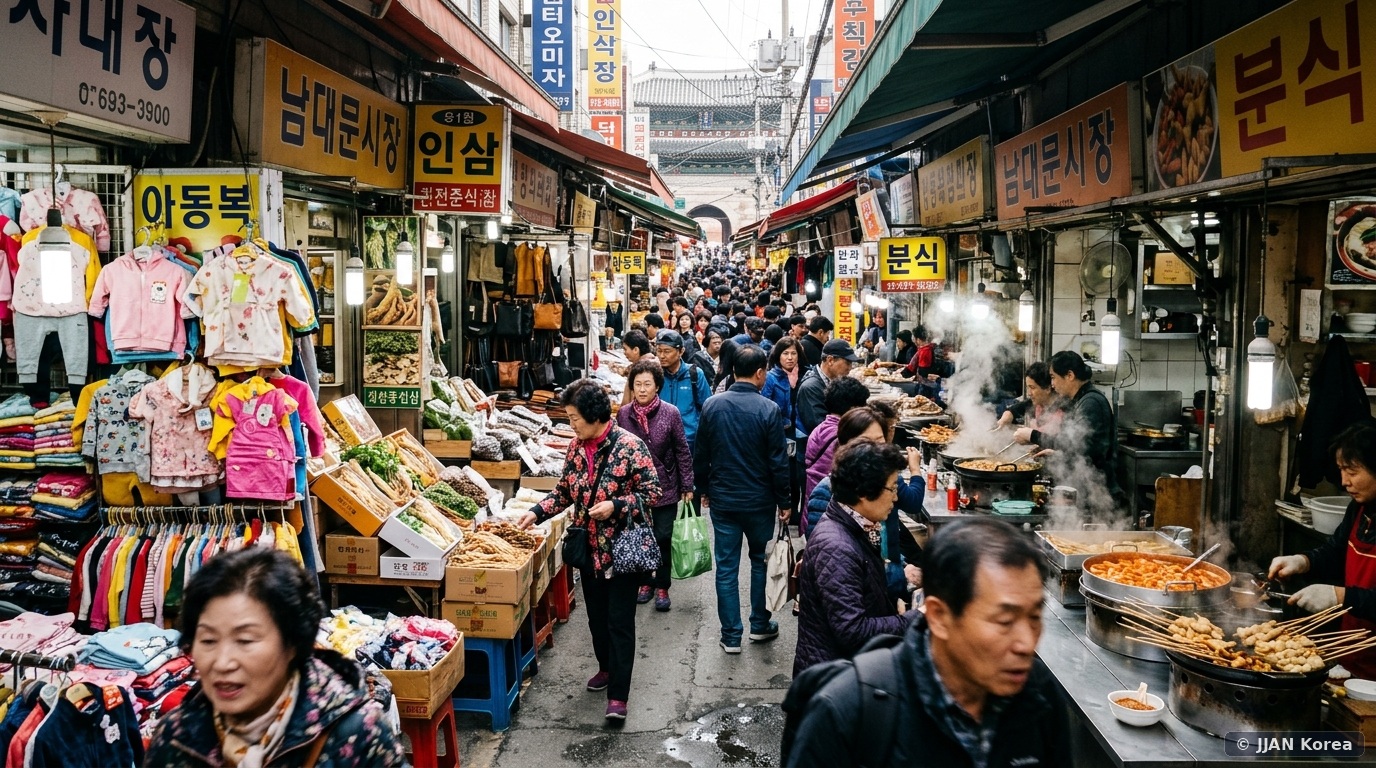

Dating back more than six centuries to the reign of King Taejong in 1414, Namdaemun Market (남대문시장) is South Korea’s oldest, largest, and most historically venerable commercial marketplace. Spanning over 10 hectares directly beside the national treasure Sungnyemun (Namdaemun Gate), this colossal retail maze houses more than 10,000 independent shops, stalls, and multi-story wholesale department buildings that welcome over 300,000 shoppers and international traders every single day.
Unlike trendy, manicured shopping boutiques in Gangnam or Seongsu, Namdaemun Market thrums with raw, unvarnished energy: wholesale porters balancing colossal bundles of textiles on their heads, street vendors shouting dynamic price calls, the fragrant steam of simmering braised fish stew pots, and sizzling oil from golden hotteok griddles. Whether you are hunting for children’s fashion, Korean red ginseng, optical eyeglasses, or embarking on a legendary street food crawl, mastering Namdaemun’s historic alleys is an essential Seoul adventure. This comprehensive guide covers iconic culinary alleys, wholesale shopping hacks, bargaining etiquette, and navigating the market in 2026.
1. The Two Legendary Culinary Corridors: Kalguksu & Galchi Jorim Alleys
While street stalls span the entire market, food lovers must seek out two hidden, specialized gastronomic alleys:
1. Handmade Knife-Cut Noodle Alley (Kalguksu Golmok / 칼국수 골목)
Step through a nondescript plastic flap door near Hoehyeon Station Exit 5 into an enclosed, vibrant corridor lined with dozens of competing noodle matriarchs (Imo / 이모). The dining deal here is legendary: **Order a steaming bowl of handmade knife-cut wheat noodles (Kalguksu) for just ₩8,000 ($6 USD), and you are automatically served a complimentary bowl of spicy cold buckwheat noodles (Bibim Naengmyeon) AND a generous bowl of seasoned barley bibimbap (Boribap)!** The noodles are freshly hand-kneaded, rolled, and sliced before your eyes, bathed in a deeply restorative dried anchovy broth topped with toasted seaweed, fried tofu puffs, and sesame seeds.
2. Braised Hairtail Fish Alley (Galchi Jorim Golmok / 갈치조림 골목)
Tucked into a narrow, winding alleyway operating since the late 1980s, this corridor is dominated by roaring gas burners holding blackened, dented nickel-silver pots bubbling with Galchi Jorim (갈치조림). Thick, silvery cutlassfish steaks are braised in an intensely savory, sweet, and spicy red pepper reduction over massive wedges of slow-cooked Korean white radish. Every order arrives with complimentary sizzling fried hairtail tails and a fluffy stone-pot steamed egg (Gyeran-jjim). Spoon the rich spicy sauce and melting radish over steaming white rice for the ultimate Korean comfort meal (₩12,000–₩14,000 per person)!
2. The Famous Namdaemun Street Food Specialties
Beyond sit-down alleys, Namdaemun is famous for signature grab-and-go street snacks:
| Street Food Specialty | Famous Location | Culinary Description | Average Price (KRW) |
|---|---|---|---|
| Vegetable Glass Noodle Hotteok (야채호떡) | Gate 2 Entrance (Long queue near IBK Bank) | Crispy, golden shallow-fried dough pancake stuffed with savory soy-seasoned Japchae sweet potato glass noodles, scallions, and carrots. Brushed with fruit-soy glaze! | ₩1,500 – ₩2,000 each |
| Kamegol Hand-Made Dumplings (가메골 왕만두) | Main Central Walking Street | Fluffy, steamed bun-style King Dumplings stuffed with minced pork, glass noodles, and finely chopped kimchi. Lines form as giant wooden bamboo steamers open. | ₩5,000 for 5 large dumplings |
| Handcrafted Bindaetteok | Central Food Stalls | Crispy stone-ground mung bean pancakes served with pickled onion soy sauce, rivaling specialties in our Gwangjang Market food guide. | ₩5,000 each |
3. Top Shopping Sectors: Children’s Fashion, Optical & Kitchenware
Namdaemun is a multi-sector wholesale hub where boutique retailers from Tokyo, New York, and Hong Kong source inventory:
- Children’s Clothing Wholesale District (아동복 상가): The undisputed capital of children’s fashion in Asia (Buildings: Buma, Won, Paint Town). Thousands of boutique stalls showcase stylish, soft cotton Korean children’s clothes, rompers, and shoes at wholesale prices (typically 40% to 60% cheaper than department stores). Day shopping is open for retail tourists; wholesale traders buy in bulk from 22:00 to 05:00 AM.
- Eyeglasses & Prescription Lenses Street (안경골목): Over 100 professional optical shops offer state-of-the-art computerized eye examinations and prescription lenses manufactured while you wait in just 20 to 30 minutes! High-index anti-glare lenses and designer titanium frames cost a fraction of Western optometry prices.
- Kitchenware & Korean Tableware (그릇도매상가): Located on the 3rd floors of Buildings C and D. The premier source for authentic Korean stone bibimbap pots (Dolsot), brass cutlery sets (Sujeo), stainless steel side-dish bowls, and portable gas barbecue burners favored by professional restaurant owners.
- Ginseng & Dried Seafood Arcade: Buildings dedicated to 6-year-old Korean red ginseng roots, dried wild sea cucumbers, and seasoned toasted seaweed (Gim / 김), packaged in airtight travel boxes with duty-free savings.
4. Practical Market Navigation, Payments & Bargaining Etiquette
Navigating Namdaemun’s bustling corridors requires observing local commercial customs:
- Subway Access: Take Seoul Subway Line 4 to Hoehyeon Station (회현역). Exits 5, 6, and 7 lead directly into the market’s central walking thoroughfares. (Connect seamlessly using our Seoul Climate Card transit guide).
- Cash vs. Credit Cards: Indoor multi-story wholesale shopping buildings and established restaurants accept international credit cards. However, open-air street carts, vegetable hotteok kiosks, and small textile stalls strongly prefer cash (KRW). Withdraw ₩30,000 to ₩50,000 from global ATMs detailed in our Korean ATM foreign card withdrawal guide before diving in.
- Polite Bargaining Culture: Unlike Southeast Asian markets where initial prices are marked up 300%, Namdaemun prices are relatively fixed and modest. However, if purchasing three or more clothing items from the same merchant, it is completely acceptable to smile and politely ask: “Kkakka-juseyo? (깎아주세요? / Can you give a small discount?)” Merchants will often round down the total by ₩2,000 to ₩5,000 or toss in a pair of free socks!
5. Namdaemun Market Shopping Checklist
- Arrived via Hoehyeon Station (Line 4, Exit 5) during morning hours (09:30–11:00 AM).
- Prepared ₩30,000 to ₩50,000 cash for street food stalls and hotteok queues.
- Ate handmade Kalguksu noodles with free naengmyeon in Kalguksu Alley.
- Tried Gate 2’s famous savory Vegetable Japchae Hotteok.
- Explored children’s clothing buildings and 3rd-floor kitchenware ceramics floors.
- Remembered that wholesale buildings close on Sundays (open-air food stalls remain active).
6. Frequently Asked Questions (FAQ)
What are Namdaemun Market’s operating hours?
General retail stalls and outdoor street food vendors operate from 09:00 AM to 18:00 or 19:00 PM daily. Wholesale nighttime markets (for clothing and textiles) operate from 23:00 PM to 05:00 AM. Most indoor wholesale shopping buildings are closed on Sundays, though central food alleys remain bustling seven days a week.
How does Namdaemun compare to Gwangjang Market?
Namdaemun is a massive, multi-faceted mega-market specializing in retail goods, wholesale apparel, souvenirs, and everyday household items alongside food. In contrast, Gwangjang Market is celebrated primarily as an evening culinary and street food drinking haven famous for raw beef tartare (Yukhoe) and mung bean pancakes. Visiting both provides a complete picture of historic Seoul commerce!
Can I have prescription glasses made if I don’t have my prescription card?
Yes. Optical shops in Namdaemun offer complimentary on-site computerized auto-refractor eye examinations performed by licensed opticians. Alternatively, hand them your existing pair of glasses; their optical sensors instantly copy your exact lens prescription into your new frames in 20 minutes.
Is Namdaemun Market within walking distance of Myeongdong?
Yes! Namdaemun Market is located just a 10-minute leisurely walk across the boulevard from Myeongdong. Simply walk past Shinsegae Department Store’s main branch and cross under the pedestrian underpass into the market gates.
JJAN Korea Editorial Standards & Fact-Checking Verification
This commercial heritage report was researched and field-tested across 30 market alleys by Travel Editor Do-jun Kim in coordination with the Namdaemun Market Merchants Association and Seoul Jung-gu District Office. Operating schedules and wholesale trading bylaws reflect official 2026 standards.
🛡️ JJAN Korea Editorial Standards & Fact-Checking Verification
This article was independently researched, field-tested, and audited by the JJAN Korea Traditional Commerce & Gastronomy Desk in Seoul. Field-tested across 30 market alleys by Travel Editor Do-jun Kim in coordination with the Namdaemun Market Merchants Association.
Notice an unlisted policy change, fare update, or revised administrative rule? Help us keep our international community accurately informed: Submit a Correction to our Seoul Newsroom.