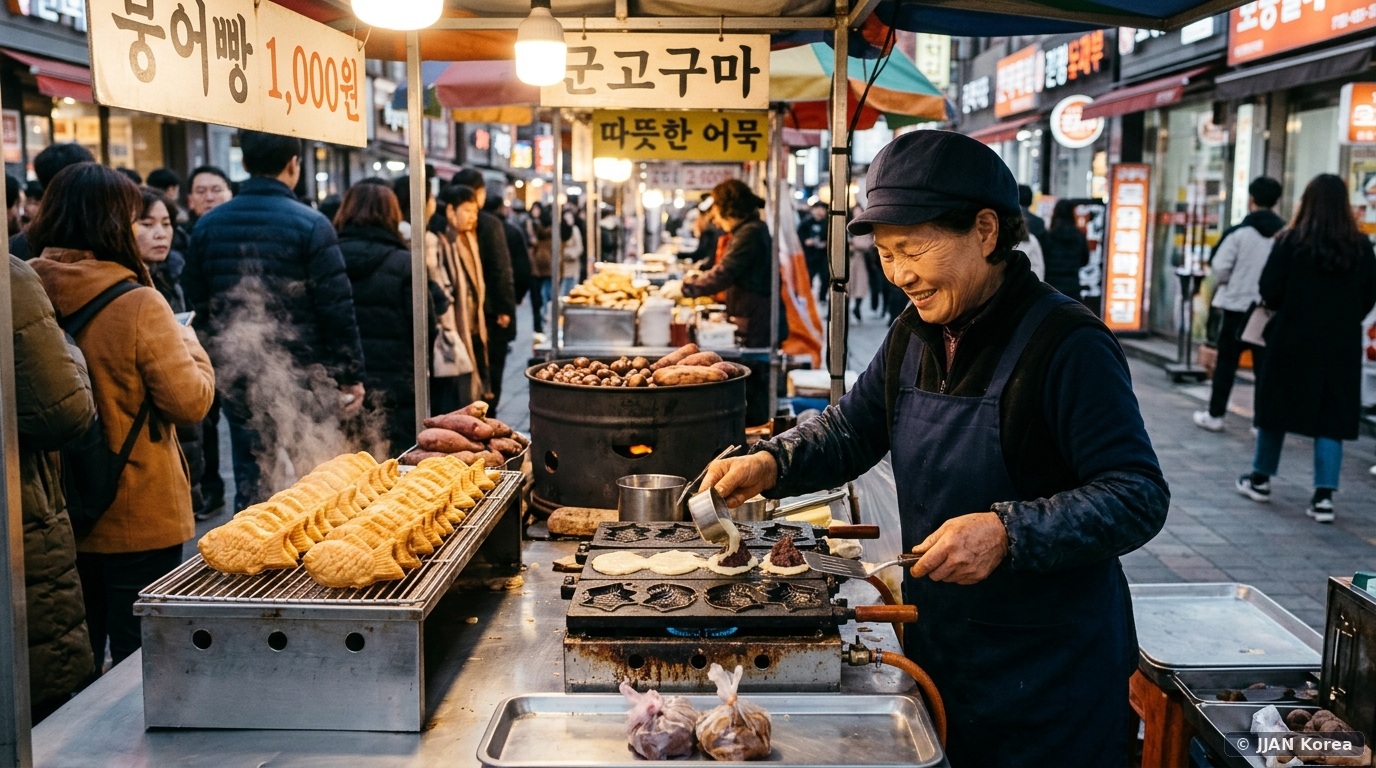
As the crisp, biting evening chill of mid-October settles over the alleyways of Seoul and street trees shed their golden leaves, a beloved culinary transformation sweeps across South Korea. Modest wheeled street carts, mobile propane burner stalls, and converted metal drum ovens emerge outside subway station exits and busy commercial corners. The irresistible scents of sweet cinnamon batter sizzling in hot oil, rich roasted chestnuts crackling over open flames, and caramelized sugars baking in heavy cast-iron molds begin to perfume the autumn air. This marks the triumphant annual return of Korean Autumn & Winter Street Foods (Gyeoul-cheol Gilgeori Eumsik). For food lovers and international travelers, gathering around a glowing food stall with warm paper bags clutched in cold hands represents one of the most comforting, delicious, and joyful everyday rituals in Korean lifestyle culture.
1. The Bungeoppang Phenomenon: Red Bean (Pat) vs. Custard Choux Cream (Shu)
The undisputed undisputed crown prince of Korean cold-weather street snacks is Bungeoppang (붕어빵)—delicate, crispy, golden waffle cakes pressed into the detailed shape of a swimming carp. Crafted by pouring a light flour-and-baking-soda batter into double-sided cast-iron fish molds over intense gas flames, bungeoppang delivers a crispy, paper-thin exterior skin contrasted against an intensely hot, molten interior.
Across Korean society, every winter brings a passionate, humorous cultural debate: the rivalry between traditional Pat-Bungeoppang (Sweet Red Bean) and modern Shu-Bungeoppang (Custard Choux Cream):
| Bungeoppang Variety | Interior Filling | Flavor Profile & Texture | Fandom Demographics |
|---|---|---|---|
| Pat-Bungeoppang (팥붕) | Slow-simmered whole adzuki red beans crushed with sugar | Earthy, comforting, balanced sweetness, traditional chew | Traditionalists, older generations, purists |
| Shu-Bungeoppang (슈붕) | Velvety vanilla custard choux cream | Rich, decadent, silky, pudding-like dessert sweetness | Generation MZ, younger students, sweet-tooths |
| Pizza Bungeoppang (피자붕) | Tomato sauce, sweet corn, diced ham, molten mozzarella | Savory, cheesy, pizza-pocket comfort bite | After-school snack connoisseurs |
| Mini Bungeoppang (Kkoma) | Bite-sized baby fish filled with chocolate or sweet cheese | Ultra-crispy edges, pop-in-the-mouth convenience | Casual commuters, children |
Furthermore, Korean pop psychology humorously claims that how you eat your bungeoppang reveals your personality: eating the head first indicates a passionate, impulsive leader; eating the tail first reveals a cautious, romantic planner; and eating the belly first signals an energetic, open-hearted optimist!
2. Hotteok: Sizzling Yeast Pancakes with Molten Cinnamon Honey
If bungeoppang is the king of baked snacks, Hotteok (호떡) is the supreme ruler of the griddle. Originating from Chinese merchants who settled in Korea in the late 19th century, this fermented glutinous rice dough pancake is stuffed with a generous scoop of dark brown sugar, roasted crushed peanuts, sesame seeds, and fragrant Saigon cinnamon powder.
The vendor drops the elastic dough ball onto a scorching, oil-slicked flat-top griddle and presses it flat using a heavy circular stainless-steel press (Hotteok Nulleo). As it fries to a deep golden bronze, the brown sugar interior melts into a piping-hot, bubbly molten syrup. The finished pancake is folded in half and served inside a thick paper cup.
Crucial Tasting Safety Warning: Never bite aggressively into a freshly served hotteok! The molten brown sugar syrup inside can exceed 80°C, causing painful burns to your tongue and palate. Nibble a small corner first to let steam escape before enjoying the chewy, cinnamon-scented perfection.
While exploring traditional markets, by discovering seasonal cold-weather comfort snacks across Seoul’s street stalls, visitors will also discover regional variations like Busan’s famous Ssiat Hotteok (Seed Hotteok), which is sliced open with scissors and packed with crunchy toasted pumpkin, sunflower, and pine nut seeds.
3. Metal Drum Nostalgia: Gun-goguma & Gun-bam
Before electric ovens, Korean winter streets were illuminated by the glowing embers of Gun-goguma (군고구마 – Roasted Sweet Potatoes) and Gun-bam (군밤 – Roasted Chestnuts) stalls. Vendors slow-roast purple Korean honey sweet potatoes inside massive converted cylindrical oil drums filled with volcanic stones over glowing wood briquettes.
The intense dry heat caramelizes the natural sugars, causing golden sweet syrup to ooze through the charred skin. Peeling away the blackened, smoking skin reveals steaming, velvet-soft orange flesh that melts on your tongue like custard. Street vendors sell bags of 3 or 4 large roasted potatoes for 5,000 to 7,000 KRW, wrapped in thick brown kraft paper bags that double as natural hand warmers.
If the evening autumn wind feels especially brisk while you eat, by picking up pocket hot packs (핫팩) to keep your fingers warm between snacks, sliding an activated chemical iron-powder warming pack into your coat pocket keeps your hands toasty between street food tastings.
4. Community Crowdsourcing Apps (Gaseumsok 3-Cheon-Won) & Cashless Street Banking
In modern South Korea, tracking down traditional street food vendors who roast sweet potatoes inside oil drums or bake fresh bungeoppang has transitioned into a high-tech community scavenger hunt. Because municipal urban renewal ordinances and sidewalk zoning regulations have reduced the number of unpermitted street carts, Korean mobile developers launched crowdsourced tracking platforms—most notably the viral lifestyle app “Gaseumsok 3-Cheon-Won” (가슴속 3천원 – “3,000 Won in My Chest Pocket”).
The app’s title humorously references the nostalgic Korean adage that in autumn and winter, everyone must keep a crisp 3,000-won paper bill tucked inside their winter coat pocket in case they stumble upon an aromatic street cart. Using live user-generated geolocation pins, the app maps operating street stalls across Seoul, classifying them by specialized dough types (traditional red bean vs. custard cream vs. kimchi cheese), average price per unit (typically 2 fish for 1,500 KRW or 3 for 2,000 KRW), and whether the cart is currently open and firing up its gas ovens.
While historic street vendors historically accepted only physical Korean banknotes, nearly all modern cart operators (frequently elderly grandparents known affectionately as Halmeoni or Harabeoji) now facilitate instant cashless transactions. Prominently taped to the glass windshield of the cart, you will notice laminated cards displaying a bank account number (usually KB Kookmin, NH Nonghyup, or KakaoBank) and a printed Toss / KakaoPay QR code.
To pay without paper cash, simply open your Korean banking app or Toss mobile wallet, select “Account Transfer” (Gyejwa Iche), enter the printed account number and exact sum, and show the completed payment confirmation screen to the owner. It is considered polite street etiquette to show the screen clearly before accepting your steaming paper bag of pastries, ensuring mutual trust and warmth amidst the crisp autumn breeze.
In recent autumn seasons, experimental gourmet bungeoppang fillings have surged across trendy youth neighborhoods like Hongdae, Yeonnam-dong, and Hyehwa. Adventurous foodies can sample savory “Pizza Bungeoppang” loaded with marinara sauce, sweet corn, and stretchy mozzarella cheese, or rich Nutella chocolate and sweet potato mousse fillings. Regardless of flavor, authentic street connoisseurs insist on savoring the crispy tail fin first, where the batter crisps to a crackling golden crunch.
Complementing bungeoppang stalls are metal drum roasters preparing roasted chestnuts (Gun-bam – 군밤). Vendors make tiny knife incisions along each chestnut shell before roasting, allowing the sweet roasted nutmeat to pop easily from its charred hull with a gentle squeeze. Pairing a paper bag of piping-hot chestnuts with velvety sweet pumpkin porridge (Hobak-juk) from an adjacent market cart provides the ultimate comforting culinary antidote to chilly autumn evenings.
4. Frequently Asked Questions (FAQ)
Q1: How much do autumn street foods cost on average?
Korean autumn street snacks remain extraordinarily affordable: standard Bungeoppang typically costs 2,000 KRW for 2 to 3 fish (or 1,000 KRW each for premium handmade versions); Hotteok ranges between 1,500 and 2,500 KRW each; and bags of fresh roasted chestnuts or sweet potatoes cost approximately 5,000 KRW.
Q2: How do I find street food stalls in my neighborhood?
Because street food carts are mobile and informal, tech-savvy Koreans rely on crowdsourced smartphone apps such as “Gaseumnok 3 Cheonwon” (가슴속 3천원 – “3,000 Won in My Pocket”). This GPS app crowdsources live community reports showing active bungeoppang, hotteok, and takoyaki carts currently operating near your location, including accepted payment methods.
Q3: Can I pay with credit cards at street food carts?
Most independent wheeled street carts run by elderly vendors do not have credit card terminals. Always carry physical 1,000 and 5,000 KRW cash banknotes. Alternatively, vendors prominently display their bank account numbers; you can instantly wire funds using Korean mobile banking apps (Gyejwa Iche).
Q4: Are bungeoppang and hotteok vegan or dairy-free?
Traditional red bean bungeoppang (Pat-bungeoppang) and classic hotteok are largely vegan, consisting of flour, yeast, water, vegetable oil, sugar, and beans. However, custard choux cream bungeoppang (Shu-bungeoppang) contains dairy milk and eggs, and some modern dough recipes incorporate powdered milk; individuals with severe dairy allergies should inquire before eating.
🛡️ JJAN Korea Editorial Standards & Fact-Checking Verification
This cultural culinary guide to Korean autumn street foods has been authored and verified by Culture Editor Min-ah Kim in accordance with culinary history records preserved by the Korean Food Promotion Institute (KFPI).
- Street food pricing averages and seasonal appearance trends cross-referenced with Seoul Metropolitan Small Business Monitoring datasets.
- Food safety and mobile burner sanitation guidelines audited under Ministry of Food and Drug Safety (MFDS) standards.
- Culinary origins of Hotteok and Bungeoppang verified through National Folk Museum of Korea culinary archives.